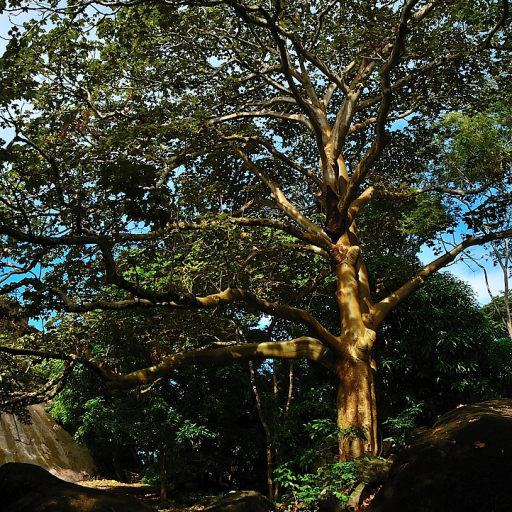
Plant Overview
The Sterculia apetala, famously known as the Panama Tree, is a majestic giant that holds a place of honor as the national tree of Panama. Its name, "apetala," refers to its unique flowers that lack true petals, relying instead on a colorful, bell-shaped calyx to attract pollinators. In the wild, these towering beauties create a massive canopy, offering deep shade and a sanctuary for tropical birds.
🔍 How to Identify
- 🍃 The Foliage: Large, deeply lobed leaves that resemble a giant hand or a star, usually clustered at the ends of thick branches.
- 🔔 The Flowers: Small, yellowish-green blossoms with reddish-purple spots inside. They lack petals but have a distinct, slightly pungent "carrion" scent to attract flies and beetles.
- 🥜 The Pods: Woody, boat-shaped fruit pods that turn brown and split open when ripe, revealing several large, black, waxy seeds nestled inside a fuzzy interior.
🏡 In Your Garden
- 🌳 Space Requirements: This is not a plant for small patios! It grows into a massive, wide-spreading tree, so it needs a large backyard or park setting where its aggressive root system won't interfere with pipes or foundations.
- 🍂 Seasonal Personality: Being deciduous, it will drop its large leaves all at once during the dry season, creating a thick carpet of mulch. It’s a "messy" tree, but excellent for those wanting a natural, forest-like soil cycle.
- ☀️ Sun & Resilience: It is incredibly sun-hardy and drought-tolerant once established, making it a "plant-it-and-forget-it" species for tropical and subtropical climates.
⚠️ Safety & Toxicity
- 🧤 Skin Irritant: While the tree isn't "poisonous" in the traditional sense, the inside of the seed pods is lined with tiny, stiff hairs (trichomes) that can cause intense itching or skin irritation if touched.
- 🐾 Pet Safety: The seeds are generally considered safe and are even roasted and eaten by humans in some cultures, but the irritating hairs can cause discomfort if a curious dog tries to chew on a fallen pod.
✨ Fun Fact
The word "Panama" is believed by many historians to originate from an indigenous Cueva word for this very tree, signifying an "abundance of fish, birds, and butterflies," which are often found gravitating toward its massive, life-sustaining canopy.

Detailed Care Instructions
To grow a Sterculia Apetala plant, follow these steps:
- Obtain seeds or a young plant: Sterculia Apetala seeds can be purchased online or obtained from local nurseries. Alternatively, you can collect seeds from mature plants (if available) by harvesting the seed pods.
- Choose the right location: Sterculia Apetala plants prefer warm climates and full sun or partial shade. Ensure the plant will have enough space to grow as it can reach up to 30 meters (98 feet) in height.
- Prepare the soil: Sterculia Apetala prefers well-draining soil with a slightly acidic pH. Work organic matter, such as compost or well-rotted manure, into the soil before planting to improve fertility and drainage.
- Plant the seeds or young plant: If using seeds, soak them in water for 24-48 hours to enhance germination. Plant the seeds about 2-3 centimeters (0.8-1.2 inches) deep in the soil. If using a young plant, dig a hole slightly larger than its existing root ball. Place the plant in the hole, backfill with soil, and gently firm the soil around the base.
- Water regularly: Sterculia Apetala plants require consistent watering, especially during the first few years after planting. Keep the soil moist but not waterlogged. Water deeply at regular intervals, particularly during dry periods.
- Mulch: Apply a layer of organic mulch, such as wood chips or hay, around the base of the plant to help retain moisture, suppress weed growth, and provide nutrients as it breaks down.
- Prune if necessary: Sterculia Apetala generally requires minimal pruning. Remove any dead or damaged branches. If desired, shape the tree when young to maintain a specific form.
- Fertilize: Apply a balanced fertilizer during the growing season to provide additional nutrients to your Sterculia Apetala plant. Follow the instructions on the fertilizer packaging for proper application.
- Protect from pests: Monitor the plant for pests such as aphids, mealybugs, or scale insects. If infestations occur, use appropriate insecticides or try natural remedies such as insecticidal soap or neem oil.
- Be patient: Sterculia Apetala plants may take several years to mature and begin flowering. Be patient and provide the necessary care for healthy growth.
Remember to check your local regulations and any specific guidelines for planting or growing trees in your area.

Place in a bright room that is sun drenched almost all day. Or directly in a south-facing window.

To water this particular plant, one should first assess the soil moisture level by sticking their finger into the soil up to the second knuckle. If the soil feels dry, water the plant until the soil is evenly moist. It is important not to overwater the plant, as it can lead to root rot. Allow the soil to partially dry out before watering again. In the winter months, the plant may require less frequent watering. When watering, avoid getting water on the leaves as this can lead to fungal diseases.
To fertilize this plant, use a balanced fertilizer with equal amounts of nitrogen, phosphorus, and potassium. Fertilize during the growing season every two weeks until fall. Do not over-fertilize as this can cause damage to the plant. Water the plant before fertilizing to prevent root burn. Additionally, top-dress the soil with organic matter to improve soil fertility.
Sterculia Apetala plant prefers well-draining soil that is slightly acidic with a pH range of 6.0 to 6.5. It requires nutrient-rich soil that is high in organic matter and has good water retention capabilities. The soil should not be waterlogged, as this can lead to root rot. It is recommended to mix in a good quality potting mix with organic matter such as peat moss or compost. The Sterculia Apetala plant also benefits from regular fertilization, especially during the growing season. It is important to avoid using fertilizers that are high in nitrogen as this can lead to excessive foliage production at the expense of flowers and fruits. Overall, the soil should promote healthy root growth and provide essential nutrients for the plant's overall health and vigor.
- Seed propagation: Collect mature seeds from the plant and clean them by removing any pulp or debris. Soak the seeds in warm water for 24 hours to soften the seed coat. Sow the seeds in a well-draining potting mix and keep the soil moist. Place the pot in a warm and bright location, but out of direct sunlight. Germination may take several weeks to several months.
- Stem cuttings: Take stem cuttings from healthy and mature branches of the plant. Remove the lower leaves and any flower or fruit buds. Dip the cut end of the stem in rooting hormone powder. Plant the cutting in a well-draining potting mix, and make sure the soil stays moist. Cover the pot with a plastic bag or clear plastic wrap to create a humid environment. Place the pot in a bright and warm location, but out of direct sunlight. Roots should develop after several weeks.
- Layering: Choose a low-growing branch with a flexible stem. Bury a portion of the stem under the soil, making sure that the buried section is in contact with the soil. Use a U-shaped wire or a small stone to keep the stem in place. Water the soil and keep it moist. After several weeks or months, the buried section of the stem should develop roots and can be severed from the parent plant and transplanted.
- Grafting: This method is a bit more advanced and requires some knowledge of plant anatomy. Select a healthy and vigorous rootstock of a closely related species. Cut a scion, or a section of the desired plant, and graft it onto the rootstock. Secure the graft with grafting tape or grafting wax. Keep the plant out of direct sunlight and in a warm and humid environment. After several weeks or months, the graft should take hold and grow.








