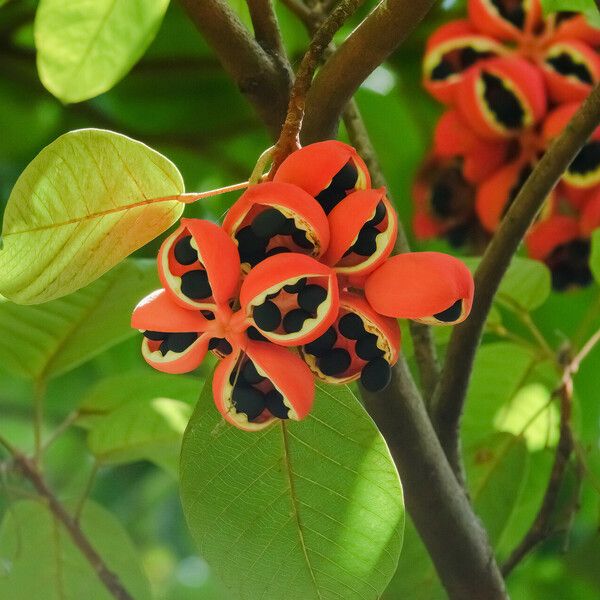
Plant Overview
Often called the Heart-leaved Sterculia, this tropical beauty is a standout for its lush, romantic foliage. Native to the humid forests of Southeast Asia, it is prized by enthusiasts for its architectural silhouette and unique, woody seed pods that split open to reveal dark, striking seeds. It brings a prehistoric, "deep-jungle" vibe to any large garden space or tropical collection.
🔍 How to Identify
- 🍃 The Foliage: Large, broad leaves that are distinctly heart-shaped (cordate) at the base. They often have a soft, velvety texture on the undersides due to fine hairs.
- 🌸 The Blooms: Small, pale greenish-yellow or reddish flowers that grow in clusters. While not traditionally "showy," they have a delicate, intricate structure.
- 🌰 The Seed Pods: Perhaps the most striking feature; the fruit consists of leathery, bright orange or reddish follicles that fan out in a star shape when ripe, exposing jet-black seeds.
🏡 In Your Garden
- 🌡️ Climate Needs: This is a true child of the tropics. It thrives in high humidity and consistent warmth. It is very sensitive to frost and will drop its leaves if temperatures dip too low for extended periods.
- 🌱 Root Awareness: Like many members of the Sterculia genus, it develops a strong taproot. It prefers to be planted in its "forever home" early on, as it can be quite grumpy and slow to recover if transplanted once established.
- 💧 Soil & Water: It loves rich, loamy soil that stays moist but never "swampy." Good drainage is essential to prevent the roots from suffocating in the heat.
⚠️ Safety & Toxicity
- 🐾 Pet Safety: While not famously deadly, the seeds of many Sterculia species contain alkaloids that can cause digestive upset if ingested by curious dogs or cats. It is best to keep fallen pods out of reach.
- ✋ Skin Sensitivity: The fine, brownish hairs found on the seed pods and young leaves can be an irritant to those with sensitive skin. Wearing gloves when pruning is a smart precaution.
✨ Fun Fact
🏛️ A "Smelly" Legacy: The genus name Sterculia is derived from "Sterculius," the Roman god of manure. This refers to the unpleasant, musk-like scent produced by the flowers of some species in this family to attract fly pollinators!

Detailed Care Instructions
To grow Sterculia cordata, also known as the Philippine chestnut, follow these steps:
- Climate: Sterculia cordata is native to tropical regions. Ensure you live in an area with a warm and humid climate, with temperatures ranging between 20-30 degrees Celsius (68-86 degrees Fahrenheit). It prefers a frost-free environment.
- Soil: Use a well-draining soil mixture. Sterculia cordata prefers slightly acidic to neutral soil with a pH level between 5.5-7.5.
- Planting: Obtain Sterculia cordata seeds from a reliable source. Soak the seeds in warm water for 24 hours before planting.
- Germination: Sterculia cordata seeds can take up to several months to germinate. To speed up the process, you can scarify the seeds by lightly scratching their outer coating before soaking them. Plant the seeds in individual pots filled with a mix of peat moss or coconut fiber and perlite. Plant a seed about 2-3 centimeters (1 inch) deep.
- Care: Place the pots in a warm and humid location that receives partial shade. Provide consistent moisture by watering regularly, but avoid overwatering, as it can lead to root rot. Mist the leaves occasionally to mimic the high humidity of its native habitat.
- Transplanting: Once the seedlings are about 15-20 centimeters (6-8 inches) tall and have developed a few sets of leaves, they can be carefully transplanted into larger pots or planted directly in the ground. Choose a location with partial shade to protect the young tree from intense sunlight.
- Fertilization: Use a balanced, slow-release fertilizer to nourish the Sterculia cordata plant during the growing season. Apply the fertilizer according to the manufacturer's instructions.
- Pruning: Sterculia cordata may require occasional pruning to remove dead or damaged branches and to maintain a desirable shape.
- Pest and disease control: Watch out for common pests such as aphids, caterpillars, and mealybugs, which can be removed by hand or treated with insecticidal soap. Regularly inspect the plant for any signs of diseases like root rot, leaf spots, or fungal infections. If diseases are detected, promptly address them using appropriate treatments.
Remember, growing Sterculia cordata requires patience as it may take several years to reach maturity and start producing flowers and fruit.
To water Sterculia cordata, it is important to take into consideration the plant's natural habitat and watering needs. Here are some guidelines on watering this plant:
- Watering frequency: Sterculia cordata prefers a moderate amount of water. Water the plant thoroughly when the top inch of soil feels dry to the touch. This usually translates to a watering schedule of once every 7-10 days, but it may vary depending on factors such as climate, temperature, and humidity.
- Soil moisture: Ensure that the soil is evenly moist but not waterlogged. Overwatering can lead to root rot and other issues, so it's essential to strike a balance. Before watering, check the moisture level by inserting your finger into the soil up to your first knuckle. If the soil feels moist, wait a few days before watering again.
- Watering method: Apply water at the base of the plant rather than overhead to minimize the risk of fungal diseases. Directing the water towards the roots helps ensure optimal absorption and prevents water pooling on the leaves, which can lead to leaf damage or diseases.
- Deep watering: When you do water Sterculia cordata, make sure to water deeply. This means allowing the water to penetrate the root zone, which encourages deep root growth. Avoid shallow watering, which promotes shallow roots and makes the plant less drought-tolerant.
- Consider the season: Adjust your watering schedule based on the season. During summer or hot weather, the plant may require more frequent watering. In contrast, during cooler seasons or when the plant is dormant, reduce the watering frequency to prevent overwatering.
- Environmental factors: Factors such as humidity, temperature, and light intensity can influence the plant's water needs. In high humidity or low light conditions, the plant may require less water compared to when placed in a bright, well-ventilated environment. Consider these factors while assessing the plant's watering requirements.
- Drainage: Ensure the plant is potted in well-draining soil to prevent excess moisture from accumulating around the roots. Well-draining soil allows water to flow freely through the container, reducing the risk of waterlogging.
Remember that the watering guidelines mentioned above are general recommendations. It is always advisable to monitor your specific plant's condition closely and adjust the watering based on its individual needs and responses.
To properly fertilize the Sterculia Cordata plant, follow these instructions:
- Choose a balanced, slow-release fertilizer with an NPK ratio of around 10-10-10 or 20-20-20.
- Apply the fertilizer during the plant's active growing season, which is typically in spring and summer. Avoid fertilizing during the colder months when the plant is dormant.
- Dilute the fertilizer according to the package instructions. Mix it with water to the recommended concentration.
- Use a watering can or a garden sprayer to distribute the diluted fertilizer evenly around the base of the plant.
- Be cautious not to over-fertilize, as this can harm the plant. Follow the recommended dosage based on the fertilizer package instructions to ensure you provide the right amount of nutrients.
- After fertilizing, water the Sterculia Cordata plant thoroughly to help the nutrients penetrate the soil.
- Monitor the plant for any signs of nutrient deficiencies or over-fertilization. Adjust the fertilization frequency or concentration if necessary.
- Remember to always read and follow the specific instructions provided by the fertilizer manufacturer, as different products may have slightly different application guidelines.
Sterculia cordata, a tropical tree species, requires a specific type of soil to thrive. The ideal soil composition for this plant is well-draining and rich in organic matter. The soil should also be slightly acidic with a pH level ranging from 5.5 to 6.5.
To create suitable soil for Sterculia cordata, you can incorporate the following components:
- Sand: Adding sand to the soil mixture helps improve drainage and prevent waterlogging, as it aids in enhancing permeability.
- Peat Moss: Peat moss provides organic matter, retains moisture, and increases soil aeration, promoting healthy root development.
- Compost: Incorporating compost enriches the soil with essential nutrients, enhances its structure, and promotes microbial activity, thus benefiting the plant's growth.
- Perlite: Including perlite in the soil mix helps improve drainage and prevents compaction by increasing soil porosity.
To create the planting medium, combine these components in the following proportions:
- 50% well-draining soil or garden soil
- 25% sand
- 15% peat moss
- 10% compost
- (Optional) a small amount of perlite for enhanced drainage
It is crucial to ensure that the soil is consistently moist but not waterlogged. Overwatering can lead to root rot and other detrimental conditions. Additionally, providing organic mulch around the base of the plant can help conserve moisture, suppress weed growth, and maintain a preferable temperature for the roots.
Regularly check the soil moisture level by inserting your finger about an inch into the soil; if it feels dry, it's time to water. However, avoid watering too frequently or letting the soil completely dry out between waterings.
By utilizing well-draining soil rich in organic matter and maintaining appropriate moisture levels, you can provide the optimal growing environment for Sterculia cordata plants.
To propagate Sterculia cordata plants, you can follow the following steps:
- Gather the necessary materials: You will need a healthy, mature Sterculia cordata plant, a sharp pair of pruning shears or scissors, a clean container (such as a pot or seed tray), well-draining potting soil, and a clear plastic bag or plastic wrap.
- Take a stem cutting: Choose a stem from the parent plant that is healthy and preferably at least six inches long. Use the pruning shears or scissors to make a clean cut, just below a leaf node (the point where a leaf connects to the stem). Ensure the cutting has at least two to three pairs of leaves.
- Prepare the cutting: Remove the lower pairs of leaves, leaving only a few leaves at the top of the cutting. This will help prevent excess moisture loss. If there are any flowers or buds, remove them as well.
- Optional rooting hormone: Although not necessary, dipping the lower end of the cutting in a rooting hormone powder may enhance the chances of successful propagation. Follow the instructions on the rooting hormone packaging for proper application.
- Plant the cutting: Fill the clean container with well-draining potting soil. Create a small hole in the soil using your finger or a pencil, and gently insert the lower end of the stem cutting into the hole. Firmly press the soil around the base of the cutting to hold it in place.
- Provide the necessary conditions: Moisture is crucial for successful rooting. Water the planted cutting thoroughly until excess water drains from the bottom of the container. Place the container in a warm and bright location, avoiding direct sunlight, which can scorch the cutting. To maintain high humidity, cover the container with a clear plastic bag or plastic wrap, creating a mini greenhouse effect.
- Care and monitoring: Over the next few weeks, keep an eye on the cutting to ensure the soil remains moist and does not dry out. If necessary, water it when the top inch of soil feels dry. Avoid overwatering, as this can cause rot. Remove any leaves that show signs of wilting or decay. Within a few weeks to a couple of months, you should notice new growth indicating successful rooting.
- Transplanting: Once the new roots have developed, and the cutting has established itself, it can be transplanted into a larger pot or directly into the garden if the weather and conditions are suitable. Handle the young plant carefully to avoid damaging the delicate roots.
By following these steps, you can successfully propagate Sterculia cordata plants and enjoy the process of growing new individuals of this species.








