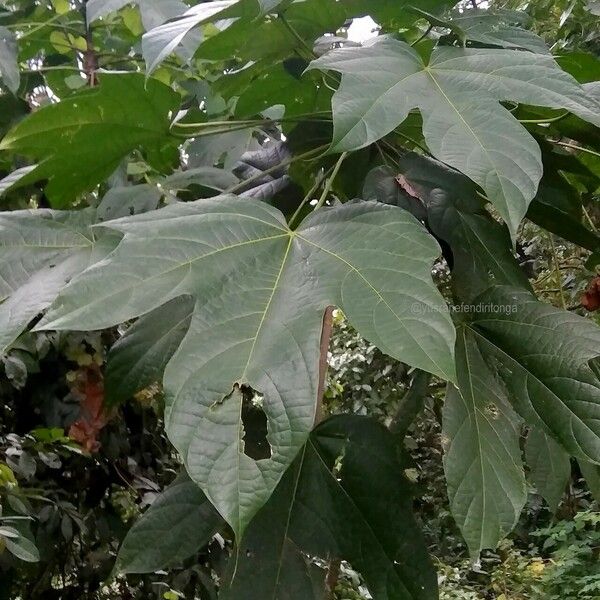
Plant Overview
Known as the Broad-leafed Sterculia or "Tropical Chestnut," this majestic giant is a cornerstone of Southeast Asian rainforests. It is famous for its massive, umbrella-like leaves that create a dense, emerald canopy, making it a favorite for those trying to recreate a prehistoric "dinosaur garden" look. While it starts as a manageable sapling, it carries the spirit of a forest titan, eventually producing striking woody seed pods that look like carved mahogany.
🔍 How to Identify
- 🍃 Massive Foliage: The leaves are the showstoppers—broad, heart-shaped (ovate), and can grow up to 40 centimeters long, often with a slightly leathery texture.
- 🔔 Clustered Blooms: It produces small, bell-shaped flowers that hang in drooping clusters (panicles), typically appearing in shades of dull orange or cream.
- 🥥 Woody Seed Pods: The fruit is a large, thick-walled pod that turns a deep reddish-brown or scarlet when ripe, eventually splitting open to reveal dark, velvety seeds.
🏡 In Your Garden
- 🌳 Space Requirements: This is not a plant for small spaces or indoor pots for long. Because of its vigorous growth and massive root system, it needs a wide berth away from foundations and pipes.
- 💧 Humidity Lover: It thrives in high-humidity environments. If you live in a drier climate, it requires deep, consistent watering and a thick layer of mulch to keep its roots cool and moist.
- ☀️ Sun Exposure: While young saplings appreciate a bit of filtered light (mimicking the forest floor), mature trees crave full tropical sun to fuel their massive leaf production.
⚠️ Safety & Toxicity
- 🟢 General Status: Mostly non-toxic, but use caution with the seed pods.
- 🧤 Skin Irritation: The pods of many Sterculia species are lined with tiny, irritating hairs that can cause "itchy skin" if handled without gloves.
- 🐾 Pet Safety: While not categorized as a high-risk poison, the seeds contain high levels of tannins; ingestion by curious dogs or cats may cause mild stomach upset or vomiting.
✨ Fun Fact
The genus name Sterculia is derived from Sterculius, the Roman god of manure. This rather unglamorous name was chosen because the flowers of some species in this family emit a pungent, "stinky" odor to attract flies for pollination!

Detailed Care Instructions
To grow a Sterculia Macrophylla plant, also known as the Giant Sterculia or Large-leaved Sterculia, you will need to follow these steps:
- Choose a suitable location: Sterculia Macrophylla requires full sun or partial shade. Select a spot in your garden that receives at least 6 hours of direct sunlight per day.
- Prepare the soil: Sterculia Macrophylla prefers well-draining soil. You can improve the soil drainage and fertility by adding organic matter such as compost or aged manure. Also, ensure that the soil pH is slightly acidic to neutral, around 6.0 to 7.0.
- Planting method: Sterculia Macrophylla can be grown from seeds. You can start by soaking the seeds in warm water for 24 hours to soften the hard seed coat. After soaking, sow the seeds directly into the prepared soil at a depth of 1-2 inches. Space the seeds at least 6-8 feet apart as the plant can grow quite large.
- Watering: Keep the soil evenly moist but not waterlogged. Water the plant deeply once or twice a week, depending on the weather conditions. The soil should be allowed to dry out slightly between watering to prevent root rot.
- Mulching: Apply a layer of organic mulch, such as wood chips or straw, around the plant to help retain moisture and suppress weed growth. Mulching also protects the roots from extreme temperatures.
- Pruning: Sterculia Macrophylla generally requires minimal pruning. However, you can remove any damaged, dead, or crossing branches to enhance the plant's appearance and stimulate healthy growth.
- Fertilizing: Feed the Sterculia Macrophylla plant with a balanced fertilizer once or twice a year, preferably in spring and summer. Follow the instructions on the fertilizer package for proper dosage and application.
- Pest and disease control: Monitor the plant regularly for any signs of pest or disease infestations such as mealybugs or leaf spot. Treat accordingly with organic or chemical controls as necessary.
- Support system: As the Sterculia Macrophylla plant grows, it may benefit from a sturdy support system if it becomes top-heavy or prone to leaning. You can use stakes or a trellis to provide support and keep the plant upright.
Remember that Sterculia Macrophylla is a slow-growing tree, and it may take several years to reach its full size. Be patient and provide proper care, and you will enjoy the beauty of this unique plant.
Sterculia Macrophylla is a type of plant that requires special attention when it comes to watering. Here are some detailed guidelines to help you water this plant effectively:
- Understand the water requirements: Sterculia Macrophylla is a tropical plant that thrives in moist but well-draining soil. It requires a consistent level of moisture to grow and develop properly.
- Observe the soil moisture: Before watering the plant, check the moisture level of the soil. Stick your finger about 2 inches deep into the soil near the plant's base to assess if it feels dry. If the soil feels dry, it's an indication that the plant needs watering. If it feels slightly damp, you can hold off watering for a little longer.
- Water quantity: When watering Sterculia Macrophylla, it's important to provide an adequate amount of water. Ensure that you provide enough water to moisten the entire root zone but avoid overwatering, as it can lead to root rot or other related issues. A good rule of thumb is to water until you see water draining out of the drainage holes in the pot.
- Watering technique: To water Sterculia Macrophylla effectively, use a gentle and slow watering technique. Avoid drenching the plant or using high-pressure streams that may dislodge the soil or damage the plant's delicate roots. Instead, aim to evenly distribute the water around the plant's base, allowing the soil to absorb it gradually.
- Watering frequency: The frequency of watering Sterculia Macrophylla depends on various factors such as climate, temperature, humidity, and the size of the plant. As a general guideline, water the plant deeply once the top inch of the soil feels dry. However, make sure to avoid letting the soil completely dry out between watering sessions.
- Mulching: Applying a layer of organic mulch around the plant can help retain moisture in the soil by reducing evaporation. Mulching also helps regulate soil temperature and suppresses the growth of weeds that may compete for water.
- Water quality: Sterculia Macrophylla is sensitive to the quality of water used for irrigation. If possible, try to use filtered or distilled water to avoid the negative effects of chlorine, minerals, or other chemicals present in tap water.
Remember, these guidelines provide general instructions for watering Sterculia Macrophylla, but it's always essential to assess the specific needs of your plant and make adjustments accordingly. Regularly monitor the plant's growth, health, and soil moisture levels to ensure proper watering practices.
To properly fertilize Sterculia Macrophylla plants, you can follow these instructions:
- Choose a balanced fertilizer: Look for a slow-release, granular fertilizer with an N-P-K ratio close to 10-10-10 or 20-20-20. This will provide a good balance of nitrogen (N) for leaf growth, phosphorus (P) for root and flower development, and potassium (K) for overall plant health.
- Timing: Start fertilizing in early spring when new growth appears and continue throughout the growing season. Avoid fertilizing during the dormant period, typically in winter.
- Application method: Sprinkle the fertilizer evenly around the base of the plant or as directed on the package instructions. Avoid direct contact with the stem or foliage to prevent burning.
- Dosage: Follow the recommended dosage indicated on the fertilizer package. Usually, 1 to 2 tablespoons per square foot or 2 to 4 tablespoons per plant is sufficient. Avoid over-fertilizing, as it can lead to nutrient imbalances or burning of the roots.
- Watering: After applying the fertilizer, gently water the soil to help the nutrients penetrate into the root zone. Ensure the water absorbs the fertilizer and doesn't wash it away.
- Frequency: For Sterculia Macrophylla plants, fertilize every 4-6 weeks during the growing season. Adjust the frequency if necessary based on the plant's response and overall health.
- Stop fertilizing in winter: As the plant goes dormant during winter, it doesn't require additional nutrients. Refrain from fertilizing during this period to allow the plant to rest.
Note: It is always advisable to read the specific instructions provided with your fertilizer for optimal usage. Additionally, monitoring your plant's growth, leaf color, and overall health can help you determine if any adjustments need to be made to the fertilization routine.
Sterculia Macrophylla is a tropical plant that thrives in various soil conditions. When selecting soil for this plant, it is important to consider its natural habitat, growth requirements, and preferred soil composition.
Sterculia Macrophylla typically prefers well-draining soil that retains some moisture while allowing excess water to drain away. A loamy soil with good drainage is ideal for this plant. The soil should neither be too heavy and compacted, nor excessively sandy and quick-draining.
Ideally, the soil should be slightly acidic to neutral in pH, ranging from 6.0 to 7.0. This will provide the optimal conditions for nutrient absorption by the plant's roots. A pH level outside this range may hinder nutrient availability or uptake, affecting the overall health and growth of the Sterculia Macrophylla plant.
To enhance soil quality, it is recommended to amend it with organic matter such as compost or well-decomposed leaf litter. This helps improve soil structure, water retention, and nutrient availability. Organic matter aids in maintaining a healthy balance between air circulation and moisture retention within the soil.
Additionally, incorporating some perlite or vermiculite into the soil mixture can improve its drainage capability and prevent waterlogging around the roots.
While Sterculia Macrophylla can tolerate a wide range of soil types, it is important to monitor the moisture levels and adjust watering accordingly. Overwatering or leaving the plant in soggy soil for extended periods can lead to root rot and other fungal diseases.
Regularly assessing the moisture content of the soil by sticking a finger into it about an inch deep can help determine when to water the plant. Watering when the top inch of soil feels dry to the touch is generally a good rule of thumb.
By providing a well-draining, slightly acidic to neutral soil enriched with organic matter, you can create an optimal growing environment for Sterculia Macrophylla, supporting its overall health, growth, and vitality.
Sterculia Macrophylla, commonly known as [], can be propagated through various methods such as seed propagation, stem cuttings, and air layering. Here are the details on each method:
- Seed propagation: Collect mature seeds of Sterculia Macrophylla. Soak the seeds in water for 24-48 hours to increase germination success. Prepare a well-draining potting mix comprising equal parts of perlite and peat moss or vermiculite. Sow the seeds about half an inch deep in the potting mix, ensuring they are not overcrowded. Water the pots moderately to keep the soil consistently moist, but avoid waterlogging. Place the pots in a warm, bright location, away from direct sunlight. Germination usually takes around 4-8 weeks. Once the seedlings have developed a few sets of true leaves, they can be transplanted into larger containers or planted in the desired location.
- Stem cuttings: Select a healthy stem of Sterculia Macrophylla, preferably from a mature plant. Take a sharp, clean pair of pruners and make a diagonal cut just below a node. Remove any leaves or branches from the lower part of the cutting, leaving only a few leaves at the top. Dip the cut end in a rooting hormone powder or gel to enhance rooting. Prepare a well-draining potting mix, such as a mixture of perlite and peat moss or vermiculite. Make a hole in the potting mix with a pencil or finger and insert the cutting, ensuring the node is covered. Water the cutting thoroughly and place it in a warm, bright location with indirect sunlight. Maintain humidity around the cutting by covering it with a transparent plastic bag or placing it in a propagator. Mist the cutting regularly to keep the leaves hydrated. Rooting can take several weeks to a few months. Once roots have developed, the rooted cutting can be transplanted into a larger pot or planted in the desired location.
- Air layering: Air layering is a propagation method best suited for larger, mature Sterculia Macrophylla plants. Select a healthy, non-woody stem on the plant and make a 1-2 inch diagonal cut through the bark at a height of around 12 inches from the tip. Use a sterilized knife to avoid contamination. Gently peel away the bark to expose the cambium layer. Dust the exposed cambium with a rooting hormone powder. Take a handful of moist sphagnum moss or peat moss and wrap it around the wounded stem, covering the exposed cambium. Secure the moss with plastic wrap or a sheet of plastic tied with gardening string, ensuring it remains in place. Mist the moss occasionally to keep it moist. Within a few weeks to a few months, roots will develop in the moss. Once a significant number of roots have formed, cut the rooted section below the moss and transplant it into a pot or the desired location.
Remember to provide the propagated Sterculia Macrophylla plants with proper care, including suitable light, water, and temperature conditions, to ensure their healthy growth and development.








