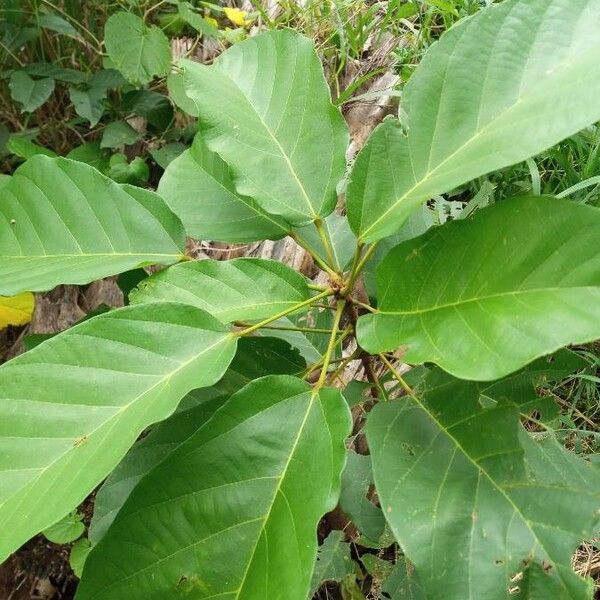
Plant Overview
Known as the African Tragacanth, this striking tree is a staple of West and Central African landscapes. It is often called the "Forest Healer" due to its widespread use in traditional medicine and its ability to thrive in disturbed soils, helping to "mend" the forest canopy. Its most distinctive feature is the thick, reddish gum that oozes from its bark, which has historically been used as a substitute for true gum tragacanth in everything from textiles to food.
🔍 How to Identify
- 🍃 The Leaves: Large, simple, and oval-shaped with a slightly leathery texture. They often cluster at the ends of branches, creating a lush, umbrella-like canopy.
- 🌸 The Flowers: Look for dense, branched clusters of tiny, bell-shaped flowers. They are typically a muted reddish-purple or greenish-yellow and appear while the tree is leafless or just as new leaves emerge.
- 🛶 The Seed Pods: Perhaps its most recognizable feature, the fruit consists of 4 to 5 woody, boat-shaped pods (follicles). When ripe, they turn a vibrant scarlet red and split open to reveal small, dark seeds.
🏡 In Your Garden
- 🌱 Growth Habit: This is an "architectural" tree. In a large garden or park setting, it provides excellent shade and acts as a pioneer species, meaning it is very hardy and grows quickly to reclaim open spaces.
- 💧 Resilience: Because it is native to tropical savannahs and forests, it is incredibly drought-tolerant once established. It prefers deep, well-draining soil and plenty of overhead sun to reach its full height.
⚠️ Safety & Toxicity
- ✅ Status: Generally considered non-toxic and safe to handle.
- ⚠️ Details: While the gum and bark are used medicinally in their native regions, the seeds should not be consumed by humans or pets without expert knowledge, as the raw seeds of many Sterculia species contain oils that can cause digestive upset if not processed correctly.
✨ Fun Fact
The "tragacantha" in its name comes from the Greek words for "goat" and "thorn." While this specific tree isn't thorny, it produces a gum so similar to the Astragalus herb (the original source of gum tragacanth) that it became a vital commercial resource for thickening calico dyes and medicinal syrups!

Detailed Care Instructions
To grow Sterculia Tragacantha (Also known as the Gum Karaya tree), you can follow these steps:
- Obtain seeds: You can purchase seeds from a reputable seller or collect them from mature trees in your area.
- Soil preparation: Sterculia Tragacantha prefers well-draining soil. Prepare a pot or garden bed with a mixture of loamy soil, sand, and organic matter such as compost.
- Germination: Prepare the seeds for germination by soaking them in water for 24 hours. This process helps to soften the seed coat and enhance germination rates.
- Planting: Plant the seeds in the prepared soil at a depth of about 1 inch. Make sure to space them adequately as they will grow into large trees.
- Watering: Keep the soil consistently moist but not waterlogged. Water the plant regularly, especially during dry spells or while the seedlings are establishing.
- Light and temperature: Sterculia Tragacantha thrives in full sun or partial shade. Ensure the plant receives at least 6-8 hours of direct sunlight daily. It prefers temperatures between 65°F and 85°F (18°C to 29°C).
- Fertilizer: Use a balanced, slow-release fertilizer once the seedlings have grown a few inches in height. Follow the instructions on the fertilizer package for application rates.
- Pruning: As the tree grows, you can prune it to maintain its desired shape and size. However, minimal pruning is usually required.
- Pest and disease control: The gum karaya tree is generally considered to be pest and disease-resistant. However, monitor the tree for any signs of pests or diseases and take appropriate action if necessary.
- Patience: Sterculia Tragacantha takes several years to reach maturity and produce gum. Be patient and provide the required care for the tree to thrive.
Remember to research and understand the specific requirements of Sterculia Tragacantha in your particular region as environmental factors may vary.
Sterculia Tragacantha plant requires regular watering to thrive, especially during the growing season. It is important to ensure that the soil remains consistently moist but not waterlogged. Allow the soil to dry slightly between watering to prevent the roots from rotting. When watering, avoid getting water on the leaves, as this can lead to fungal infections. It is recommended to water in the morning or evening to prevent sunburn on the leaves. Use lukewarm water, as cold water can shock the plant. During the winter months, reduce watering frequency to prevent overwatering. Always check the soil moisture level before watering to prevent over or under-watering the plant.
To fertilize the Sterculia Tragacantha plant, you should start by selecting a balanced, slow-release fertilizer. Apply fertilizer to the plant during the growing season, which is typically from early spring to late summer. Avoid fertilizing the plant during the dormant season.
Before fertilizing, make sure the soil is moist but not waterlogged. Apply fertilizer according to the package instructions, and ensure that it is evenly distributed around the root zone of the plant. Do not apply fertilizer directly to the base of the plant or in large clumps, as this can burn the roots.
Water the plant well after fertilizing to ensure that the nutrients are absorbed by the roots. Repeat this process every four to six weeks during the growing season for best results.
Keep in mind that over-fertilization can be harmful to the plant, so be sure to follow the recommended dosage and frequency carefully. Additionally, always monitor the plant for signs of stress or nutrient deficiencies, as this can indicate a need for adjustments in the fertilizing regimen.
It is recommended to use a well-draining soil mix with good aeration for the Sterculia Tragacantha plant. The soil should be slightly acidic, with a pH range of 5.5 to 6.5. Adding organic matter to the soil mix can also be helpful in improving soil fertility and water retention. It is important to avoid heavy clay soils or soils that retain too much moisture, as this can lead to root rot and other plant diseases. A good soil mix for Sterculia Tragacantha can be created by combining equal parts of peat moss, perlite, and coarse sand.
To propagate this plant, you will need to start with healthy mature plants with strong roots and stems. You can take stem cuttings in the spring or summer when the plant is actively growing. Select a healthy stem section with at least two leaves and a node, which is the spot where a leaf meets the stem.
Cut the stem using a sharp, clean knife just below the node. Remove the lower leaves, leaving at least one or two at the top of the cutting. Dip the cut end of the stem in rooting hormone powder, which will encourage root growth.
Fill a small pot with well-draining soil mix, such as a 50/50 mix of perlite and peat moss. Make a hole in the soil using a pencil or your finger and gently insert the cutting. Firm the soil around the cutting and water it well.
Place the pot in a warm, humid location with bright, indirect light but not direct sun. Cover the pot with a plastic bag or a clear plastic container to create a mini greenhouse environment that will help retain moisture and keep the cutting from drying out.
Keep the soil moist but not waterlogged and check the cutting for signs of new growth after a few weeks. Once new growth appears and roots have formed, the cutting can be transplanted into a larger pot or directly into the garden.
Propagation by seed is also possible, but it can take several years to produce mature plants.








