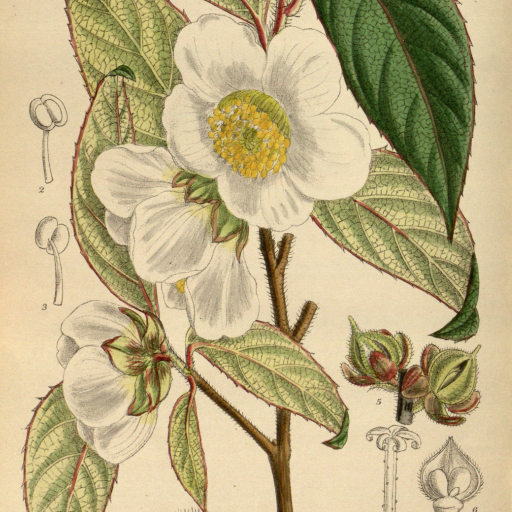
Plant Overview
Known as the Chinese Stewartia, this understated aristocrat of the garden is prized for its rare "four-season" appeal. A member of the tea family (Theaceae), its delicate, cup-shaped blooms look remarkably like single camellias nestled among the leaves. For many enthusiasts, it is considered a "connoisseur’s tree" because it transforms beautifully throughout the year, from summer white to autumn fire.
🔍 How to Identify
- 🍂 Exfoliating Bark: The most striking feature is the smooth, cinnamon-brown bark that peels away in thin, papery flakes to reveal patches of grey, cream, and burnt orange beneath.
- 🌼 Summertime Blooms: In early to mid-summer, it produces fragrant, 2-inch white flowers with a central cluster of bright orange-yellow stamens.
- 🍁 Autumn Foliage: The dark green, elliptic leaves transition into spectacular shades of crimson, burgundy, and bronze once the temperature drops.
🏡 In Your Garden
- 🧪 Soil Sensitivity: This tree is a bit of a "soil snob"—it demands well-drained, acidic soil rich in organic matter. It will struggle or show yellowing leaves (chlorosis) in alkaline or heavy clay environments.
- 💧 Cool Roots: While it enjoys a sunny spot, its root system is shallow and sensitive to drought. Applying a thick layer of mulch is essential to keep the root zone cool and hydrated during the heat of summer.
- 🌳 Patience is Key: It is a slow-growing species and famously resents being moved. Because it has a sensitive taproot system, it’s best to choose its "forever home" carefully to avoid transplant shock.
⚠️ Safety & Toxicity
- ✅ Non-Toxic: Stewartia sinensis is generally considered non-toxic to humans, cats, and dogs.
- 🧤 Bark Protection: While safe to touch, the tree itself is vulnerable. Its beautiful bark is thin and easily damaged by weed-whackers or climbing; it should be protected in high-traffic areas or yards with active pets.
✨ Fun Fact
Despite its delicate appearance, the Chinese Stewartia was famously brought to the West by the legendary plant hunter Ernest "Chinese" Wilson in 1901, who considered it one of the most beautiful trees in the forests of Central China.

Detailed Care Instructions
To grow Stewartia Sinensis, also known as the Chinese stewartia, you will need to follow a few steps:
- Obtain seeds or young plants: You can either buy seeds from a reputable nursery or obtain young plants. It is often easier to start with younger plants as they have already gone through the initial growth stages.
- Choose a suitable location: Stewartia Sinensis prefers a well-drained soil that is rich in organic matter. It thrives in partial shade to full sun, but avoid planting it in areas with harsh afternoon sun exposure.
- Prepare the soil: Before planting, prepare the soil by loosening it and adding organic compost or well-rotted manure to improve its fertility and drainage.
- Planting: Dig a hole twice the width and depth of the root ball. Place the plant in the hole, making sure that the top of the root ball is level with or slightly above the soil surface. Backfill the hole with soil, gently firming it around the roots.
- Watering: Water the plant thoroughly after planting to settle the soil around the roots. Stewartia Sinensis prefers moist, but not waterlogged, soil. Water regularly during dry spells and provide supplemental irrigation if needed.
- Mulching: Apply a layer of organic mulch around the plant, leaving a small gap around the base to prevent moisture buildup. Mulch helps conserve moisture, suppress weeds, and maintain a more even soil temperature.
- Pruning: Stewartia Sinensis typically requires minimal pruning. However, you can remove any dead, damaged, or diseased branches to promote overall health and shape the plant as desired.
- Fertilizing: Feed the plant with a balanced fertilizer once or twice a year, in early spring and late summer, following the package instructions for dosage and application.
- Protection: During extreme weather conditions, such as heavy frosts or strong winds, consider protecting the plant with a temporary covering.
- Monitor for pests and diseases: Keep an eye out for common pests like aphids or scale insects, as well as diseases like leaf spot. Take appropriate measures to control pests or treat diseases if necessary.
With proper care and attention, your Stewartia Sinensis plant should grow and thrive. Remember to be patient, as it may take a few years for the plant to reach its full potential and start blooming.

Place in a window with dappled sun or a spot in the middle of a room. Or directly in a window facing west or east.

To water this particular plant, it is recommended to thoroughly soak the soil until water starts to seep out of the drainage holes in the pot or the soil feels moist to the touch. It is important to not let the plant sit in standing water as it can lead to root rot. The frequency of watering will depend on factors such as the temperature, humidity, and amount of sunlight the plant receives. It is important to monitor the moisture level of the soil and adjust watering accordingly. In general, it is better to water less frequently but more thoroughly to prevent waterlogging the soil and promoting healthy root growth.
To fertilize this plant, it is recommended to use a balanced fertilizer with equal parts nitrogen, phosphorus, and potassium. Apply the fertilizer in early spring, just before new growth appears, and again in early summer. Avoid fertilizing in late summer or fall, as this may encourage late-season growth that could be damaged by winter weather. Follow the manufacturer's instructions for dosage and application method, and be sure to water the plant well before and after fertilizing. Additionally, it is important to avoid overfertilizing as this can cause damage to the plant.
The best soil to use with this particular plant is a loamy soil with good drainage. It should have a slightly acidic pH level, ideally between 5.0 and 6.5. The soil should also be rich in organic matter, such as compost or peat moss. When planting, it is important to ensure that the root ball is well covered and that the soil is packed firmly around the base of the plant. Additionally, regular fertilization with a balanced fertilizer can help ensure the plant receives all the nutrients it needs to thrive.
Stewartia Sinensis is a plant that can be propagated by cuttings or by seed. To propagate by cuttings, select a stem with several leaves, remove the lower leaves, and plant the stem in potting soil. Keep the soil moist and place the pot in a shaded area until the new plant has established roots and grown new leaves. To propagate by seed, collect mature seeds from the plant and sow them in a pot or directly in the ground. Cover the seeds with a layer of soil and keep the soil moist until the seeds germinate and sprout. Maintain proper soil moisture and temperature to ensure successful propagation of Stewartia Sinensis.








