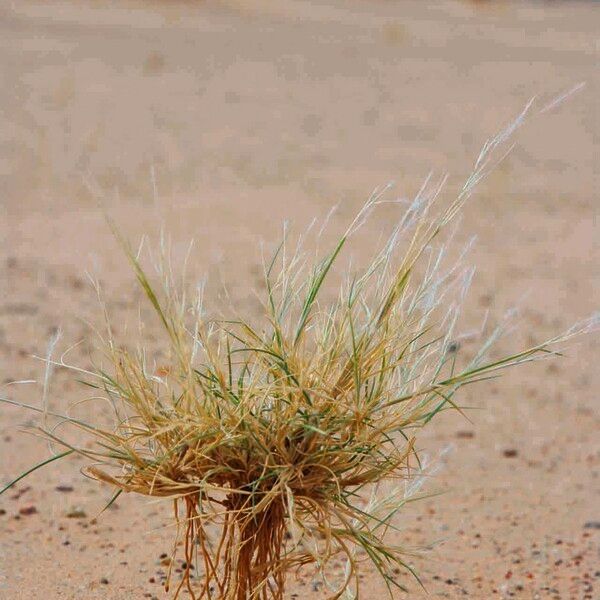
Plant Overview
Imagine a shimmering, silvery sea of feathers dancing across a dry desert landscape. Often nicknamed "Old Man’s Beard" or "Feathery Tussock," Stipagrostis plumosa is a master of survival in the harshest arid environments of Africa and the Middle East. It isn't just a plant; it is a vital lifeline for desert wildlife and a symbol of resilience in the shifting sands.
🔍 How to Identify
- 🌾 Growth Habit: This is a perennial bunchgrass that forms dense, upright tufts (tussocks), usually reaching between 30 to 60 centimeters in height.
- 🌬️ Feathery Awns: Its most striking feature is the long, silky, white feathery "tails" (awns) that emerge from the seed heads, giving the plant a soft, cloud-like appearance when in bloom.
- 🍃 Stiff Leaves: The leaves are narrow, grayish-green, and often rolled inward to conserve moisture, feeling tough and wiry to the touch.
🏡 In Your Garden
- 🏜️ The Desert Specialist: This grass is a "xerophyte," meaning it is evolutionarily built for extreme drought. It thrives in sandy, well-draining soils where most other plants would wither, making it an excellent choice for rock gardens or xeric landscaping.
- 🌍 Dune Stabilizer: Because of its sturdy, deep root system and ability to trap blowing sand with its foliage, it is frequently used in environmental projects to prevent desertification and hold shifting dunes in place.
- 🐫 Natural Forage: In its native habitat, it serves as high-quality "standing hay." It remains nutritious even after it dries out, providing essential food for camels, goats, and wild gazelles during the dry season.
⚠️ Safety & Toxicity
- ✅ Non-Toxic: Stipagrostis plumosa is generally considered safe and non-toxic to humans, cats, dogs, and livestock.
- 👀 Physical Irritant: While not poisonous, the fine, feathery awns and sharp seeds can occasionally cause mechanical irritation. They may get stuck in a pet's fur, ears, or paws, or cause slight itching if brushed against sensitive skin.
✨ Fun Fact
The feathery "plumes" are a brilliant evolutionary trick; they act like tiny parachutes. This allows the wind to carry the seeds for miles across the Sahara and Arabian deserts, ensuring the plant can colonize new territory far from the parent tuft.

Detailed Care Instructions








