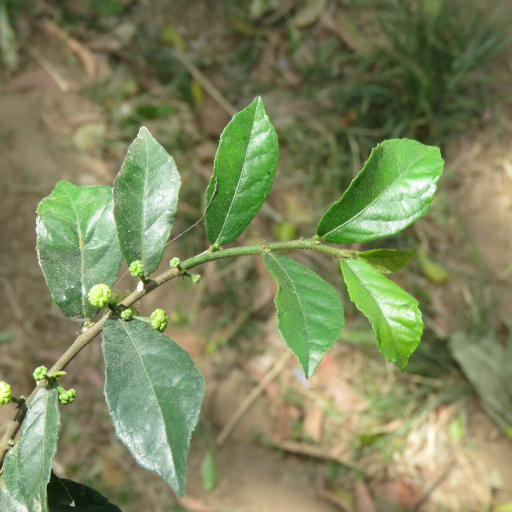
Plant Overview
Known as the Siamese Rough Bush or the Sandpaper Tree, Streblus asper is a rugged, architectural beauty native to the tropical regions of Southeast Asia. Often found near ancient temples or winding riverbanks, this tree carries a sense of history, having been used for centuries to create sacred scrolls and traditional medicine. Its gnarled, crooked trunk gives it an "old-soul" aesthetic that makes it a prized choice for bonsai enthusiasts worldwide.
🔍 How to Identify
- 🍃 The Sandpaper Leaf: The most distinct feature is the leaf texture; both sides are incredibly rough and abrasive, feeling exactly like fine-grit sandpaper.
- 🌳 Gnarled Form: The tree typically grows with a crooked, rigid trunk and heavily branched crown, often appearing much older than it actually is.
- 🟡 Tiny Fruits: It produces small, berry-like fruits that turn a bright yellow or pale orange when ripe, nestled among the dark green foliage.
🏡 In Your Garden
- ✂️ Bonsai Potential: Because it has naturally small leaves and responds exceptionally well to heavy pruning, it is one of the best tropical species for "shaping." It can handle wires and aggressive trimming without stress.
- 💧 Taproot Resilience: It develops a very deep, strong taproot. While this makes it incredibly drought-tolerant once established, it means the plant hates being moved. Choose its "forever home" carefully to avoid transplant shock.
- ☀️ Sun Seeker: To maintain its dense, bushy appearance, it requires high light levels. In low light, the branches may become "leggy" and lose that iconic compact shape.
⚠️ Safety & Toxicity
- 🥛 Mild Irritant: The tree contains a milky white latex (sap) that oozes when a branch is broken or a leaf is plucked.
- 🖐️ Skin Sensitivity: While not considered deadly, this sap can cause mild skin irritation or rashes in sensitive individuals and should be kept away from the eyes. It is generally considered non-toxic to pets, but the rough leaves may cause mechanical irritation if chewed.
✨ Fun Fact
In ancient Thailand, before the invention of modern paper, the bark of the Streblus asper was used to manufacture "Khoi Paper." This material was so durable and resistant to insects and moisture that it was used to record the kingdom's most important legal documents and sacred religious texts.

Detailed Care Instructions
To grow Streblus asper, also known as the Siamese rough bark, follow these steps:
- Climate and soil: This plant thrives in tropical and subtropical climates. It prefers well-drained soil, so make sure the planting site has good drainage.
- Propagation: Streblus asper can be propagated through seeds or stem cuttings. Collect ripe seeds from the plant and sow them in potting soil or a seed-starting mix. Keep the soil moist but not waterlogged. For stem cuttings, take a 6-8 inch cutting from a healthy plant and remove the lower leaves. Dip the cut end in rooting hormone and plant it in a well-draining potting mix. Keep the soil moist until roots develop.
- Planting: Once the seeds have germinated or the cuttings have rooted, transplant the seedlings or rooted cuttings into larger pots or directly into the ground. Choose a location that receives partial shade to protect the plants from excessive sun exposure.
- Watering: Water the plants regularly, keeping the soil evenly moist. Avoid overwatering or allowing the soil to dry out completely, as both conditions can stress the plant.
- Fertilizing: Apply a balanced, slow-release fertilizer every 2-3 months during the growing season to promote healthy growth. Follow the manufacturer's instructions for the correct dosage.
- Pruning: Streblus asper plants benefit from occasional pruning to maintain their shape and size. Prune any dead or diseased branches and trim back excessive growth to promote a more compact form.
- Pest and disease control: Streblus asper can be susceptible to pests like aphids and mealybugs. Regularly inspect the plant for signs of infestation and treat with insecticidal soap or neem oil if necessary. Ensure good air circulation around the plant to prevent fungal diseases.
- Mulching: Apply a layer of organic mulch around the base of the plant to help retain moisture, suppress weed growth, and regulate temperature.
Remember to check with local nurseries or gardening experts for specific advice based on your location and climate.

Place in a bright room that is sun drenched almost all day. Or directly in a south-facing window.

To properly water this plant, you should first consider the type of soil it is planted in. It is important to ensure that the soil is well-draining and does not become waterlogged. When watering, be sure to thoroughly saturate the soil around the base of the plant, avoiding the leaves and stem. Overwatering can lead to root rot and other issues, so it is best to wait until the top inch of soil is dry before watering again. In addition, it is important to provide adequate humidity for this plant, which can be achieved through misting or placing it near a humidifier.
To fertilize the Streblus Asper plant, you will need to use a balanced fertilizer with an N-P-K ratio of 10-10-10. Apply the fertilizer once every two weeks during the growing season, which is in the spring and summer. Dilute the fertilizer according to the instructions on the package and apply it directly to the soil around the base of the plant. Avoid getting the fertilizer on the leaves or stem as it may cause damage. Ensure that the plant is well-watered before and after fertilization to prevent fertilizer burn.
Streblus Asper plant thrives in loose, well-drained soil that is rich in organic matter. The ideal soil pH range for this plant is slightly acidic to neutral, between 6 and 7.5. A mix of loamy and sandy soil is ideal for Streblus Asper plant.
It is important to ensure that the soil used for this plant is loose and well-drained to prevent waterlogging, which can lead to root rot. Adding compost or well-rotted manure to the soil can help increase its nutrient content and improve drainage.
In addition to the soil, it is important to choose an appropriate container size for Streblus Asper plant, as it prefers a slightly cramped root environment. Therefore, a small to medium-sized pot with good drainage is best suited for this plant.
To propagate this plant, take stem cuttings that are about 6 inches (15 centimeters) long and remove the leaves from the lower half of the stem. Dip the bottom of the stem in rooting hormone and plant it in a well-draining potting mix. Keep the soil moist and place the cutting in a location with bright, indirect light. The cutting should root within a few weeks, and can be transplanted to a larger pot once it has established roots.








