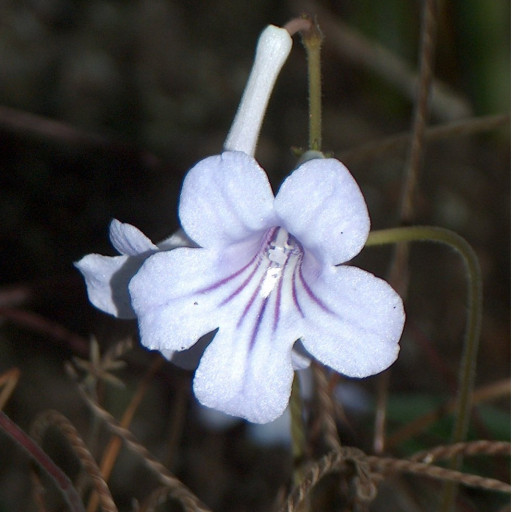
Plant Overview
Often called the Cape Primrose, the Streptocarpus is a charming relative of the African Violet that hails from the cool, shaded hillsides of Southern Africa. These plants are beloved by indoor gardeners for their remarkably long blooming seasons and their elegant, trumpet-shaped flowers that seem to float effortlessly above a rosette of velvety green leaves. They carry a vintage, Victorian-era appeal but are perfectly suited for modern windowsills.
🔍 How to Identify
- 🌿 The Foliage: Long, tongue-shaped leaves that are deeply veined and covered in soft, fine hairs. They have a distinct "quilted" texture that feels like soft velvet to the touch.
- 🌸 The Blooms: Delicate, trumpet-like flowers with five petals, often featuring intricate "nectar guides" (darker lines or splashes of color) in the throat to lead pollinators inside.
- 🌀 The Seed Pods: If left to go to seed, the plant produces long, slender pods that twist into a tight spiral—the very feature that gives the plant its name (Greek for "twisted fruit").
🏡 In Your Garden
- 💧 The "Drought-First" Rule: These plants have very fine, hair-like root systems that are highly susceptible to rot. It is much safer to let a Streptocarpus wilt slightly than to overwater it. They prefer a "dry-drench" cycle rather than constant moisture.
- 🌤️ Light & Temperature: While they crave bright light to produce flowers, their thin leaves scorch easily. They thrive in east-facing windows where they get gentle morning sun but remain cool during the heat of the day.
⚠️ Safety & Toxicity
- 🐾 Pet Safe: Streptocarpus is generally considered non-toxic to cats, dogs, and horses, making it a fantastic choice for pet-centric households.
- 👶 Gentle Handling: While non-toxic to humans, the leaves are quite brittle. They contain no irritants, but the plant can be easily damaged by curious hands or paws.
✨ Fun Fact
Unlike most plants that grow multiple leaves from a central stem, some wild species of Streptocarpus are "unifoliate"—meaning they grow one single, giant leaf that continues to expand for the plant's entire life, sometimes reaching over three feet in length!

Detailed Care Instructions
| Humidity | Normal |
| Lighting | Part Sun |
| Difficulty | Medium |
| Hibernation | Cold Period |
| Temperature | 18°C - 25°C |
| Hardiness Zones | 9A - 11B |
To grow Streptocarpus plant, also known as Cape Primrose, follow these steps:
- Choosing the right location: Place the plant in a bright, well-lit spot away from direct sunlight. Streptocarpus prefers filtered or indirect light.
- Potting: Use a pot with drainage holes to ensure proper drainage. Fill the pot with a well-draining potting mix that is slightly acidic and rich in organic matter.
- Watering: Keep the soil evenly moist but not waterlogged. Water thoroughly when the top inch of soil feels dry. Avoid water sitting in the saucer as it can cause root rot.
- Humidity: Streptocarpus prefers high humidity levels. You can increase humidity by placing a tray of water near the plant or using a humidifier.
- Temperature and ventilation: Keep the plant at temperatures between 60-80°F (15-27°C). Provide good air circulation by placing it in a well-ventilated area.
- Fertilizing: Feed the plant with a balanced liquid fertilizer every two to three weeks during the growing season. Dilute the fertilizer to half strength to prevent fertilizer burn.
- Pruning: Remove faded blooms and yellowed leaves regularly to maintain the plant's appearance. Trim any leggy growth to encourage bushier growth.
- Repotting: Streptocarpus prefers slightly crowded roots, so repot only when the plant becomes root-bound. Use a larger pot and fresh potting mix while handling the roots gently.
- Pest control: Keep an eye out for common pests such as aphids and mealybugs. Use insecticidal soap or neem oil to control any infestations.
- Propagation: Streptocarpus can be propagated by leaf cuttings. Cut a healthy leaf, dip the cut end in a rooting hormone, and plant it in a well-draining rooting medium. Keep it moist and in indirect light until new roots develop.
With proper care and attention, your Streptocarpus plant should grow and produce beautiful flowers.

Place in a window with dappled sun or a spot in the middle of a room. Or directly in a window facing west or east.

To properly care for this particular plant, it is important to provide it with consistent watering. The soil should be kept consistently moist, but not overly wet or waterlogged. When watering, it is important to water at the base of the plant to avoid getting water on the leaves, which can lead to disease or rot. It may be helpful to place a tray or saucer underneath the pot to catch any excess water after watering. It is also important to monitor the plant for signs of dehydration, such as wilting or yellowing leaves, and adjust the watering schedule accordingly.
To properly fertilize this plant, use a balanced, water-soluble fertilizer at half-strength every two weeks during the growing season. Be sure to apply the fertilizer to moist soil and avoid getting it on the foliage. During the dormant season, reduce fertilization to once a month or stop altogether until new growth emerges.
The ideal soil for Streptocarpus plants is a well-draining, lightweight potting mix with a slightly acidic pH level. It should contain a mix of ingredients such as peat moss, perlite, vermiculite, and/or sand to provide good drainage and aeration. The soil should also be rich in nutrients and organic matter to support healthy plant growth. Avoid using heavy, clay soils that hold too much water and can cause root rot. Additionally, adding some slow-release fertilizer or organic compost to the soil can help provide ongoing nutrition to the plant.
There are two common ways to propagate this plant - through seeds and leaf cuttings.
To propagate using seeds, collect the seeds from a mature plant and sow them in a well-draining potting mix. Keep the soil moist and place the pot in a warm, bright location. The seeds should germinate in a few weeks.
To propagate using leaf cuttings, choose healthy leaves from a mature plant and cut them into sections, making sure each section has a small piece of stem. Dip the cut ends in rooting hormone and plant them in a well-draining potting mix. Keep the soil moist and place the pot in a warm, bright location. Roots should form in a few weeks and a new plant will begin to grow.







