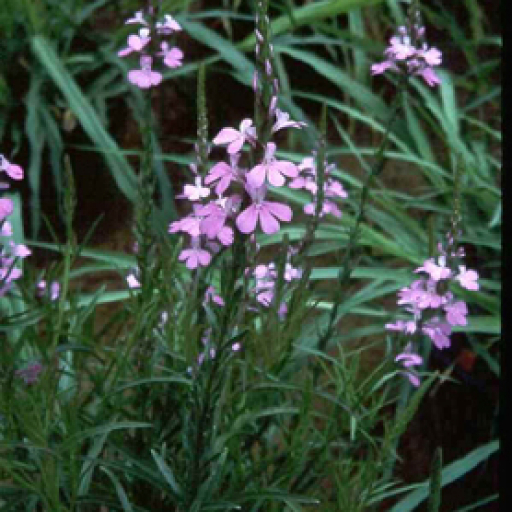
Plant Overview
Known as the "Purple Witchweed," Striga hermonthica is a beautiful but deceptive parasite. It earns its "witchy" name by lurking underground for weeks, silently draining the life from crops like corn and sorghum before suddenly appearing as a vibrant burst of purple. In many regions, it is considered a "vampire plant" because of its devastating impact on local agriculture.
🔍 How to Identify
- 🌸 The Bloom: Distinctive pink to deep purple flowers with five petals. The blossoms are asymmetrical, with a slight "bend" in the flower tube.
- 📏 The Stem: Stiff, upright, square-shaped stems that are covered in coarse, sandpaper-like hairs.
- 🌿 The Leaves: Small, narrow, green leaves that look like tiny blades. Because the plant steals nutrients, it doesn't need large leaves for photosynthesis.
🌾 Ecology & Impact
- 🧛 A Root Thief: Unlike most plants, Striga cannot survive on its own. It uses specialized structures called "haustoria" to hijack the root systems of nearby grasses and cereals, stealing their water and minerals.
- 🏜️ Thrives in Struggle: It actually prefers poor, nitrogen-depleted soils. When the host plant is stressed, the Witchweed thrives, making it a difficult adversary for farmers in dry climates.
⚠️ Safety & Toxicity
- 🟢 Physical Safety: Striga hermonthica is not known to be toxic to humans or pets if touched or accidentally brushed against.
- 🌾 Agricultural Threat: While not "poisonous" in a chemical sense, it is considered "economically toxic." It can destroy up to 100% of a crop yield, making it a major threat to food security rather than a physical health hazard.
✨ Fun Fact
Striga seeds are as tiny as dust and can remain dormant in the soil for over 20 years. They only wake up when they "smell" a specific chemical (strigolactones) exhaled by the roots of a potential host plant.

Detailed Care Instructions
To grow Striga hermonthica, also known as witchweed, you can follow these steps:
- Find Striga hermonthica seeds: Obtain seeds from a reputable supplier or collect them from a mature plant.
- Prepare the soil: Striga hermonthica prefers sandy or loamy soils with good drainage. Ensure the pH of the soil is slightly acidic to neutral (pH 5.5-7).
- Sow seeds: Broadcast the seeds evenly over the prepared soil surface. You can lightly press them into the soil, but they do not need to be covered with soil.
- Provide optimal conditions: Striga hermonthica thrives in warm climates with full sun exposure. Maintain temperatures around 75-85°F (24-29°C) and provide adequate moisture.
- Watering: Keep the soil consistently moist, but avoid waterlogging. Water the plants regularly, especially during dry periods.
- Fertilization: Apply a balanced fertilizer, such as a 10-10-10 or 14-14-14 formulation, every 4-6 weeks during the growing season to promote healthy growth.
- Weeding: Regularly remove any competing weeds to prevent striga hermonthica plants from being overwhelmed.
- Support: As the plants grow, you may need to provide support by staking them to prevent them from falling over.
- Harvest: Striga hermonthica is typically grown for its weed-suppressing properties rather than for harvest. However, you can collect mature seeds for propagation or research purposes.
- Controlling spread: Striga hermonthica is a parasitic plant that can infest and damage susceptible crops. To prevent it from spreading, dispose of any infected plants properly and avoid using contaminated soil or farming equipment in other areas.
It's essential to note that Striga hermonthica is considered a parasitic weed that can cause significant damage to susceptible crops. Therefore, it is advisable to only grow this species in controlled environments for research purposes or under expert guidance.
To water Striga Hermonthica plant, you should first determine the soil moisture level of the plant by inserting a finger into the soil to a depth of about 2 inches. If the soil feels dry, then it's time to water the plant.
When watering, pour a sufficient amount of water slowly onto the soil around the base of the plant. Avoid watering the leaves, as it may encourage fungal growth and disease. Allow the soil to absorb the water fully before watering again.
Striga Hermonthica plant prefers well-draining soil that doesn't retain too much water. Thus, it's recommended to water the plant either early in the morning or late in the evening to minimize evaporation of moisture from the soil.
It's also crucial to monitor the soil moisture level regularly, avoiding overwatering, which may lead to root rot.
- Prepare the soil by loosening it to a depth of at least 6 inches and removing any weeds or debris.
- Apply a balanced fertilizer with a 1:1:1 (nitrogen, phosphorus, potassium) ratio at a rate of 1 to 2 pounds per 100 square feet of soil.
- Mix the fertilizer into the soil evenly to avoid creating pockets that could burn the roots.
- Water the soil thoroughly to help the fertilizer reach the plant's root zone.
- Repeat the fertilizer application every 4 to 6 weeks during the growing season, but avoid over-fertilizing as it can lead to excessive growth and weak plants.
One can use a loamy soil with Striga Hermonthica plant. The soil should be well-draining and have a neutral pH level. It should be rich in nutrients, especially nitrogen, potassium, and phosphorus. The soil should also be free of any weeds or other plant growth, as Striga Hermonthica is a parasitic plant that can easily attach itself to other nearby plants and feed off them. It is important to regularly fertilize the soil to encourage healthy growth and prevent the plant from becoming stressed. Additionally, the soil should be kept moist but not waterlogged, as Striga Hermonthica prefers a consistently moist environment.
Striga Hermonthica plant can be propagated through various means such as seeds and stem cuttings.
- Propagation by Seeds: Collect the mature seeds from the parent plant and store them in a cool and dry place until planting time. The seeds can be sown directly into the soil or started in containers with well-draining soil. Plant the seeds at a shallow depth, water regularly, and keep the soil moist until germination. Transplant the seedlings to their permanent location when they are 4-6 inches tall.
- Propagation by Stem Cuttings: Take stem cuttings from a healthy parent plant, making sure each cutting has at least two nodes. Remove the lower leaves and dip the cuttings in rooting hormone powder. Plant the cuttings in well-draining soil and water regularly. Keep the soil moist and the cuttings in a humid environment until they develop roots. Transplant the rooted cuttings to their desired location.
It is important to note that Striga Hermonthica plant is a parasitic plant that feeds on the roots of other plants. Therefore, it is important to control its growth and spread to prevent harm to other plants in the vicinity.








