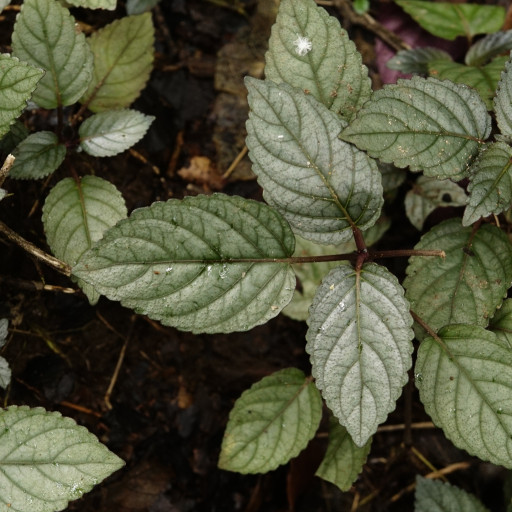
Plant Overview
Commonly known as the Purple Waffle Plant or Red Flame Ivy, this Indonesian native is a favorite for those who love high-contrast foliage. Its dramatic, puckered leaves and metallic sheen make it look like something plucked straight from a fantasy forest. It’s a low-growing treasure that acts as a stunning groundcover in tropical climates or a vibrant "spiller" in indoor containers.
🔍 How to Identify
- 🍃 Waffled Texture: The leaves are deeply "puckered" or crinkled, creating a texture that resembles a waffle—this isn't just for looks; it increases the leaf's surface area.
- 🎨 Metallic Coloration: The top of the leaf is a rich, metallic grayish-green, while the underside is a striking, deep burgundy or royal purple.
- 📐 Growth Habit: It typically stays low to the ground (6–9 inches tall) but spreads horizontally, making it an excellent choice for hanging baskets or terrariums.
- 🌸 Small Blooms: During the warmer months, it may produce tiny, tubular white flowers that peek out from the dark foliage, though they are often secondary to the leaves.
🏡 In Your Garden
- 🌫️ Humidity Lover: Because it hails from the jungles of Java, this plant craves moisture in the air. If the leaf edges start to turn brown and crispy, it’s likely a cry for a pebble tray or a nearby humidifier.
- 💧 The "Dying" Act: This plant is a bit of a drama queen. If it gets too dry, it will wilt completely flat, looking quite dead. However, it usually "revives" within an hour of being watered, as long as the roots haven't been dry for too long.
- ☀️ Light Nuance: While it loves bright light to keep its purple hue deep, direct afternoon sun can actually bleach the metallic colors, turning the leaves a dull, washed-out green.
⚠️ Safety & Toxicity
- 🐾 Pet Friendly: Good news for animal lovers! The Purple Waffle Plant is considered non-toxic to cats and dogs, making it a safe choice for low-shelf placement.
- 👶 Family Safe: It is generally safe for children as well, though the textured leaves can sometimes collect dust, which might irritate those with sensitive skin or allergies if handled frequently.
✨ Fun Fact
The Purple Waffle Plant was part of a famous NASA study on indoor air quality. It was found to be exceptionally good at removing volatile organic compounds (VOCs) like benzene and octane from the air, making it as functional as it is beautiful!

Detailed Care Instructions
To grow a Strobilanthes Alternata plant, also known as the Persian shield plant, follow these steps:
- Choose the right location: Strobilanthes Alternata prefers bright, indirect light. Place the plant near a window that receives morning or evening sun but avoid direct sunlight during the hottest part of the day.
- Prepare the soil: Use well-draining soil that retains moisture but doesn't become waterlogged. You can either purchase a potting mix suitable for houseplants or create your own blend by mixing equal parts of potting soil, peat moss, and perlite.
- Planting: Select a pot that is a few inches larger in diameter than the plant's current pot. Fill the pot with the prepared soil mix and gently remove the plant from its nursery container. Place the plant in the new pot, ensuring the top of the root ball is level with the top of the soil. Add more soil around the plant and press it down lightly to secure the plant.
- Watering: Keep the soil evenly moist but avoid overwatering, as it can cause root rot. Water the plant whenever the top inch of soil feels dry to the touch. During the winter months, reduce watering frequency as the plant goes into a dormant period.
- Humidity: Strobilanthes Alternata thrives in humid conditions. You can increase humidity by placing the plant on a tray of water with pebbles or by using a room humidifier. Alternatively, mist the leaves regularly.
- Fertilizer: Feed the plant with a balanced, water-soluble fertilizer every two weeks during the growing season (spring and summer). Follow the package instructions for the correct amount to use.
- Pruning: Pinch off the stem tips regularly to encourage bushier growth and prevent legginess. You can also prune the plant to maintain its shape or remove any damaged or dead parts.
- Temperature: Strobilanthes Alternata prefers temperatures between 60-80°F (15-27°C). Avoid exposing it to temperatures below 50°F (10°C).
- Propagation: You can propagate new Strobilanthes Alternata plants by taking stem cuttings. Dip the cut end in rooting hormone and plant it in moist soil. Keep the cutting in a warm and humid environment until roots develop.
With proper care, your Strobilanthes Alternata plant should grow well and add a touch of beauty to your indoor or outdoor space.

Place in a window with dappled sun or a spot in the middle of a room. Or directly in a window facing west or east.

To properly water this plant, it is important to consider its specific needs. It prefers consistently moist soil, but does not like to be waterlogged. Therefore, it is recommended to allow the top inch of soil to dry before watering again. When watering, use a watering can or hose to gently pour water onto the soil until it begins to drain out of the bottom of the pot. Be sure to not let water pool in the saucer beneath the pot. Additionally, it is important to avoid getting water on the leaves, as this can encourage disease.
To fertilize this plant, apply a balanced fertilizer every 4-6 weeks during the growing season. This will provide the necessary nutrients for healthy growth and blooming. Be sure to follow the instructions on the fertilizer package for application rates and methods. Additionally, ensure that the soil is well-draining and moist, but not waterlogged, to prevent root rot.
The ideal soil for Strobilanthes Alternata plant should be well-draining, moist, and rich in nutrients. It should have a pH range of 5.5 to 6.5. A soil mix that contains peat moss, perlite, and vermiculite can provide the necessary moisture-retention and drainage required by the plant. Adding organic matter like compost or aged manure can also improve the soil structure and provide nutrients for the plant. Avoid using soils that are heavy or clayey, as they can retain too much water and lead to root rot. Overall, a well-draining soil that retains moisture and is rich in nutrients is suitable for the healthy growth of Strobilanthes Alternata plant.
Strobilanthes Alternata can be propagated through stem cuttings. First, select a healthy stem from the parent plant that is about 10cm in length and has several leaves attached to it. Then, using a sharp, clean knife, cut just below a node (where a leaf grows from the stem). Remove any leaves from the bottom half of the stem and dip the cut end into rooting hormone powder. Place the stem cutting into a small pot filled with a well-draining soil mix and water thoroughly. Cover the pot with a plastic bag to increase humidity and place it in a bright, indirect light location. Keep the soil moist but not waterlogged and mist the plant occasionally. After a few weeks, the stem cutting should develop roots and start to grow new leaves. Gradually remove the plastic cover and transplant the new plant into a larger pot once it has outgrown its current container.
Common pests of the waffle plant include Mealybugs, spider mites, fungus gnats, aphids. Make a habit of checking your waffle plant frequently for pests so that any infestations can be caught and managed early.








