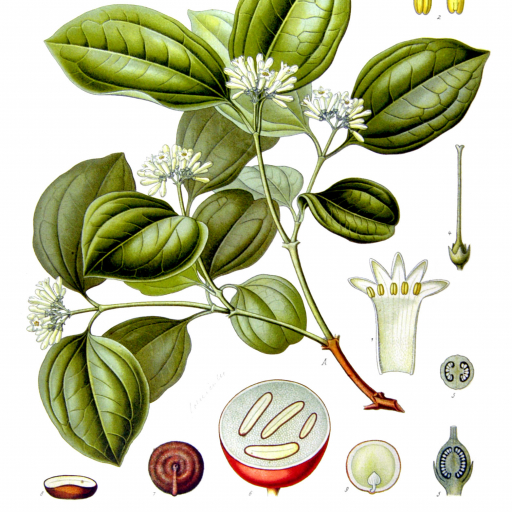
Plant Overview
Known as the "Strychnine Tree" or "Poison Nut," this medium-sized evergreen is the source of one of the world's most famous and feared poisons. Originating from the tropical forests of Southeast Asia and India, it has earned a dark reputation in both historical medicine and mystery novels. While its orange-colored fruit looks deceptively inviting, every part of this plant hides a potent chemical secret that demands respect and caution.
🔍 How to Identify
- 🍃 Glossy Foliage: The leaves are broadly oval, shiny, and grow in opposite pairs. They feature a distinct vein pattern where three to five veins radiate from the base of the leaf.
- 🌸 Funnel Flowers: It produces small, pale green or white flowers that grow in terminal clusters. These blossoms often emit a faint, somewhat unpleasant scent.
- 🟠 The Fruit: The most recognizable feature is the fruit, which looks like a small, smooth-skinned orange. Inside the bitter pulp sit several flat, gray, button-shaped seeds—the "nuts" where the poison is most concentrated.
🏡 In Your Garden
- 🌳 Natural Habitat: In the wild, this tree can reach heights of 40 to 50 feet. It thrives in well-drained, sandy soil and requires a tropical or sub-tropical climate to survive, as it is highly sensitive to frost.
- 🌞 Growth Habit: It is a slow-growing species that prefers full sun. While it isn't commonly grown as an ornamental due to its danger, it is a sturdy tree with a crooked trunk and yellowish-gray bark that becomes deeply cracked as it ages.
⚠️ Safety & Toxicity
- ☠️ Status: LETHAL. This is one of the most toxic plants in the world. The seeds, bark, and even the blossoms contain the alkaloids strychnine and brucine.
- 🚨 Extreme Danger: Ingestion causes violent muscle convulsions, respiratory failure, and death. There is no "safe" amount of this plant to handle or consume. It is exceptionally dangerous to children, pets, and livestock. Even the smoke from burning the wood can be hazardous.
✨ Fun Fact
- 📖 The Queen of Crime: Strychnine is a legendary plot device in classic detective fiction. It was the central poison used in Agatha Christie’s very first novel, The Mysterious Affair at Styles, making Strychnos nux-vomica a permanent icon in the world of mystery and thrillers.

Detailed Care Instructions
Growing a Strychnos Nux-vomica plant requires specific conditions and care. Here is a step-by-step guide to help you with the process:
- Obtain seeds: Purchase viable Strychnos Nux-vomica seeds from a trusted source or collect them from a mature plant. Keep in mind that the seeds are highly poisonous and should be handled with caution.
- Germination: Soak the seeds in warm water for 24 hours before planting to soften the hard outer shell. Use a sterile seed-starting mix or well-draining potting soil.
- Planting: Fill small pots or seed trays with the planting medium, leaving some space at the top for watering. Place one seed in each container and cover with a thin layer of soil. Moisten the soil but do not make it overly wet.
- Temperature and sunlight: Strychnos Nux-vomica is a tropical plant that thrives in warm conditions. Maintain a consistent temperature range of 70-80°F (21-27°C). Place the pots in a warm and bright location but avoid direct sunlight during the seedling stage.
- Watering: Keep the soil consistently moist but not waterlogged. Water the plants when the top inch of soil feels slightly dry. Never let the soil completely dry out, as it may hinder germination.
- Transplanting: Once the seedlings have developed their first few sets of true leaves, they can be transplanted into larger pots. Use a well-draining soil mix that retains moisture. Ensure the pots have drainage holes to prevent waterlogging.
- Care: Provide the plants with 6-8 hours of direct sunlight each day. Maintain a warm and humid environment by utilizing a humidifier or placing a tray of water near the plants to increase humidity levels. Water the plants when the top inch of soil dries out.
- Fertilization: Feed the plants with a balanced liquid fertilizer every two weeks during the growing season. Follow the manufacturer's instructions for proper dilution and application.
- Pruning: Prune the plants to promote branching and maintain a desired shape. Pinch off the tips of the stems to encourage bushier growth.
- Harvesting: It may take several years for the Strychnos Nux-vomica plant to mature and produce seeds. Once the outer shells of the seeds turn red, harvest them by carefully removing them from the fruit.
Remember to exercise caution while handling the Strychnos Nux-vomica plant and its seeds as they are toxic. Keep it out of reach of children and pets.
To water this plant, it is important to ensure that the soil is moist but not waterlogged. The frequency of watering will depend on the climate and the type of soil the plant is growing in. Generally, it is recommended to water it once or twice a week during the growing season and reduce watering in the winter months. It is important not to let the plant completely dry out between waterings. When watering, it is best to water around the base of the plant rather than directly onto the leaves, to prevent fungal diseases. Overwatering can lead to root rot, so it is important to ensure proper drainage and not to leave the plant sitting in standing water.
To fertilize this plant, it is recommended to use a balanced fertilizer with equal amounts of nitrogen, phosphorus, and potassium. Apply the fertilizer every two to three weeks during the growing season, which is typically from spring to fall. Be careful not to over-fertilize, as this can lead to nutrient burn and damage to the plant. It is also important to water the plant after fertilizing to help distribute the nutrients.
The ideal soil to use with the aforementioned plant is a well-draining mix that has a neutral to slightly alkaline pH level. It should consist of a blend of materials such as coarse sand, perlite or vermiculite, peat moss, and loamy soil. A good amount of organic matter is required to improve the soil's fertility and water-holding capacity. The soil should not be compacted or heavy, as this can lead to root rot and other diseases. The plant needs a good amount of sunlight and water on a regular basis but should be allowed to dry out a bit between watering to avoid waterlogging. It is also recommended to fertilize the plant with a balanced fertilizer every three to four weeks during the growing season.
Strychnos Nux-vomica can be propagated by seed. To do so, you will need to scarify the seeds by rubbing them vigorously with sandpaper or nicking them with a knife blade to promote germination. Once scarified, soak the seeds in water for 24 hours before planting them in a well-draining soil mix. Keep the soil moist but not waterlogged and place the container in a warm, bright location. Germination can take up to 6-8 weeks. When the seedlings have developed to around 10-15cm in height and possess a good root system, they can be transplanted into individual pots, ready for use in your garden or landscape. Alternatively, you can also propagate Strychnos Nux-vomica by stem cuttings. Take cuttings of around 10-15cm in length from healthy, mature plants with woody stems in the spring or summer. Strip away the lower leaves and dip the cuttings in a hormone rooting powder before planting them in a well-draining soil mix. Place the container in a warm, bright location, keeping the soil moist but not waterlogged. After a few weeks, the cuttings should start to root and can then be transplanted into individual pots ready for use in your garden or landscape.








