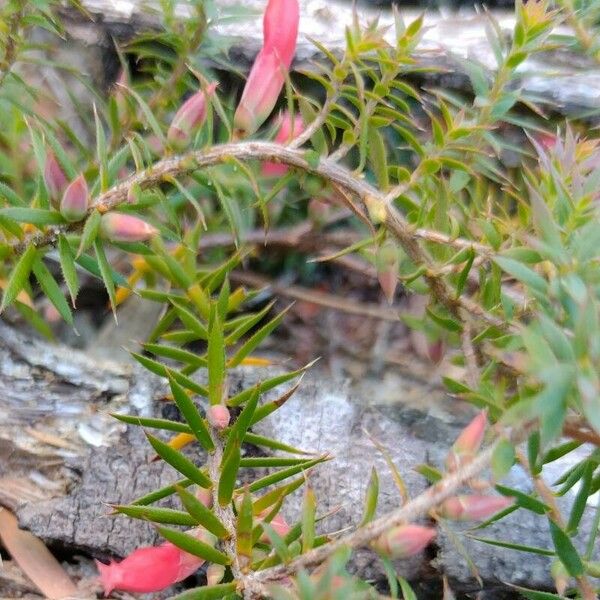
Plant Overview
Known as the Cranberry Heath, this resilient Australian native is a master of the ground-cover game. It paints rocky outcrops and sandy heathlands with vibrant splashes of scarlet, often blooming when the rest of the landscape looks a bit weary. Its species name, humifusa, literally translates to "spreading on the ground," perfectly describing its carpet-like growth habit that hugs the earth.
🔍 How to Identify
- 🌿 Sharp Foliage: The leaves are small, stiff, and lance-shaped, ending in a very fine, prickly point that makes the plant feel "scratchy" to the touch.
- 💄 Tubular Blooms: It produces striking, bright red tubular flowers. If you look closely, the inner lobes of the petals are covered in tiny, dense hairs, giving them a "bearded" appearance.
- 🍒 The Fruit: It bears small, succulent, globose fruits (drupes) that are typically greenish-white to reddish and hidden slightly beneath the foliage.
🏡 In Your Garden
- 🏜️ Tough as Nails: This plant thrives in well-drained, sandy, or stony soils where many other garden plants might wilt. It is a fantastic choice for rockeries or coastal gardens facing harsh winds.
- 💧 Root Sensitivity: Like many members of the Ericaceae family, the Cranberry Heath has a delicate root system. It hates being moved once planted, so pick a permanent spot with plenty of sun to light shade.
- 🐦 Wildlife Magnet: The nectar-rich red tubes are perfectly shaped for the beaks of small honeyeaters, making it a "living bird feeder" for your backyard.
⚠️ Safety & Toxicity
- ✅ Non-Toxic: The Cranberry Heath is generally considered safe. Historically, the small berries were used as a traditional "bush tucker" snack by Indigenous Australians and early settlers.
- 🌵 Physical Irritant: While not poisonous, the sharp-tipped leaves can be quite prickly. It is best to wear gloves when weeding around it and avoid planting it right next to narrow walkways where it might snag on skin or clothing.
✨ Fun Fact
The "beard" inside the flower petals isn't just for decoration; it acts as a barrier to keep out "nectar robbers" (insects that try to steal the sugar without pollinating the plant), ensuring only the right birds get the sweet reward!

Detailed Care Instructions








