Plant Overview
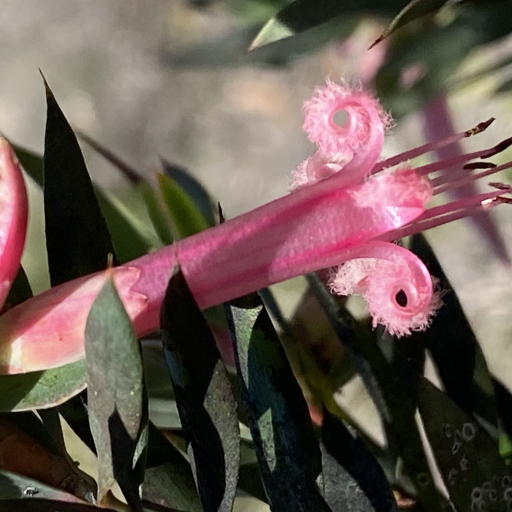
Often referred to as the Pink Five-corners, this enchanting Australian native is a standout star of the sandstone bushlands. With its elegant, tubular blossoms that resemble miniature Victorian lanterns, it adds a touch of architectural beauty to any wild-style garden. It is a hardy survivor that has adapted perfectly to the rugged, nutrient-poor soils of the East Coast.
🔍 How to Identify
- 🌸 The "Five-Corners": The flowers are long, waxy tubes (usually pink or red) with five distinct petal lobes at the tip that curl back tightly to reveal a fuzzy, hairy interior.
- 🍃 Prickly Foliage: The leaves are stiff, lance-shaped, and come to a sharp point. They are arranged in a crowded, spiral fashion along the woody stems.
- 🌿 Growth Habit: It typically grows as a small, upright shrub, reaching about 1 to 2 meters in height, with a slightly "scraggly" but charming wild appearance.
🏡 In Your Garden
- 🏜️ Drainage is King: In a garden setting, this plant is a "drainage snob." It thrives in sandy or rocky soils and will quickly succumb to root rot if left in heavy, wet clay. Planting it in a raised bed or a rockery is the best way to keep it happy.
- 🐦 Nectar Cafe: If you want to see more life in your yard, this is the plant for you. Its long, tubular flowers are perfectly designed for the curved beaks of Honeyeaters, who will visit frequently for a sugar fix.
- ✂️ Slow and Steady: It is a relatively slow grower and doesn't enjoy heavy pruning. A light tip-prune after flowering is enough to keep it from becoming too leggy.
⚠️ Safety & Toxicity
- ✅ Status: Non-toxic and safe.
- 🌵 Mechanical Hazards: While not poisonous, the leaves are quite stiff and sharp. It’s best planted away from narrow pathways where the foliage might scratch the legs of passersby or curious pets.
✨ Fun Fact
The name "Five-corners" refers to the five-angled shape of the fruit that follows the flowers. These little berries were a traditional "bush candy" for Indigenous Australians and early settlers, who prized them for their sweet, jelly-like pulp!

Detailed Care Instructions








