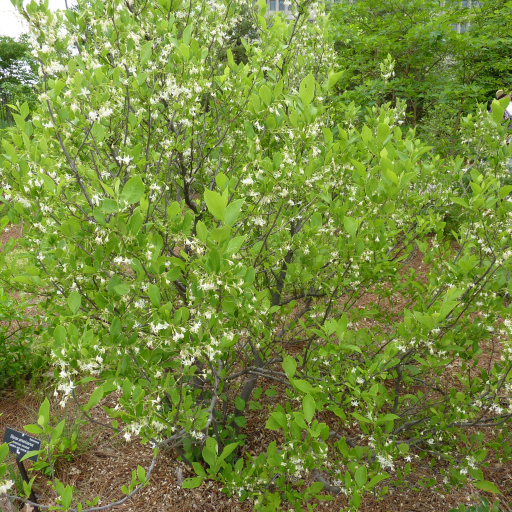
Plant Overview
Known as the American Snowbell, this elegant native shrub transforms damp woodlands into a display of hanging white jewels every spring. Often found whispering along the banks of Southern rivers or tucked into swampy thickets, it is a favorite for gardeners looking to add a touch of "woodland magic" and a sweet, citrusy fragrance to their landscape.
🔍 How to Identify
- 🔔 The Flowers: Its most striking feature is the clusters of nodding, bell-shaped white flowers. Each bloom has five delicate petals that recurve backward, exposing a bright cluster of golden stamens.
- 🍃 The Foliage: The leaves are relatively small, oval-shaped, and a vibrant medium green. They are arranged alternately along the stems and often turn a soft, understated yellow in the autumn.
- 🌳 Growth Habit: This is a multi-stemmed deciduous shrub that typically grows between 6 to 12 feet tall. It has an airy, open structure and smooth, dark gray bark that becomes slightly fissured as the plant matures.
🏡 In Your Garden
- 💧 Moisture Lover: Unlike many garden shrubs that fear "wet feet," the American Snowbell thrives in soggy, acidic soils. It is a perfect choice for rain gardens, low spots in the yard, or near a pond's edge where other plants might struggle.
- 🦋 Pollinator Magnet: The fragrant, nectar-rich bells are an irresistible siren song for bumblebees and butterflies. If you are building a native pollinator garden, this plant provides a vital early-season food source.
- 🌤️ Light Preferences: While it can handle full sun if the soil stays consistently wet, it prefers the dappled light of a woodland understory. High filtered shade helps keep its roots cool and its delicate leaves from scorching.
⚠️ Safety & Toxicity
- ✅ Status: Generally considered non-toxic.
- 🐾 Details: There are no documented reports of Styrax americanus being poisonous to dogs, cats, or horses. While it isn't meant for human consumption, it is a very safe choice for family-friendly backyards.
✨ Fun Fact
The genus name Styrax comes from the ancient Greek word for "resin." While the American Snowbell isn't the primary source, many of its close cousins are used to produce Benzoin resin, a fragrant balsamic material used for centuries in incense, perfumes, and medicine.

Detailed Care Instructions
To grow Styrax americanus, also known as American snowbell, you can follow these steps:
- Select a suitable planting site: Styrax americanus prefers well-drained soil and partial shade. Choose a location that receives morning sun and afternoon shade, or filtered sunlight throughout the day.
- Prepare the soil: The soil should be fertile and loamy. Amend the soil with organic matter such as compost to improve its nutrient content and drainage.
- Planting: Dig a hole that is slightly larger than the root ball of the Styrax americanus plant. Place the plant in the hole, making sure the top of the root ball is level with the soil surface. Backfill the hole with soil and gently compact it around the roots.
- Watering: Water the plant thoroughly after planting to settle the soil and eliminate any air pockets. Provide regular watering to keep the soil moist, especially during dry periods. However, ensure that the soil doesn't become waterlogged, as Styrax americanus prefers well-drained soil.
- Mulching: Apply a layer of organic mulch, such as shredded bark or wood chips, around the base of the plant. Mulching helps retain moisture, suppresses weed growth, and regulates soil temperature.
- Pruning: Prune Styrax americanus to remove dead, damaged, or overcrowded branches. It is best to prune in early spring before the new growth starts.
- Fertilization: Apply a balanced, slow-release fertilizer in spring to provide necessary nutrients for healthy growth. Follow the manufacturer's instructions for application rates.
- Protection: Protect the plant from extreme weather conditions, such as drying winds and heavy frosts. Mulching around the base can help provide insulation during colder months.
- Pest and disease control: Monitor the plant for any signs of pests or diseases, such as aphids or fungal infections. Treat as necessary using appropriate methods or consult a local nursery or gardening expert for guidance.
- Overall maintenance: Regularly check on the plant, water as needed, and ensure it receives enough sunlight and nutrients. With proper care, your Styrax americanus plant should thrive and grow.

Place in a window with dappled sun or a spot in the middle of a room. Or directly in a window facing west or east.

To properly water the Styrax Americanus plant, it is important to take into consideration factors such as the soil type, weather conditions, and the age of the plant. The best way to water this plant is to give it a deep soaking, allowing the water to penetrate down to the roots. This can be done by watering the plant slowly and evenly, making sure the water is not pooling on the surface or running off too quickly. It is recommended to water this plant once a week, or more frequently during hot or dry weather. To prevent over-watering, it is important to allow the soil to dry out slightly between waterings. The plant may also benefit from a layer of mulch around its base to help retain moisture and protect the roots. Overall, the key to properly watering the Styrax Americanus plant is to ensure that it receives adequate moisture without becoming waterlogged.
To fertilize this plant, use a balanced fertilizer with equal parts nitrogen, phosphorus, and potassium. Apply the fertilizer in the early spring before new growth appears and again in the late fall after the plant has shed its leaves. Be careful not to over-fertilize, as this can harm the plant. Follow the instructions on the fertilizer packaging for application rates and methods.
Styrax Americanus plant prefers a well-draining soil that is rich in organic matter. The soil pH should be slightly acidic, with a range between 5.5 to 6.5. A recommended soil mix could be a combination of peat moss, perlite, and compost. This type of soil mix will retain moisture while allowing for proper drainage and aeration. It is important to avoid using heavy, clay soils as they can retain too much moisture which can lead to root rot. Additionally, the added organic matter will provide essential nutrients for the plant's growth and overall health.
To propagate this plant, you will need to take stem cuttings in the spring or early summer. Choose healthy stems that are at least 4 inches long and have several sets of leaves. Using a sharp, clean pair of pruners, make a diagonal cut just below a leaf node. Remove the leaves from the bottom 2/3 of the cutting, leaving only a few leaves at the top.
Dip the cut end of each cutting into rooting hormone powder and then insert it into a pot filled with a mix of half peat moss and half sand. Firm the soil around the cutting and water the pot thoroughly. Cover the pot with a plastic bag or dome to create a humid environment and keep it in a warm, bright spot out of direct sunlight.
Check the cuttings regularly to make sure the soil stays moist and mist the leaves with water if they start to droop. After 4-6 weeks, gently tug on the cuttings to see if they have developed roots. If they have, transplant them into individual pots with a well-draining potting mix.
Keep the young plants in a bright, warm spot with indirect sunlight and continue to water them regularly. Once they have grown to a size where they have several sets of leaves, you can transplant them outside into their permanent location in the garden.








