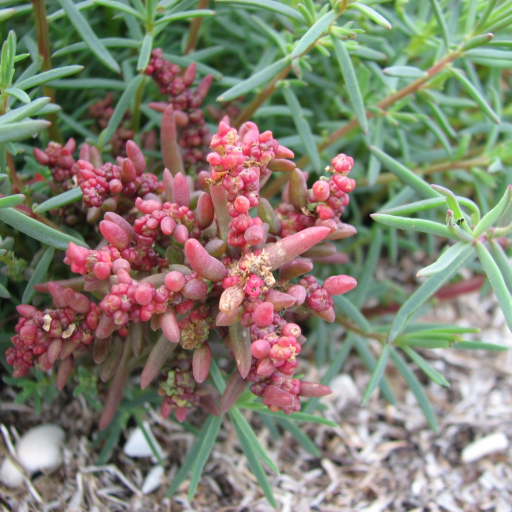
Plant Overview
Known as the Austral Seablite, this resilient succulent is a coastal chameleon. Often found hugging the shoreline or decorating salt marshes, it transforms from a vibrant lime green to a fiery red or deep purple as it matures or faces environmental stress. It is a true survivor, thriving in salty "dead zones" where most other plants would quickly wither.
🔍 How to Identify
- 🌿 Succulent Foliage: The leaves are cylindrical, fleshy, and needle-shaped, typically measuring between 1 and 4 centimeters long.
- 🎨 Color Shifting: Look for the dramatic gradient; young growth is usually bright green, while older stems and leaves turn a striking crimson or maroon.
- 🌸 Inconspicuous Blooms: It produces tiny, star-like green or yellowish flowers tucked into the leaf axils (where the leaf meets the stem), which are easily missed without a close look.
🏡 In Your Garden
- 🌊 Salt Specialist: This plant is an elite choice for "extreme" coastal gardens. It handles heavy salt spray and brackish water with ease, often acting as a natural soil stabilizer against erosion.
- 🏜️ Drainage is King: Because it naturally grows in sandy estuaries, it cannot tolerate "wet feet" or heavy, compacted clay. It requires gritty, fast-draining soil to mimic its wild seaside home.
- ✂️ Growth Habit: It typically grows as a low, spreading shrub. Periodic pruning can help keep it from becoming too "leggy" and encourages a flush of new, brightly colored growth.
⚠️ Safety & Toxicity
- 🥗 Edible Status: The leaves are edible and have a pleasant, salty, and crunchy texture. They are often used in gourmet salads or as a garnish, similar to Sea Samphire.
- 🐾 Pet Safety: While non-toxic, the plant naturally accumulates high levels of salt from its environment. It should not be fed to pets in large quantities, especially those with heart or kidney sensitivities.
- 🛑 Forager's Caution: If harvesting from the wild, ensure the area is free from coastal pollution or heavy metal runoff, as the plant can absorb toxins from the soil.
✨ Fun Fact
Indigenous Australians traditionally used the Austral Seablite as a reliable food source, eating the leaves raw or steaming them. The plant’s ability to store salt in its leaves was a natural way to season other foraged foods!

Detailed Care Instructions

Place in a bright room that is sun drenched almost all day. Or directly in a south-facing window.

When the top few inches of soil dry out, water your plants. If the top few inches of soil are still moist, do not water your plant. Wait a few days, then poke your finger into the soil to see if anything has changed. Overwatering poses a disease risk, such as the development of fungal diseases in the roots. These plants have adaptations in there leaves that allow them to survive in low water supply.








