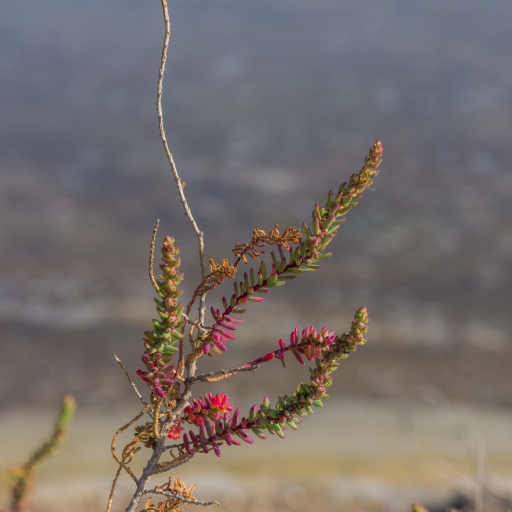
Plant Overview
Meet the Shrubby Seablite, a resilient coastal warrior that thrives where most plants wither: in the salt-sprayed edges of the sea. Often found hugging Mediterranean cliffs or lining European salt marshes, this evergreen shrub is a master of survival in extreme conditions. Historically, it was a vital player in the industrial world, harvested and burned to produce the alkali-rich ash needed for fine glass and soap making.
🔍 How to Identify
- 🍃 Succulent Foliage: The leaves are small, fleshy, and cylindrical, resembling tiny grey-green sausages or beads that cluster densely along the stems.
- 🪵 Woody Framework: Unlike many of its soft-stemmed relatives, Suaeda vera develops a permanent, woody base, allowing it to grow into a sturdy, mounding shrub up to 3 feet tall.
- 🎨 Subtle Blooms: During late summer, it produces inconspicuous, yellowish-green flowers that lack petals and sit tucked away in the leaf axils.
🏡 In Your Garden
- 🌊 Coastal Specialist: This plant is one of the best choices for "front-line" coastal gardening. It acts as a natural windbreak and is completely unfazed by heavy salt spray or occasional tidal flooding.
- 🏜️ Drainage is King: In a garden setting, it requires very gritty, well-draining soil. It has evolved to live in sandy or rocky environments; if kept in heavy, waterlogged clay, the roots will quickly succumb to rot.
- ☀️ Sun Seeker: To maintain its dense, silvery-green habit, it needs a position in full sun. In shade, the plant becomes "leggy" and loses its attractive, compact form.
⚠️ Safety & Toxicity
- ✅ Generally Safe: Shrubby Seablite is not considered toxic to humans, dogs, or cats.
- 🧂 Mineral Accumulator: While technically edible and used in the past as a salty potherb, it accumulates high levels of minerals and salts from the soil. Because of this, it is rarely eaten today and may have a laxative effect if consumed in large quantities.
✨ Fun Fact
Before the invention of modern chemical processes, Suaeda vera was a primary source of "Barilla ash." This ash was a key ingredient shipped across Europe to help the master glassmakers of Murano, Venice, create their world-famous crystal-clear glass!

Detailed Care Instructions
To grow Suaeda Vera plant, follow these steps:
- Choose the right location: Suaeda Vera thrives in coastal areas with salty soil or in well-drained soil with partial shade. Ensure the area gets at least 6-8 hours of direct sunlight.
- Prepare the soil: If you're growing in a salty soil area, you won't need to amend the soil. For other soil types, mix compost or organic matter into the soil to improve drainage and fertility.
- Propagation: Suaeda Vera can be grown from seeds or cuttings. If using seeds, soak them in water overnight before sowing. If using cuttings, take stem cuttings about 4-6 inches long from a mature plant and plant them directly in the soil.
- Sow or plant: Dig small holes or furrows in the soil, about 1/4 inch deep and place the seeds or cuttings in them. Space the plants about 12-24 inches apart to allow room for growth.
- Watering: Water the plants regularly, keeping the soil slightly moist but not waterlogged. Avoid overwatering as it may cause root rot.
- Mulching: Apply a layer of organic mulch around the plants to retain moisture, improve soil quality, and suppress weed growth.
- Fertilization: Suaeda Vera doesn't typically require much fertilizer. However, if the soil lacks nutrients, you can apply a slow-release balanced fertilizer once or twice a year.
- Pruning: Suaeda Vera doesn't require heavy pruning, but you can trim dead or damaged branches to maintain a neat appearance.
- Pests and diseases: Monitor the plants for any signs of pests like aphids or diseases like fungal infections. Treat them accordingly with appropriate insecticides or fungicides.
- Winter care: Suaeda Vera is a hardy plant, but if you live in a cold region, provide some protection during winter by covering the plants with a frost cloth or moving containers indoors.
Remember to check the specific requirements of the Suaeda Vera plant, as it may vary slightly depending on the region and climate.

Place in a bright room that is sun drenched almost all day. Or directly in a south-facing window.

The best way to water this plant is to allow the top inch of soil to dry before watering again. It is important to water deeply, ensuring the entire root ball is saturated. Avoid getting water on the leaves or stems of the plant as this can cause damage or encourage disease. Use room temperature water and avoid letting the plant sit in standing water, as this can also cause problems with root rot. Generally, this plant prefers moderate watering, but be sure to adjust based on environmental factors such as temperature, humidity, and sunlight.
To fertilize this plant, it is recommended to use a balanced fertilizer with equal parts nitrogen, phosphorus, and potassium. Apply the fertilizer sparingly, avoiding direct contact with the stems and foliage. Water immediately after fertilizing to help distribute the nutrients evenly to the roots. Fertilize once a month during the growing season, which starts in early spring and ends in late fall. Avoid fertilizing during the dormant season, as it can encourage new growth that could be damaged by frost.
It is recommended to use a well-draining soil mix with good water retention properties. The soil should be slightly alkaline with a pH range between 7.5 to 8.5. It should also be rich in nutrients and organic matter. It is important to avoid compacted soil as this can affect the growth of the plant. Additionally, the soil should be able to hold moisture well, but also allow for proper drainage. The plant is adaptable and can tolerate a range of soil types, but optimal growth is achieved with a well-drained, nutrient-rich soil.
To propagate this plant, take a stem cutting that is about 6 inches long with several leaves. Remove the bottom leaves and dip the cut end in rooting hormone. Plant the cutting in a well-draining soil mix and water thoroughly. Keep the soil moist but not waterlogged and provide bright indirect light. After a few weeks, new growth should appear indicating successful propagation.








