Plant Overview
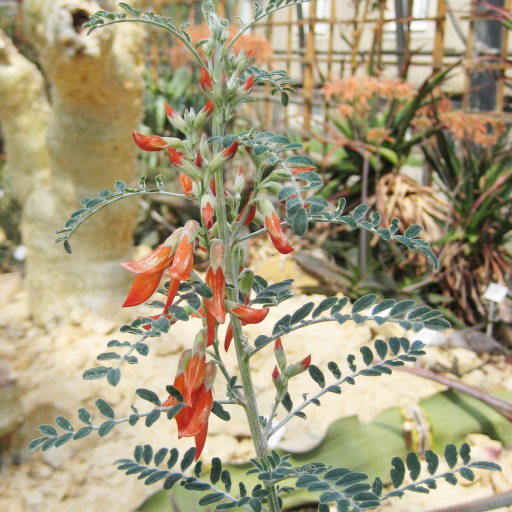
Known as the "Cancer Bush" or "Balloon Pea," Sutherlandia frutescens is a legendary medicinal shrub native to the dry regions of Southern Africa. With its striking scarlet flowers and shimmering silver-green foliage, it looks like a refined garden ornamental, but it carries a deep history of healing within its bitter leaves. It is a resilient survivor, often found thriving in harsh, sunny landscapes where other plants struggle.
🔍 How to Identify
- 🌿 Silvery Foliage: The plant features delicate, feathery leaves made up of small leaflets that have a soft, grey-green or silvery hue due to tiny hairs.
- 🌺 Scarlet Blooms: It produces bright orange-to-red pea-shaped flowers that hang in clusters, providing a bold contrast against the muted leaves.
- 🎈 Papery Pods: The most distinct feature is the fruit—large, inflated, papery seed pods that look like translucent balloons and often turn a pinkish-red as they mature.
🏡 In Your Garden
- ☀️ Sun & Drainage: This plant is a true sun-lover and requires excellent drainage. It is perfectly suited for rockeries or water-wise gardens, as it is exceptionally drought-tolerant once its roots are settled.
- 🌱 Pioneer Spirit: It is a fast-growing "pioneer" species. While it establishes itself quickly and improves soil health by fixing nitrogen, it is relatively short-lived, usually lasting only 2 to 4 years before needing replacement.
- 🐦 Bird Buffet: The curved, nectar-rich flowers are specifically designed to be pollinated by sunbirds, making it an excellent choice for a wildlife-friendly garden.
⚠️ Safety & Toxicity
- 💊 Medicinal Caution: While famous for its use in traditional tonics, the plant contains potent chemical compounds. It should never be used as a substitute for professional medical treatment.
- 🤰 Risk Groups: It is strictly advised that pregnant or breastfeeding women avoid contact or consumption. It can also interact poorly with certain pharmaceutical medications, particularly those for diabetes or blood pressure.
- 🐾 Pet Safety: While not typically listed as highly toxic to pets, its medicinal potency means it should be kept out of reach of curious chewers to avoid stomach upset.
✨ Fun Fact
The "Balloon Pea" gets its nickname from more than just the shape of its pods—the dried, inflated pods are so light that they break off and "sail" across the South African veld in the wind, effectively scattering seeds far away from the parent plant.

Detailed Care Instructions
To grow Sutherlandia frutescens, also known as the Cancer bush or Balloon pea, follow these steps:
- Climate and soil: Sutherlandia frutescens is native to South Africa and prefers a warm, dry climate with temperatures between 68-86°F (20-30°C). It requires well-draining sandy or loamy soil.
- Propagation: You can propagate Sutherlandia frutescens from seeds or cuttings. Seeds should be scarified (scratched) lightly to enhance germination. Soaking them in warm water for 24 hours before sowing can also aid germination.
- Planting: Sow the seeds in seed trays or pots filled with well-draining soil mix. Press the seeds lightly into the soil and cover them with a thin layer of soil. Keep the soil slightly moist but not excessively wet.
- Light requirements: Sutherlandia frutescens requires full sun to partial shade. Place the seed trays or pots in a location where they can receive at least 6-8 hours of direct sunlight per day.
- Watering: Once the seeds have germinated, water the seedlings, keeping the soil slightly moist but not waterlogged. As the plant grows, reduce the frequency of watering, allowing the soil to dry partially between waterings.
- Transplanting: When the seedlings have developed a few sets of true leaves, they can be transplanted into larger pots or directly into the garden. Ensure the spacing between plants is about 2-3 feet (60-90 cm) for optimal growth.
- Fertilization: Sutherlandia frutescens does not require much fertilizer. A balanced, organic fertilizer can be applied during the growing season, following the manufacturer's instructions.
- Pruning: Regular pruning can help maintain a bushy and compact shape. Prune any leggy or dead branches and promote new growth by pinching or cutting back the tips.
- Harvesting: The leaves and flowers of Sutherlandia frutescens can be harvested for medicinal use. Wait until the plant has matured for about 2-3 years before harvesting. Cut the stems just above the leaf nodes to encourage new growth.
Remember to consult with local gardening experts or botanical resources specific to your region for the best results and any additional care requirements.
To water this plant, first check the soil moisture level by inserting a finger about an inch deep into the soil. If it feels dry, it's time to water. Use room temperature water and pour it directly onto the soil around the base of the plant, taking care not to wet the leaves. Avoid overwatering, as this can lead to root rot. Monitor the plant frequently and adjust watering frequency based on the soil moisture levels. It's important to provide good drainage by ensuring the pot or planting site has drainage holes to prevent water from pooling around the roots.
- Begin fertilizing Sutherlandia Frutescens in early spring, once the plant has started to emerge from dormancy.
- Use a balanced, water-soluble fertilizer with an N-P-K ratio of 10-10-10.
- Dilute the fertilizer according to the instructions provided on the package.
- Apply the fertilizer to the soil around the base of the plant, taking care not to get any on the foliage.
- Water the plant thoroughly after fertilizing to help the nutrients leach into the soil.
- Repeat fertilization every 4-6 weeks throughout the growing season, until the plant goes dormant in the fall.
- Stop fertilizing during the winter months, when the plant is dormant.
When growing the plant known as Sutherlandia Frutescens, it is important to choose a suitable soil for its growth. The ideal soil for this plant should be well-draining and not too heavy in texture. A mixture of sand, peat moss, and a small amount of clay soil can be an appropriate soil mix. This soil mix should be rich in organic matter and nutrients, with a pH level of approximately 6.0 to 7.0.
The soil should also be kept moist, but not waterlogged, as too much moisture can lead to root rot and other fungal diseases. Mulching around the base of the plant can help to retain moisture and regulate soil temperature.
It is recommended to plant Sutherlandia Frutescens in a location that receives full sun or partial shade. Adequate sunlight is crucial for the plant to grow and produce flowers. If grown indoors, the plant should be placed in a bright, sunny spot.
Regular fertilization with a balanced, all-purpose fertilizer can help promote optimal growth and health of the plant. However, care should be taken not to over-fertilize, as this can lead to excessive foliage growth and reduced flowering.
Overall, providing the appropriate soil, sunlight, moisture, and nutrients can help ensure successful growth and blooming of Sutherlandia Frutescens.
To propagate this plant, take a healthy, mature specimen and collect its seeds. These seeds can then be planted in a well-draining potting soil, where they will germinate and eventually grow into young plants. Alternatively, this plant can also be propagated via stem cuttings. Cut a section of stem from a healthy plant, remove the leaves from the bottom half of the stem, and dip the cut end into rooting hormone. Then, plant the cutting in a container filled with soil and keep the soil moist in a warm, well-lit area until roots develop and the plant begins to grow.








