Plant Overview
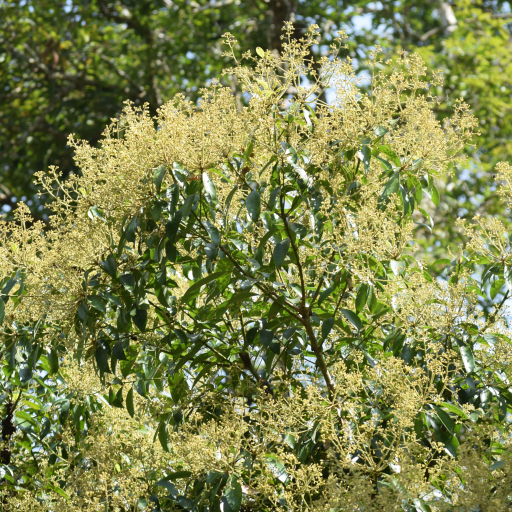
Known as the Civet Fruit Tree or Merpauh, Swintonia floribunda is a towering giant of the Southeast Asian rainforests. A member of the Anacardiaceae family—the same lineage as Mangoes and Cashews—this tree is famous for its massive stature and "floribunda" (profuse) blooming habit that can turn a green canopy into a sea of cream-colored blossoms. In its native habitat, it plays a vital role in the ecosystem, providing shelter for high-canopy birds and unique spinning seeds that captivate anyone lucky enough to see them fall.
🔍 How to Identify
- 🌳 The Trunk: Look for a massive, straight trunk that often features high, dramatic buttress roots at the base, allowing the tree to reach heights of over 40 meters.
- 🍃 The Foliage: The leaves are leathery, elliptical, and glossy green, typically arranged alternately along the branches with a distinct midrib.
- 🌸 The Flowers: It produces dense, terminal clusters (panicles) of tiny, fragrant white or pale-yellow flowers that appear in such abundance they can hide the leaves.
- 🚁 The Fruit: The most distinct feature is the fruit; it is a small nut attached to five long, leaf-like wings that cause the seed to spin like a helicopter as it falls to the forest floor.
🏡 In Your Garden
- 🏞️ Space Requirements: This is not a typical backyard tree! Due to its immense size and aggressive root system, it is best suited for botanical gardens, large estates, or reforestation projects in tropical climates.
- 💧 Environmental Needs: It thrives in deep, well-draining loamy soils and requires high humidity. While it is hardy once established, it prefers a "forest-like" setting where the soil remains cool and rich in organic mulch.
- 🌱 Growth Habit: It is a slow-to-moderate grower initially but becomes a dominant "emergent" tree, meaning it eventually grows taller than the surrounding forest canopy to soak up maximum sunlight.
⚠️ Safety & Toxicity
- 🧪 Mild Irritant: Like many of its cousins (including Mango and Poison Ivy), the sap of Swintonia floribunda contains urushiol-like compounds.
- 🖐️ Skin Contact: Sensitive individuals may experience skin irritation or a "cashew-rash" if they come into contact with the sap from a cut branch or bruised leaf.
- 🐾 Pet Safety: While not commonly kept as a houseplant, the fallen fruits and sap should be kept away from curious pets to avoid digestive upset or mouth irritation.
✨ Fun Fact
The seeds of Swintonia floribunda are nature's own gliders! Because the tree grows so high above the ground, it uses its five-winged fruits to catch the wind, allowing the "helicopters" to travel hundreds of feet away from the parent tree to find a sunny spot to grow.

Detailed Care Instructions








