Plant Overview
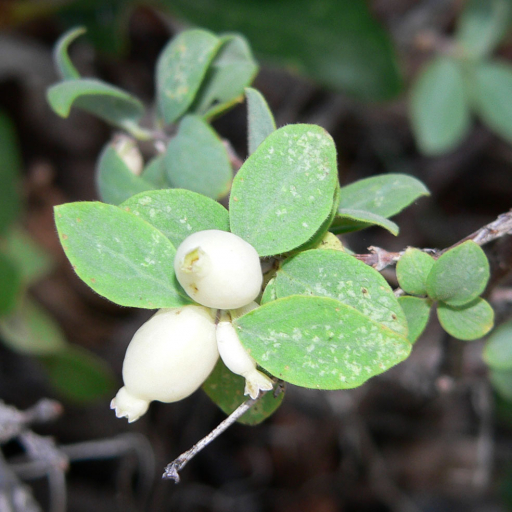
Often called the Mountain Snowberry, this resilient shrub is a silent guardian of western North American mountain slopes. Known for its pearly white berries that look like tiny snowballs clinging to branches, it provides a crucial bridge for wildlife surviving the transition from fall to winter. In some regional folklore, these are known as "Ghost Berries" due to the way the white fruit seems to glow against the dark bark in the moonlight.
🔍 How to Identify
- 🍃 Leaf Structure: Small, oval-to-round leaves that grow in perfectly opposite pairs along the stems, often featuring a subtle, matte bluish-green tint.
- 🔔 Summer Blooms: Tiny, elongated bell-shaped flowers that range from creamy white to soft pink, dangling delicately from the leaf axils in early summer.
- ⚪ The "Snowballs": Fleshy, waxy white berries that appear in late summer and often stay on the plant long after the leaves have dropped, creating a striking winter silhouette.
🏡 In Your Garden
- 🏔️ Mountain Resilience: Naturally adapted to high altitudes and rocky slopes, this plant is incredibly cold-hardy. It is a "workhorse" for erosion control on steep banks or for filling in those difficult, dry corners of a landscape.
- 🐦 Wildlife Sanctuary: While the berries aren't for us, they are a vital winter food source for grouse, quail, and various songbirds. Its dense, twiggy growth habit also provides excellent hidden nesting sites for smaller birds.
- ✂️ Spread & Control: It has a creeping root system (rhizomes) and likes to "sucker," meaning it will spread outward over time. This makes it great for naturalizing a large area but means you may need to prune the base to keep it contained in a small garden bed.
⚠️ Safety & Toxicity
- 🚫 Toxicity Status: Low to moderate toxicity.
- 🐾 Pet & Human Safety: The berries contain saponins. If ingested by children or pets, they can cause stomach upset, nausea, or dizziness. However, the berries have an incredibly bitter, "soapy" taste that usually prevents anyone from eating more than one.
✨ Fun Fact
The berries contain a high concentration of saponins, which act as a natural detergent. Historically, some Indigenous groups would crush the berries to create a mild, sudsy lather for washing or use the juice as a topical treatment for soothing skin rashes and burns.

Detailed Care Instructions
To grow Symphoricarpos Oreophilus, also known as mountain snowberry, follow these steps:
- Location: Choose a suitable location for planting. Mountain snowberry prefers full sun to partial shade and thrives in well-draining soil. It is native to high-elevation, mountainous regions and requires cool temperatures.
- Soil Preparation: Prepare the soil before planting. The soil should be loamy and rich in organic matter. If the soil is heavy clay, you can amend it by adding compost or well-rotted manure to improve drainage.
- Planting: Dig a hole that is twice the diameter of the root ball of the plant. Place the plant in the hole, ensuring that the top of the root ball is level with the ground. Backfill the hole with soil, gently firming it around the plant.
- Watering: After planting, thoroughly water the area around the plant to settle the soil. Regular watering is necessary during the establishment period, but once established, mountain snowberry is relatively drought-tolerant. Water the plant deeply and infrequently rather than frequent shallow watering.
- Mulching: Apply a layer of organic mulch around the base of the plant to help conserve moisture, suppress weeds, and regulate soil temperature. Leave a small gap around the stem to prevent rot.
- Pruning: Symphoricarpos Oreophilus generally requires minimal pruning. However, if you want to shape or rejuvenate the plant, prune it during late winter or early spring before new growth starts.
- Fertilizing: Mountain snowberry generally does not require heavy fertilization. However, you can apply a slow-release balanced fertilizer in early spring to promote healthy growth.
- Pest and Disease Control: Symphoricarpos Oreophilus is relatively resistant to pests and diseases. However, keep an eye out for common garden pests like aphids, spider mites, or powdery mildew. If necessary, treat the infestation using appropriate organic or chemical controls.
- Propagation: Mountain snowberry can be propagated by taking softwood cuttings in early summer or by sowing seeds in late winter. Cuttings should be around 4-6 inches long, dipped in rooting hormone, and planted in well-draining soil mix. Seeds should be stratified by placing them in a moist medium, sealed in a plastic bag, and refrigerated for 60-90 days before sowing.
By following these guidelines, you can successfully grow and maintain Symphoricarpos Oreophilus plants in your garden.

Place in a window with dappled sun or a spot in the middle of a room. Or directly in a window facing west or east.

Symphoricarpos oreophilus is a species of plant that requires proper watering to ensure its health and vitality. Here are some guidelines to effectively water this plant:
1. Evaluate the soil: Before watering, examine the soil moisture level. Insert your finger about an inch deep into the soil. If it feels dry, it is an indication that the plant needs watering.
2. Frequency of watering: Water the Symphoricarpos oreophilus plant deeply and thoroughly once a week during dry periods or when the weather is hot. This enables the water to reach the roots and encourages deep root growth.
3. Watering technique: Use a watering can or a garden hose with a gentle spray nozzle. Direct the water towards the base of the plant, aiming for the roots. Avoid watering the foliage excessively, as it can promote diseases.
4. Water quantity: Apply enough water to moisten the soil around the roots. The amount required may vary depending on factors such as soil type, climate, and plant size. The goal is to provide enough water to reach the root zone without causing waterlogging.
5. Mulching: Apply a layer of organic mulch around the base of the plant, but not directly against the stem. Mulch helps to retain moisture in the soil, prevents weed growth, and maintains a more consistent soil temperature.
6. Monitor rainfall: Keep an eye on the weather forecast to see if rainfall will provide sufficient water for your plant. Adjust your watering schedule accordingly to avoid overwatering.
7. Avoid overwatering: While regular watering is crucial, be cautious not to overwater the Symphoricarpos oreophilus plant. Overwatering can lead to root rot, nutrient deficiencies, and other problems. Always check the soil moisture before watering and ensure the top layer is slightly dry before watering again.
By following these watering guidelines, you can help ensure the optimal growth and overall health of your Symphoricarpos oreophilus plant.
To effectively fertilize Symphoricarpos Oreophilus, please follow these instructions:
- Choose a balanced, slow-release fertilizer specifically formulated for shrubs or native plants.
- Read the fertilizer package instructions carefully to determine the recommended amount for the size of your Symphoricarpos Oreophilus plant.
- Apply the fertilizer evenly around the base of the plant, avoiding direct contact with the stems or leaves.
- Gently scratch the soil's surface to ensure the fertilizer is incorporated into the top layer.
- Water the plant thoroughly after fertilizing to help nutrients penetrate the soil and reach the roots.
- Maintain regular watering and observe the plant's response to the fertilizer. Adjust the frequency and quantity of fertilization accordingly.
- Avoid excessive use of nitrogen-based fertilizers, as they can promote excessive growth and reduce the plant's ability to withstand harsh conditions.
- Consider incorporating organic matter, such as compost or well-aged manure, during planting or as a top dressing to provide additional nutrients naturally.
Remember, it's always a good idea to consult local gardening resources or a professional for specific recommendations regarding fertilization practices for Symphoricarpos Oreophilus or any plant species.
Symphoricarpos Oreophilus is a deciduous shrub that is native to various regions. When selecting soil for this plant, it is important to create an environment that mimics its natural habitat, promoting healthy growth and development. Here are some details about the ideal soil characteristics for Symphoricarpos Oreophilus:
- Texture: The soil should have a balanced texture, combining different particle sizes such as sand, silt, and clay. This is beneficial for adequate drainage while still retaining some water and nutrients. A loamy soil is generally recommended.
- pH level: Symphoricarpos Oreophilus prefers a slightly acidic to neutral pH level ranging from 5.5 to 7.0. It is essential to perform a soil test and adjust the pH level accordingly to meet these requirements.
- Organic matter: Adding organic matter to the soil, such as well-rotted compost or leaf mold, helps improve its structure, moisture retention, and nutrient content. Incorporating organic matter during planting or through regular mulching is recommended for the overall health of the plant.
- Moisture: Although Symphoricarpos Oreophilus can tolerate drought conditions to some extent, it generally prefers consistently moist soil. A well-draining soil that retains moisture without becoming waterlogged is desirable. Irrigation may be required during dry spells.
- Nutrients: This species benefits from a fertile soil that is rich in essential nutrients. Prior to planting, it is advisable to amend the soil with a slow-release, balanced fertilizer, ensuring a steady supply of nutrients over time. Regular fertilization during the growing season can also be beneficial.
Remember to consider the specific needs of Symphoricarpos Oreophilus and adjust the soil accordingly. Providing suitable soil conditions enhances the plant's vitality and assists in its long-term survival.
Symphoricarpos oreophilus, commonly known by various names, is a perennial flowering plant that can be propagated through different methods. Here are details on how to propagate Symphoricarpos oreophilus:
- Division: One way to propagate Symphoricarpos oreophilus is through division. This method is typically done in early spring or fall.
a. Start by digging up the mature plant carefully, ensuring that the root ball remains intact.
b. Gently separate the root ball into smaller sections, ensuring that each section has a good amount of roots and shoots.
c. Plant the divided sections immediately into prepared holes or containers filled with well-draining soil.
d. Water adequately, making sure the soil is kept moist but not waterlogged.
- Seeds: Another method to propagate Symphoricarpos oreophilus is through seeds. This method is best done after the plant flowers and produces seed pods.
a. Collect the ripe seed pods from the plant when they have turned brown or dry.
b. Break open the seed pods and remove the small seeds.
c. Prepare a seed tray or pots with a well-draining seed-starting mix.
d. Sow the seeds on top of the seed-starting mix, lightly pressing them into the surface.
e. Cover the seeds with a thin layer of soil or vermiculite and water gently.
f. Place the tray or pots in a warm, bright location, ideally with indirect sunlight.
g. Keep the soil consistently moist until germination occurs, which usually takes several weeks.
h. Once the seedlings have grown a few inches tall and developed a good root system, they can be transplanted into individual pots or suitable outdoor locations.
- Stem Cuttings: Symphoricarpos oreophilus can also be propagated through stem cuttings.
a. In late spring or early summer, select a healthy, non-flowering shoot from the parent plant.
b. Using a sharp, clean pair of pruning shears, cut a 4-6 inch long stem from the base of the shoot.
c. Remove the lower leaves, leaving only a few leaves at the top of the cutting.
d. Dip the cut end of the stem in a rooting hormone powder or gel to promote root development.
e. Insert the cutting in a pot or container filled with a well-draining rooting medium such as a mix of perlite and peat moss.
f. Place the pot in a warm, bright location with indirect sunlight.
g. Keep the soil consistently moist, but avoid overwatering.
h. After a few weeks, roots will start to form, and new growth will appear.
i. Once the roots have developed a good system, the new plant can be transplanted into a more permanent location.
Remember to provide proper care and maintenance to the propagated Symphoricarpos oreophilus plants, including regular watering, mulching, and protection from extreme temperatures or harsh weather conditions.








