Plant Overview
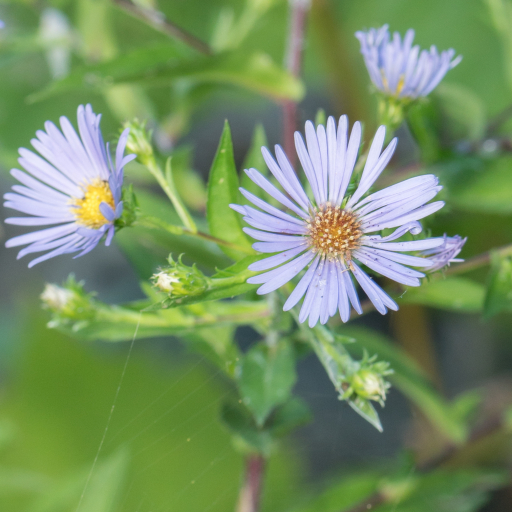
Often called the Purplestem Aster or Swamp Aster, this wildflower is a late-summer firework that lights up wetlands across North America. With its striking violet-blue petals and signature wine-red stems, it provides a crucial final feast for migrating butterflies and bees before the frost settles in. It is a resilient, "wild-looking" beauty that brings a sense of the untamed meadow into any landscape.
🔍 How to Identify
- 💜 The Bloom: Clusters of daisy-like flowers featuring 30–60 thin, violet-blue rays surrounding a bright yellow center that matures into a deep reddish-purple.
- 🍷 The Stem: True to its name, the central stalk is a distinctive dark purple or reddish-brown and is often covered in stiff, bristly hairs.
- 🍃 The Foliage: Long, lance-shaped leaves that "clasp" the stem at their base, appearing to wrap partially around the stalk rather than growing from a petiole.
🏡 In Your Garden
- 💧 Moisture Lover: This plant thrives in "wet feet" conditions. It is an ideal candidate for rain gardens, pond edges, or low-lying spots in your yard where water tends to collect after a storm.
- 🦒 Growth Habit: This is a tall, leggy grower that can reach up to 6 feet in height. In a formal garden, it may require staking or a "Chelsea Chop" (pruning the top third in early summer) to prevent it from flopping over when the heavy blooms arrive.
- 🦋 Pollinator Magnet: It is one of the most important late-season nectar sources. If you plant it, expect a flurry of activity from Monarch butterflies, bumblebees, and syrphid flies during September and October.
⚠️ Safety & Toxicity
- ✅ Status: Non-toxic and generally safe.
- 🐾 Details: The Purplestem Aster is considered safe for cats, dogs, and horses. While it is not a culinary herb, it poses no danger to children. The only minor concern is the bristly texture of the stem, which can be slightly abrasive to very sensitive skin during pruning.
✨ Fun Fact
Historically, several Indigenous North American tribes used the smoke from burning dried Symphyotrichum roots in traditional medicine ceremonies to revive unconscious patients or to treat "star-grass sickness" (fainting).

Detailed Care Instructions
To grow Symphyotrichum puniceum, also known as the purple-stemmed aster or New England aster, follow these steps:
- Choose the right location: Select a spot in your garden that receives at least 6 hours of direct sunlight daily. The soil should be well-draining, fertile, and preferably rich in organic matter.
- Prepare the soil: Clear the area of any weeds or debris. Loosen the soil using a garden fork or tiller, incorporating compost or aged manure to improve fertility and drainage.
- Planting: Dig a hole twice as wide and slightly deeper than the root ball of the aster plant. Place the plant in the hole, ensuring the top of the root ball is level with the ground. Backfill the hole with soil, gently firming it around the roots.
- Watering: Water the plant deeply after planting and provide regular watering throughout the growing season, especially during hot and dry periods. However, avoid overwatering, as this can lead to root rot.
- Mulching: Apply a layer of organic mulch around the base of the plant to conserve moisture, suppress weed growth, and regulate soil temperature. Maintain a mulch depth of around 2-3 inches, keeping it a few inches away from the stem.
- Fertilizing: Symphyotrichum puniceum typically does not require a lot of fertilization. However, if your soil lacks nutrients, you can apply a balanced, slow-release fertilizer in early spring before new growth emerges. Follow the instructions on the fertilizer packaging for proper application.
- Maintenance: Regularly remove any weeds around the aster plant to prevent competition for resources. Prune the plant in early spring to encourage bushier growth and remove any dead or damaged stems. However, avoid excessive pruning, as it may reduce flower production.
- Pest and disease control: Symphyotrichum puniceum is relatively resistant to pests and diseases. However, common pests like aphids and powdery mildew can sometimes affect this plant. Monitor regularly and take appropriate measures to control such issues, using organic pest control methods if possible.
- Division and propagation: Every few years, you can divide the plant to maintain its vigor and control its size. Dig up the clump in early spring or fall, carefully separating the root ball into smaller sections. Replant the divisions in suitable locations, ensuring they have enough space to grow.
By following these guidelines, you can successfully grow Symphyotrichum puniceum and enjoy its vibrant purple flowers in your garden.

Place in a bright room that is sun drenched almost all day. Or directly in a south-facing window.

Symphyotrichum puniceum is a plant species that belongs to the Asteraceae family. This plant requires regular watering in order to thrive and grow to its full potential. To water Symphyotrichum puniceum, you need to follow these steps:
1. Check the soil - Before watering, check the soil moisture level by inserting your finger into the soil up to the first joint. If the soil is dry, it's time to water.
2. Water deeply - When you water the plant, make sure to water it deeply, rather than just sprinkling water on top of the soil. This will help the roots grow deeper into the soil and become better established.
3. Don't overwater - Avoid overwatering the plant, as this can lead to root rot and other issues. Symphyotrichum puniceum prefers moist, well-drained soil, so make sure to let the soil dry out slightly between watering sessions.
4. Use a watering can or hose - Use a watering can or hose to water the plant. This helps to deliver water directly to the roots, rather than just wetting the surface of the soil.
5. Water in the morning - Watering in the morning allows the plant to absorb the water it needs throughout the day. If you water in the evening, the plant may not have enough time to absorb the water before the cooler temperatures of the evening set in.
Overall, Symphyotrichum puniceum requires regular, deep watering to thrive. By following these tips, you can ensure that your plant stays healthy and robust throughout the growing season.
To fertilize your plant, apply a balanced, slow-release fertilizer in early spring when new growth appears. Repeat the application once every two months during the growing season. Water the plant thoroughly after fertilizing to ensure proper absorption. Avoid over-fertilization, as it can lead to excessive foliage growth and reduced flowering.
Symphyotrichum Puniceum plant prefers a well-draining soil that is rich in organic matter. The soil should have a pH range of 6.0 to 7.5. A mixture of loam, sand, and small rocks can also help to promote aeration and drainage. Adding compost, leaf mold, or peat to the soil can help to improve its fertility and water-holding capacity. Avoid heavy clay or poorly-draining soils, as these can cause root rot and other issues. Overall, the ideal soil for Symphyotrichum Puniceum plant is one that provides good drainage, ample nutrients, and a slightly acidic to neutral pH range.
Symphyotrichum Puniceum plant can be propagated through various methods such as seed propagation, stem cutting propagation, and division propagation.
Seed propagation: Collect the seeds when they are ripe and dry. Sow the seeds in a well-draining soil mix and keep the soil moist. The seeds should germinate in 2-3 weeks and after 6-8 weeks they can be transplanted to their permanent location.
Stem cutting propagation: Take stem cuttings from the plant in early spring or summer. Cut a 6 inch stem and remove the lower leaves. Dip the end in rooting hormone and plant it in a well-draining soil mix. Keep the soil moist and cover the pot with plastic to maintain humidity. The cuttings should root in 3-4 weeks and can be transplanted to their permanent location after 8-10 weeks.
Division propagation: Dig up the plant in early spring or fall and divide the clumps into smaller sections ensuring each section has healthy roots. Plant the divisions in well-draining soil and keep the soil moist. The new plants should establish themselves within a few weeks.
It's important to note that all propagation methods have different success rates and it's important to follow the specific instructions for each method to ensure the best possible results.








