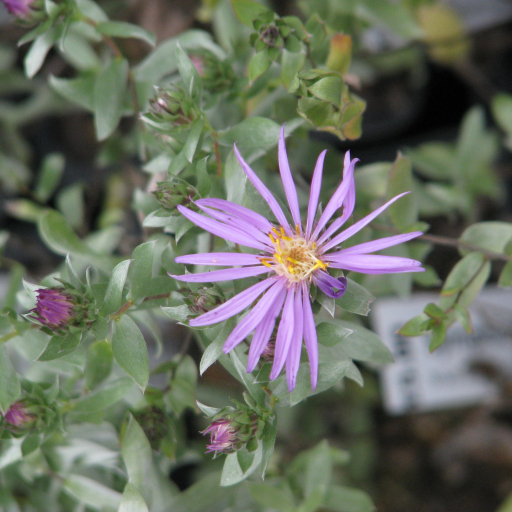
Plant Overview
The Western Silvery Aster, often called the "Silky Aster," is like a living piece of moonshine in the prairie. Known for its shimmering, metallic-looking foliage, this hardy perennial transforms dry, rocky landscapes into a sea of lavender and silver during the late summer and fall. It is a favorite for gardeners looking to add a touch of "wild elegance" to a drought-resistant landscape.
🔍 How to Identify
- 🌿 Silky Foliage: The most striking feature is its small, lance-shaped leaves covered in fine, pressed-down silver hairs that feel like soft silk to the touch.
- 💜 Starry Blooms: It produces traditional daisy-like flowers with vibrant purple to lavender petals and a center that shifts from bright yellow to a deep reddish-brown as it matures.
- 🎋 Wiry Stems: The plant grows on thin, brittle, often zig-zagging stems that can appear reddish-brown, helping it blend into dry grasses when it isn't in bloom.
🏡 In Your Garden
- ☀️ Sun Seeker: This aster thrives in "harsh" conditions. It craves full sun and gritty, well-draining soil; if planted in rich, wet garden soil, it may become "leggy" or develop root issues.
- 🦋 Pollinator Magnet: As a late-season bloomer, it acts as a vital "gas station" for migrating Monarch butterflies and native bees searching for nectar before the first frost.
- 🌱 Slow but Steady: Unlike some aggressive garden asters, the Silky Aster is well-behaved and won't take over your garden, though it hates being moved once its deep root system is established.
⚠️ Safety & Toxicity
- ✅ Non-Toxic: This plant is generally considered safe and non-toxic for humans, dogs, and cats.
- 🦌 Natural Repellent: While no plant is entirely "deer-proof," the fuzzy, silk-like texture of the leaves is often unpalatable to deer and rabbits, making it a great choice for unprotected garden borders.
✨ Fun Fact
The species name sericeum is derived from the Latin word for "silky." Those beautiful silver hairs aren't just for looks—they act as a biological sunscreen, reflecting intense UV rays and trapping a layer of cool air against the leaf to help the plant survive extreme summer droughts.

Detailed Care Instructions
To grow Symphyotrichum sericeum (Silky Aster) plants, follow these guidelines:
- Check your hardiness zone: Symphyotrichum sericeum is native to North America and thrives in USDA hardiness zones 3-8. Make sure your location falls within this range.
- Sunlight: Choose a bright location that receives at least 6 hours of direct sunlight per day. Some dappled shade is tolerated, especially in hotter climates.
- Soil: The plant prefers well-draining soil that is rich in organic matter. Amend heavy clay or sandy soil with compost to improve its texture and fertility.
- Planting: Start by preparing the planting area by removing any weeds or grass. Dig a hole slightly larger than the plant's root ball. Place the plant in the hole, ensuring that the top of the root ball is level with or slightly above the soil surface. Fill in the hole with soil and gently firm it around the roots. Water thoroughly.
- Watering: Keep the soil consistently moist but not waterlogged throughout the growing season. Reduce watering during periods of rain. Once established, Silky Aster is moderately drought-tolerant.
- Mulching: Apply a layer of organic mulch, such as wood chips or straw, around the base of the plant. This helps retain soil moisture, suppresses weed growth, and regulates soil temperature.
- Fertilization: Silky Aster generally does not require heavy fertilization. However, applying a balanced slow-release fertilizer in early spring can help promote healthy growth. Follow the manufacturer's instructions for dosage.
- Pruning: Although not necessary, you can trim back the plant after blooming to control its height or remove any dead or damaged foliage.
- Pests and diseases: Silky Aster is relatively resistant to pests and diseases. However, keep an eye out for common issues like powdery mildew. If problems arise, treat accordingly with appropriate organic controls.
- Propagation: You can propagate Symphyotrichum sericeum through division or by collecting seeds. Divide the plant in early spring, ensuring each division has sufficient root mass. To collect seeds, allow the flowers to fade and develop seed heads. Harvest the seeds and store them in a cool, dry place until ready for sowing.
By following these steps, you can successfully grow Symphyotrichum sericeum plants and enjoy their beautiful lavender or blue flowers.

Place in a bright room that is sun drenched almost all day. Or directly in a south-facing window.

To properly water this plant, you should first ensure that it is planted in well-draining soil. Over-watering can lead to root rot and other issues, so it is important to only water when the soil is dry to the touch. When you do water, make sure to thoroughly saturate the soil, allowing the water to reach deep into the roots. Avoid getting water on the leaves or flowers, as this can lead to fungal growth or other problems. It is recommended to water early in the morning or in the evening to avoid evaporation and to allow the water to fully soak in.
To fertilize the Symphyotrichum Sericeum plant, apply a balanced fertilizer in the spring before new growth appears. Use a slow-release fertilizer with a ratio of approximately 10-10-10. Apply the fertilizer evenly around the base of the plant and water thoroughly. Repeat the fertilization once or twice during the growing season, depending on the plant’s growth rate and health. Avoid fertilization in the fall, as it may encourage new growth that could be damaged over the winter.
The ideal soil for this plant would be a well-draining, loamy soil that is rich in organic matter. The pH level of the soil should be slightly acidic to neutral, with a range of 5.5 to 7.0. The plant prefers soil that is moist but not saturated, and it can tolerate occasional drought conditions. It is important to avoid soil that is compacted or poorly drained, as this can lead to root rot and other issues. Soil should be amended with compost or other organic materials to improve its texture and nutrient content. Additionally, this plant benefits from regular fertilization with a balanced fertilizer during the growing season.
To propagate this plant, it is important to select a healthy parent plant that has a strong root system. Cuttings can be taken from the parent plant in the early spring or late fall when the plant is not actively growing. To take a cutting, select a stem without flowers and make a clean cut with a sharp knife or pruners just below a node. Remove all the leaves from the lower part of the stem. The cutting should be about 4-6 inches long.
Dip the cut end in rooting hormone powder and plant the cutting in a pot or tray filled with a mixture of peat moss and perlite. Water the cutting and cover it with a plastic bag or a clear plastic container to maintain humidity. Place the container in a warm, brightly lit area, but out of direct sunlight.
Check the cutting regularly to ensure it remains moist but not waterlogged. After several weeks, when the roots have formed and the plant has started to grow, it can be transplanted into a larger pot or into the ground. It is important to keep the new plant in a sheltered spot until it has established itself.
Another way to propagate this plant is through division. This should be done in the fall or early spring when the parent plant is not actively growing. Carefully dig up the plant and separate the root clumps, making sure each new plant has several stems and a good root system. Replant the new plants into pots or directly into the ground.








