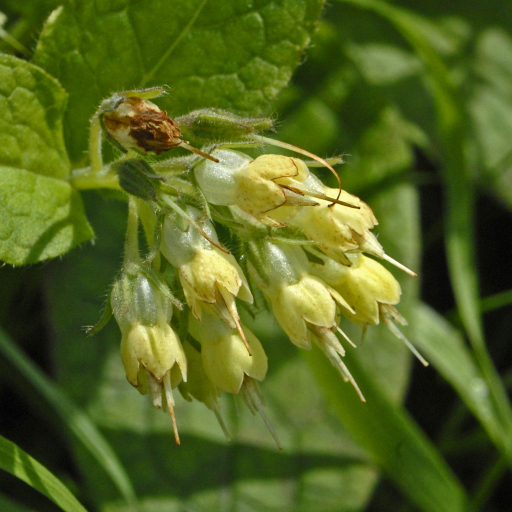
Plant Overview
Often called the Bulbous Comfrey, this Mediterranean native is the more refined, "polite" cousin of the common garden comfrey. While its relatives can sometimes take over a backyard with brute force, Symphytum bulbosum creates elegant, low-growing carpets of soft green. It is a woodland favorite, cherished for its ability to illuminate shady corners with its pale, dangling "bells" early in the spring.
🔍 How to Identify
- 🔔 The Flowers: Look for clusters of nodding, tubular flowers that are a soft creamy yellow or pale ivory. They lack the purple or blue tints often seen in other comfrey species.
- 🍃 The Foliage: The leaves are bright green, oval-shaped, and covered in fine, bristly hairs that give the plant a slightly fuzzy or "sandpapery" texture.
- 🥔 The Roots: Unlike the deep taproots of common comfrey, this species features distinctive tuberous, bulb-like rhizomes just beneath the soil surface, which allow it to store energy for early spring growth.
🏡 In Your Garden
- 🌳 The Shade Specialist: This plant thrives in the "difficult" spots of a garden—under the canopy of deciduous trees or along north-facing walls where other flowers might struggle for light.
- 💧 Drought Resilience: Because of its bulbous root system, it is surprisingly resilient. While it prefers moist, organic soil, it can go dormant and survive dry summers better than many other woodland perennials.
- 🐝 Early Pollinator Magnet: It is one of the first reliable nectar sources for long-tongued bees in early spring, making it an essential addition for those looking to support local biodiversity.
⚠️ Safety & Toxicity
- 🚫 Toxic if Ingested: Like all members of the Comfrey family, this plant contains pyrrolizidine alkaloids. These compounds can cause severe liver damage if eaten in large quantities.
- 🐾 Pet & Child Safety: Keep this plant away from curious pets or toddlers. While it isn't "touch-toxic," ingestion is dangerous.
- 🧤 Skin Irritation: The stiff hairs on the stems and leaves can cause "Comfrey Dermatitis"—a mild, itchy rash—on sensitive skin. It is best to wear gloves when thinning out a patch.
✨ Fun Fact
In the language of flowers, Comfrey is often associated with "healing" and "trust." Historically, gardeners referred to comfrey as "Knitbone" because they believed the plant's rapid growth and sticky sap could help mend fractures, though modern science warns against using it on open wounds!

Detailed Care Instructions
To grow Symphytum Bulbosum plants, follow these steps:
- Choose a suitable location: Symphytum Bulbosum prefers partial shade to full shade. Select a location with moist, well-draining soil. The soil should be rich in organic matter.
- Prepare the soil: Till the soil to a depth of about 8-10 inches. Remove any weeds or grass from the area. Add compost or well-rotted manure to improve the soil's fertility and drainage.
- Planting: Plant the Symphytum Bulbosum bulbs in early spring or fall. Dig a hole that is deep and wide enough to accommodate the bulb. Place the bulb in the hole with its pointed side facing upwards. Cover it with soil and gently press it down.
- Watering: Keep the soil consistently moist but not waterlogged. During dry periods, you may need to water regularly. Provide enough water to keep the soil evenly moist, but avoid overwatering.
- Mulching: Place a layer of organic mulch around the plants to help retain moisture, suppress weed growth, and regulate soil temperature.
- Fertilizing: Apply a balanced, slow-release fertilizer when planting, following the package instructions. Avoid overfertilizing, as excessive nutrients can harm the plant.
- Maintenance: Regularly remove weeds and dead or yellowing foliage. If the plants become overcrowded, divide the clumps every few years in fall or early spring.
- Pests and diseases: Symphytum Bulbosum is generally not prone to significant pest or disease issues. However, keep an eye out for common garden pests like slugs and snails. Take appropriate measures to control these pests if necessary.
- Winter care: In colder regions, provide a layer of mulch or straw around the base of the plants before winter to protect them from freezing temperatures.
By following these steps, you can successfully grow Symphytum Bulbosum plants in your garden. Remember to be patient, as these plants may take some time to establish and spread.

Place in a bright room that is sun drenched almost all day. Or directly in a south-facing window.

To provide adequate hydration to this plant, it is important to water it regularly and consistently. The soil should be kept evenly moist but not waterlogged, as excessive moisture can lead to root rot. It is recommended to use a well-draining soil mix that allows excess water to drain away from the roots. When watering, it is best to water deeply to encourage deep root growth, rather than frequent, shallow watering. The plant should be watered at the base of the stem, avoiding the leaves and flowers. Additionally, it is important to avoid watering during periods of heavy rainfall or high humidity to prevent over-saturation of the soil.
To fertilize this plant, apply a balanced fertilizer (10-10-10) at the beginning of the growing season and then every 4-6 weeks during the growing season. Use a slow-release fertilizer for best results. Be sure to water the plant well before and after fertilizing. Avoid over-fertilizing as this can lead to excessive growth and may cause the plant to become leggy.
Symphytum Bulbosum prefers a well-draining soil that is rich in nutrients. It thrives in soils that are slightly acidic to neutral with a pH range of 6.0 to 7.0. The ideal soil type for this plant is loamy soil that is composed of equal parts of sand, silt, and clay. The soil should also be slightly moist, as the plant does not tolerate dry conditions well. Organic matter such as compost or aged manure can be added to the soil to improve its nutrient content and water-holding capacity. It is important to avoid using heavy or compacted soil as it can hinder the root growth of the plant. Adequate drainage is also crucial to prevent waterlogging, which can lead to root rot.
To propagate this plant, you can take stem cuttings in the spring or fall. Choose healthy stems about 4 to 6 inches long and remove the leaves from the bottom third of the stem. Cut the stem at a 45-degree angle and dip it in rooting hormone powder. Then, plant the stem in a well-draining potting mix and keep it moist. Put it in a bright location out of direct sun and protect it from extreme temperatures. In a few weeks, roots should form, and once the plant is established, you can transplant it to a larger pot or into your garden.








