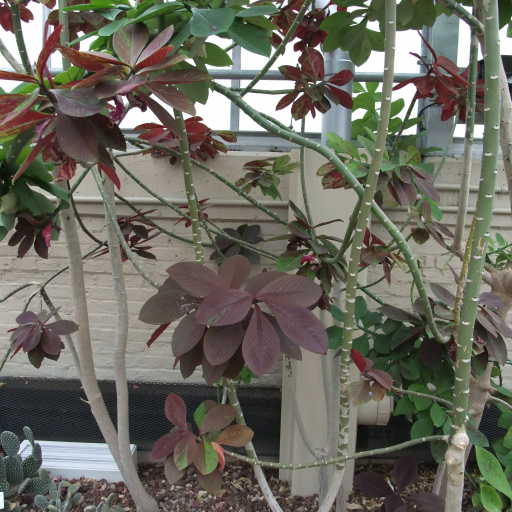
Plant Overview
Known as the "African Milk Bush," this succulent powerhouse is a staple in many tropical gardens and indoor collections. Native to East-Central Africa, it carries a sense of ancient resilience and can grow from a small windowsill plant into a towering shrub if given the space. While it is often nicknamed the "Friendship Plant" because it is so easy to share through cuttings, it demands a certain level of respect due to its potent, milky defense system.
🔍 How to Identify
- 🍃 The Leaves: Lush, fleshy, and teardrop-shaped. While naturally a vibrant emerald green, many popular varieties (like 'Rubra') feature stunning splashes of deep burgundy or mottled purple when exposed to bright light.
- 🪵 The Stems: Thick, semi-succulent branches that store water for dry spells. They are smooth and pale green when young, eventually developing a bark-like texture as the plant matures into a woody tree.
- 💧 The Milky Latex: Its most distinctive (and dangerous) trait. Any break in the leaf or stem will immediately leak a thick, sticky, white sap that looks remarkably like cow's milk.
🏡 In Your Garden
- ☀️ Light & Color: This plant is a sun-seeker. In low light, it stays solid green and grows "leggy." To see its deep reds and purples, place it in the brightest spot possible. Indoors, a south-facing window is its best friend.
- 🏜️ Drought Defense: Because it stores water in its stems and leaves, it prefers a "soak and dry" routine. It hates sitting in soggy soil, which can quickly lead to root rot. Think of it more like a cactus than a tropical leafy plant—when in doubt, don't water.
⚠️ Safety & Toxicity
- 🚫 Severe Irritant: The milky sap is highly caustic. Contact with skin can cause redness, blistering, and intense itching (dermatitis). If the sap gets into the eyes, it can cause temporary blindness and severe pain.
- 🐾 Danger to Pets: This plant is considered toxic to cats, dogs, and horses. Ingestion can lead to swelling of the mouth, vomiting, and respiratory distress. Always wear gloves when pruning and keep it on high shelves away from curious nibblers.
✨ Fun Fact
Despite its leafy, soft appearance, the African Milk Bush is a member of the Euphorbia family. This means it is a closer relative to the spiny, desert-dwelling Candelabra cactus and the festive Poinsettia than it is to common garden shrubs!

Detailed Care Instructions

Place in a bright room that is sun drenched almost all day. Or directly in a south-facing window.

Synadenium Grantii plants should be watered carefully. It is important to avoid overwatering as this can lead to root rot. It is best to allow the soil to dry out slightly before watering again. When watering, ensure that the water is distributed evenly throughout the soil and not just around the base of the plant. It is also advisable to water from the bottom up, by placing the plant in a tray or saucer of water and allowing it to absorb the water through the drainage holes in the pot. This helps to prevent waterlogging and ensures that the plant receives an adequate amount of moisture. Each plant has its particular water requirements, which can vary depending on factors such as the size of the pot, humidity levels, and the season. Regularly check the soil to determine if it needs watering and adjust accordingly.
These plant needs regular fertilizing during growing seasons. Fertilizing your plants in dormant state during the winter, might result in scorching or browning of the leaf tips. If mature plants display signs of nutrient insufficiency, fertilizer administration is necessary to restore the plant to its previous state.
You may use All Purpose Plant Food or Green Plant Food for your Synadenium Grantii
Synadenium Grantii plant requires well-draining soil that is rich in nutrients and organic matter. The soil should not be compacted, as this can lead to poor water drainage and root rot.
A good soil mix for this plant can consist of equal parts of peat moss, perlite, and sand. This will provide the plant with good drainage, aeration, and nutrient retention.
It is also important to ensure that the soil pH is within the range of 5.5 - 7.0, as this will help the plant to absorb the necessary nutrients. A soil pH tester can be used to measure the pH level of the soil.
Additionally, Synadenium Grantii plants prefer to be planted in pots with drainage holes to prevent water from accumulating at the bottom of the container. It is also important to avoid over-watering the plant, as this can lead to root rot.







