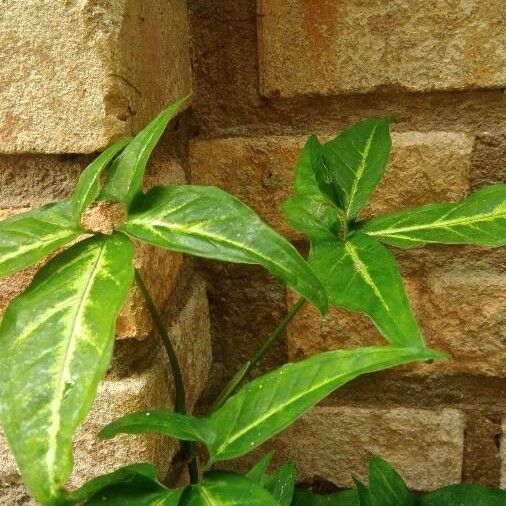
Plant Overview
Often called the "Five Fingers" plant due to its dramatic transformation as it matures, Syngonium angustatum is a versatile tropical climber native to the rainforests of Central America. This arrowhead-shaped beauty is a favorite for indoor gardeners who enjoy watching a plant "grow up," as its foliage changes shape completely as it ages. Whether trailing from a shelf or climbing a moss pole, it adds a lush, prehistoric feel to any room.
🔍 How to Identify
- 🍃 Leaf Shape Transformation: In its juvenile stage, leaves are simple arrowheads; however, as the plant matures, the leaves divide into three to nine distinct leaflets, resembling a hand.
- 🖌️ Silvery Venation: The deep green leaves are typically accented by pale green or silvery-white veins that create a striking contrast against the foliage.
- 🧗 Climbing Habit: Look for thick, vining stems equipped with small aerial roots that allow the plant to "glue" itself to trees or supports.
🏡 In Your Garden
- 🪵 The Support Strategy: While often sold in hanging baskets, this plant is a natural climber. Providing a moss pole or trellis mimics its natural environment and encourages the leaves to reach their giant, multi-lobed mature form.
- ☁️ Humidity Needs: Because it originates from tropical jungles, it struggles in dry air; placing it near a humidifier or in a bright bathroom prevents the leaf tips from turning brown and crispy.
⚠️ Safety & Toxicity
- 🚫 Toxic Level: Moderate to High. All parts of the plant contain insoluble calcium oxalate crystals.
- 🐾 Pets & Kids: If chewed or swallowed, it causes immediate mouth pain, swelling, and drooling. Keep this plant on high shelves or in hanging pots away from curious cats, dogs, and toddlers.
✨ Fun Fact
The dramatic change in leaf shape as Syngonium angustatum ages is a biological phenomenon called "heteroblasty." Scientists believe the plant changes its leaf shape to better catch dappled sunlight and shed heavy rainwater as it climbs higher into the forest canopy!

Detailed Care Instructions
| Soil Ph | Neutral To Acidic |
| Humidity | Normal |
| Lighting | Part Sun |
| Toxicity | Non-Toxic |
| Soil Type | Moist But Well-Drained |
| Bloom Time | Summer (Rarely Flowers) |
| Difficulty | Easy |
| Plant Type | Vine |
| Mature Size | 10-14" |
| Native Area | South America, Mexico |
| Temperature | 18°C - 27°C |
| Sun Exposure | Partial Shade |
| Hardiness Zones | 10-12 |
To grow Syngonium angustatum plant, also known as the arrowhead plant or nephthytis, follow these steps:
- Choosing the right location: Syngonium angustatum prefers bright, indirect light. Avoid direct sunlight, as it can scorch the leaves. Find a spot near a north or east-facing window where the plant can receive bright, filtered light.
- Providing the ideal temperature: This plant thrives in temperatures between 60-75°F (15-24°C). Avoid placing it near cold drafts or heaters, as extreme temperatures can damage the plant.
- Watering properly: Syngonium angustatum prefers slightly moist soil. Water the plant thoroughly when the top inch of soil feels dry to the touch. Discard the excess water that collects in the saucer after watering to prevent root rot. During winter or lower light conditions, reduce the frequency of watering.
- Using well-draining soil: Use a well-draining potting mix for your Syngonium angustatum plant. A mixture of peat moss, perlite, and a small amount of sand works well.
- Fertilizing regularly: Apply a balanced houseplant fertilizer every 2-4 weeks during the growing season (spring and summer). Follow the instructions on the fertilizer packaging and dilute it to half of the recommended strength. Reduce or stop fertilizing during the winter months.
- Pruning and training: Syngonium angustatum can be trained to grow in a bushier form or as a climbing vine. If you prefer a compact appearance, pinch off the growing tips to encourage branching. To train it to climb, provide a trellis or moss pole for support and gently guide the vines.
- Humidity requirements: Syngonium angustatum appreciates higher humidity levels. Place a humidifier near the plant or use other methods like placing a tray of pebbles filled with water near it. Grouping plants together can also increase humidity around them.
- Propagation: You can propagate Syngonium angustatum through stem cuttings. Take a healthy cutting with at least two leaf nodes, remove any lower leaves, and plant it in a well-draining potting mix. Keep the cutting in a warm and humid environment until it develops roots.
- Repotting: Syngonium angustatum doesn't require frequent repotting. When it becomes root-bound or outgrows its current container, move it to the next size pot in the spring. Ensure the new container has drainage holes and use fresh potting soil.
With proper care and attention to these guidelines, you can successfully grow a healthy Syngonium angustatum plant.

Place in a window with dappled sun or a spot in the middle of a room. Or directly in a window facing west or east.

Syngonium Angustatum plant prefers a well-draining soil that should be kept consistently moist but not waterlogged. When watering, it is important to avoid directly spraying water onto the leaves as it may lead to leaf spotting and rot. Instead, the soil should be gently watered at the base of the plant until water begins to drain out of the bottom. It is recommended to water the plant when the top inch of soil feels dry to the touch. The amount of water needed will vary based on factors such as humidity, temperature, and light levels. During the winter months, the plant may require less frequent watering. It is important to avoid allowing the soil to completely dry out, as it may lead to stress and wilting of the plant.
To fertilize this plant, use a liquid balanced fertilizer during the growing season, which is typically from spring to early fall. Dilute the fertilizer to half strength and apply it once every two weeks. During the fall and winter months, reduce fertilization to once a month or stop altogether. Be sure to water the plant before and after fertilizing to prevent root burn.
Syngonium Angustatum prefers well-draining soil that is rich in organic matter. The soil pH should be slightly acidic to neutral (between 5.5 and 7.5). A soil mix that is suitable for tropical plants would work well for this species. It should be a well-aerated mixture of peat moss, perlite or vermiculite, and sand or bark. The soil should be kept moist but not waterlogged, as this can lead to root rot. Adding some slow-release fertilizers or organic compost can also help enhance the soil quality and provide nutrients for the plant to thrive.
Syngonium Angustatum plant can be propagated through stem cuttings. Before taking the cutting, it is best to make sure that the mother plant is healthy and disease-free. The stem cutting should be around 4-6 inches long and should have at least one or two leaves attached to it.
Once the stem cutting has been taken, remove the bottom leaves and dip the end into rooting hormone powder. This powder will help to promote root growth. Then, plant the stem into a pot filled with well-draining soil.
It is important to keep the soil moist but not overwatered during the rooting process. Place the pot in bright, indirect sunlight and cover with a plastic bag to create a greenhouse effect that will trap moisture and heat, aiding in the rooting process.
After a few weeks, the stem cutting should have rooted and new growth should appear. Once new growth has emerged, remove the plastic bag and move the plant to a brighter location with indirect sunlight.
As the plant grows and becomes more established, it can be transplanted into a larger pot with regular potting soil mix.
Common pests of the fivefingers include Mealybugs, spider mites, thrips. Make a habit of checking your fivefingers frequently for pests so that any infestations can be caught and managed early.








