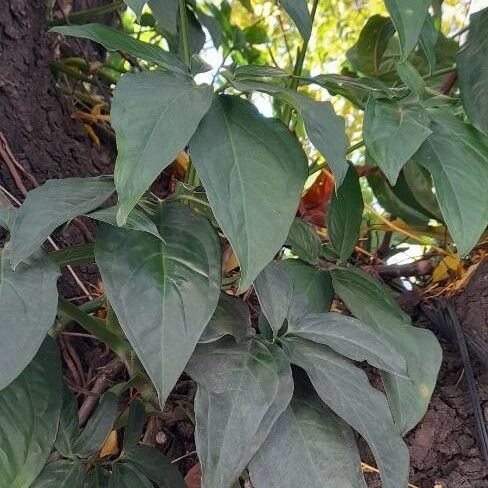
Plant Overview
Often mistaken for a Philodendron because of its sophisticated, finger-like leaves, Syngonium auritum is a tropical chameleon. Commonly known as the "Five-Fingered Philodendron" or "Star Plant," it begins its life as a simple green climber but undergoes a dramatic transformation as it matures. It is a rewarding choice for plant parents who enjoy watching a specimen literally change its identity as it grows.
🔍 How to Identify
- 🍃 Lobed Foliage: Juvenile leaves start as simple, elongated hearts. As the plant matures, the leaves split into three and eventually five distinct lobes, with the central lobe being the largest.
- 🧗 Climbing Habit: Unlike some bushier aroids, this species is a vigorous climber. It produces thick, fleshy vines and strong aerial roots designed to grip onto tree trunks in the wild.
- 🧪 Waxy Texture: The leaves have a deep, emerald-green hue and a slightly leathery, waxy texture that feels sturdier than the common Arrowhead Vine (Syngonium podophyllum).
🏡 In Your Garden
- 🪵 Support for Success: To see the iconic "five-fingered" leaves, you must provide a moss pole or totem. Without a vertical surface to climb, the plant may remain in its juvenile state indefinitely, producing smaller, heart-shaped leaves.
- 🌬️ Airy Roots: This plant is an epiphyte at heart. It hates heavy, compacted soil. It thrives best in a "chunky" mix—think orchid bark, perlite, and charcoal—which allows oxygen to reach the roots and prevents the dreaded root rot.
⚠️ Safety & Toxicity
- 🚫 Toxic Status: Highly toxic to cats, dogs, and humans.
- 🐾 The Irritant: The plant contains calcium oxalate crystals. If any part of the leaf or stem is chewed, these crystals act like tiny needles, causing immediate oral pain, swelling of the throat, and digestive distress. Always wear gloves when pruning if you have sensitive skin, as the sap can cause mild irritation.
✨ Fun Fact
Syngonium auritum is a master of "heterophylly," the botanical ability to produce different leaf shapes on the same plant. If you take a cutting from a mature, five-lobed branch and grow it in a pot, the new growth will often "revert" to the baby arrowhead shape, starting the entire lifecycle over again!

Detailed Care Instructions
| Lighting | Full Sun |
| Toxicity | Non-Toxic |
| Hardiness Zones | 10A - 11 |
To grow Syngonium Auritum, also known as Arrowhead Vine, you can follow these steps:
- Choose a suitable location: Syngonium Auritum prefers bright indirect light, so place it near a north or east-facing window where it can receive bright, filtered sunlight. Avoid exposing it to direct sunlight, as it can scorch the leaves.
- Provide the right temperature and humidity: Syngonium Auritum thrives in temperatures between 60-85°F (15-30°C) and high humidity. Place it in a warm area away from drafts and cold air. You can increase humidity by placing a humidifier nearby, misting the leaves daily, or placing the pot on a tray filled with water and pebbles.
- Use well-draining soil: Use a well-draining potting mix that retains moisture but doesn't become soggy. Adding perlite or sand can improve drainage. The soil should be slightly acidic with a pH between 5.5-6.5.
- Watering: Keep the soil consistently moist but not waterlogged. Water when the top inch of soil feels dry. Avoid allowing the plant to sit in standing water as it can lead to root rot.
- Fertilize regularly: Syngonium Auritum benefits from monthly fertilization during the growing season (spring through summer). Use a balanced liquid fertilizer diluted to half the recommended strength.
- Pruning and shaping: Syngonium Auritum can be pruned to encourage bushier growth and to control its size. Pinch or trim off the growing tips to encourage branching. Additionally, you can use stakes or trellises to guide it and create a desired shape.
- Propagation: Syngonium Auritum can be propagated through stem cuttings. Take a 4-6 inch cutting with a node and place it in water or a well-draining soil mix. Keep the cutting warm and maintain high humidity until it roots, which usually takes a few weeks.
- Pest control: Monitor the plant regularly for pests such as spider mites, aphids, or scale insects. If you notice any pests, treat them with insecticidal soap or neem oil following the product instructions.
Remember, Syngonium Auritum is toxic to pets and humans if ingested, so keep it out of reach of children and pets.

Place in a window with dappled sun or a spot in the middle of a room. Or directly in a window facing west or east.

To water this plant, ensure that the soil is completely dry before watering. You can test this by sticking your finger into the soil up to the first knuckle - if it is dry, it's time to water. Water deeply until water runs through the drainage holes in the bottom of the pot. Avoid getting water on the leaves as it can cause damage. It is important not to overwater as this can lead to root rot and other plant diseases. Watering every 1-2 weeks is usually sufficient, but can depend on factors such as the temperature and humidity in your environment.
To fertilize the Syngonium Auritum plant, use a balanced organic fertilizer during the growing season from spring to summer. Dilute the fertilizer to half the recommended strength and apply it about once a month. Do not fertilize the plant during the dormant season in autumn and winter. Water the plant thoroughly before and after fertilizing to prevent burning the roots. Additionally, remove any dead or yellowing leaves to improve overall plant health.
The ideal soil for Syngonium Auritum should be well-draining and rich in nutrients. It is recommended to use a mix of soil, peat moss, and perlite to ensure good drainage and aeration. The soil pH should be slightly acidic to neutral, around 6.0-7.0. It is also important to avoid overwatering and allow the soil to dry out slightly between waterings to prevent root rot. Adding organic matter, such as compost or aged manure, can also help improve soil fertility and overall plant health.
- Choose a healthy mother plant: Select a mature and healthy Syngonium Auritum plant as the mother plant from which the cuttings will be taken. The mother plant should be disease-free and have healthy foliage.
- Prepare the tools: Get a pair of clean and sharp scissors or pruning shears. Sterilize the cutting tools with rubbing alcohol to prevent any cross-contamination or spread of plant diseases.
- Take the cuttings: Choose a healthy stem with several leaves attached to it. Make a clean cut just below the node with the scissors or pruning shears. Nodes are the points where leaves emerge from the stem.
- Prepare the cuttings: Remove the bottom leaves from the stem cutting, leaving only a few leaves at the top. This will help reduce the stress on the cutting and conserve the plant's energy.
- Treat the cuttings: Dip the cut end of the stem in rooting hormone powder to promote root growth. This is an optional step, but it will increase the success rate of rooting.
- Plant the cuttings: Prepare a planting container filled with moist soil or a well-draining potting mix, leaving enough space for planting. Plant the cuttings in a vertical position, burying about one inch of the stem below the soil.
- Water the cuttings: Water the soil after planting the cuttings to ensure it is moist. Make sure not to overwater as this can cause root rot.
- Provide ideal growing conditions: Keep the cuttings in bright, indirect light and maintain a warm and humid environment. You can cover the container with a clear plastic bag to conserve moisture, reduce water loss, and improve humidity levels.
- Monitor the cuttings: Check the cuttings regularly to ensure that the soil is moist and adjust the humidity levels as needed. You can remove the plastic cover when new growth appears.
- Transplant the cuttings: Once the roots are well-established and the plant has outgrown the propagation container, transplant it to a larger pot or garden bed.








