Plant Overview
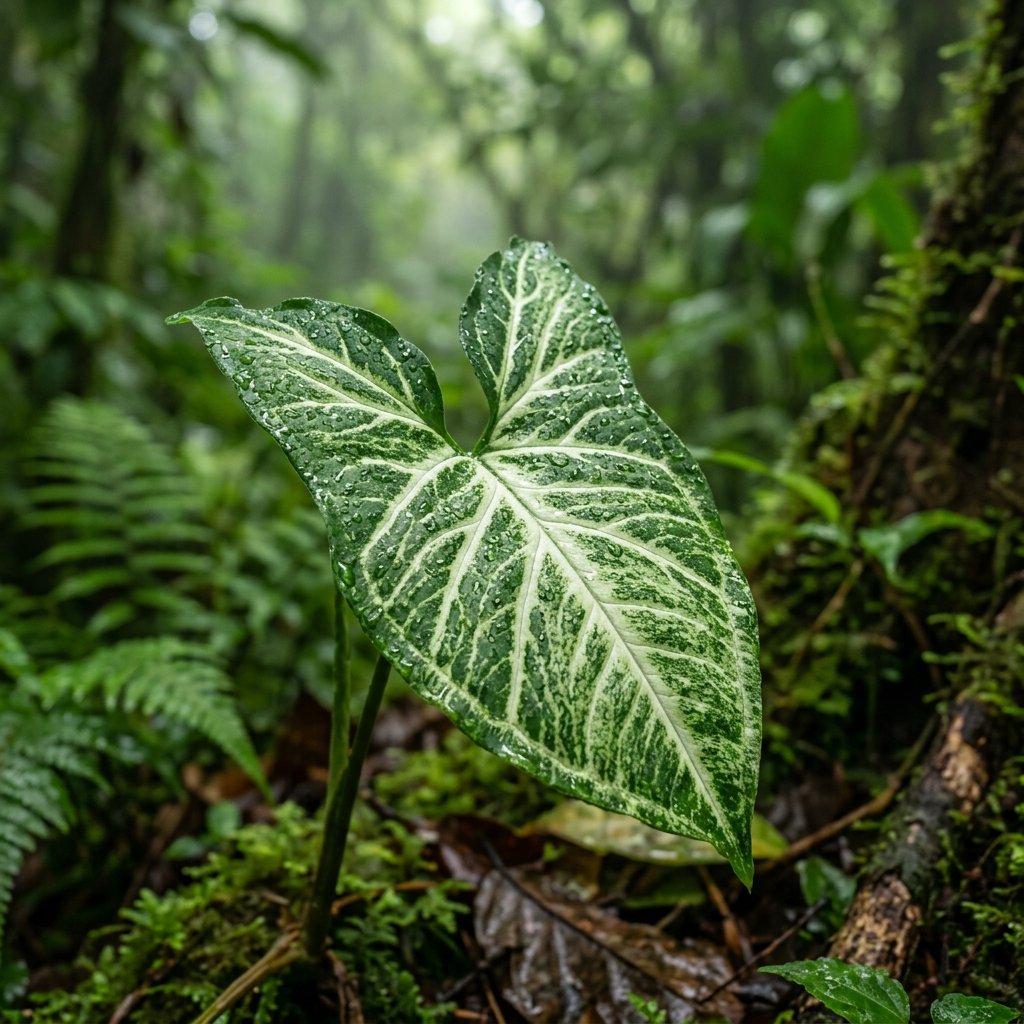
Often called the Arrowhead Plant or Goosefoot, this tropical shapeshifter is a beloved staple of indoor jungles. Native to the rainforests of Central and South America, it is prized for its ability to transform from a compact, bushy desk plant into a graceful, trailing vine. It’s the perfect choice for hobbyists who want a lush, "forest floor" aesthetic with very little effort.
🔍 How to Identify
- 🍃 Leaf Shape: Distinctive spade or arrowhead-shaped leaves when young. As the plant matures, the leaves "split" into multiple lobes, eventually looking more like a five-fingered hand.
- 🎨 Color Patterns: Most common varieties feature creamy white or silver veining against emerald green, though "Neon" (lime) and "Pink Allusion" (blush pink) varieties are high-demand collector favorites.
- 🧗 Growth Habit: It produces "aerial roots" along the stem. While it starts as a mound, it will eventually begin to "crawl" or climb if given a moss pole or trellis to grab onto.
🏡 In Your Garden
- ☁️ The Humidity Factor: Coming from the tropics, this plant thrives in humid environments. It is a fantastic candidate for a bright bathroom or a kitchen where it can soak up steam from the sink or shower.
- ✂️ Pruning for Shape: If you prefer the bushy "mound" look, you must prune the trailing vines regularly. If left unpruned, it will naturally revert to its climbing state, making it perfect for hanging baskets where it can spill over the sides.
- 💧 The "Fainting" Habit: The Syngonium is very communicative. If it gets too dry, the stems will noticeably wilt and "faint." Fortunately, it is quite resilient and usually perks back up within hours of a good soak.
⚠️ Safety & Toxicity
- 🐾 Toxic to Pets: This plant contains insoluble calcium oxalate crystals. If chewed or swallowed by cats or dogs, it causes intense oral irritation, drooling, and swelling of the throat.
- 👶 Human Irritant: Keep this plant out of reach of small children. Ingestion can cause a painful burning sensation in the mouth, and the sap may cause mild skin irritation for those with sensitive skin.
✨ Fun Fact
In its native habitat, the Syngonium is a master of disguise. It can climb trees up to 60 feet high, and its leaves change so drastically during the climb—going from a single leaf to a 5-to-9-lobed leaf—that early botanists often mistook the adult versions for entirely different species!

Detailed Care Instructions
| Humidity | High |
| Lighting | Part Sun |
| Toxicity | Poisonous |
| Difficulty | Easy |
| Hibernation | Cold Period |
| Temperature | 18°C - 24°C |
| Hardiness Zones | 9A - 11B |
To grow Syngonium Podophyllum plant, also known as Arrowhead plant or Nephthytis, follow these steps:
- Choosing the right location: Syngonium Podophyllum plants prefer bright, indirect sunlight. Place them near a north or east-facing window where they can receive filtered light. Avoid direct sunlight as it can damage their delicate leaves.
- Selecting the right soil: Use well-draining potting soil or a mixture of peat moss, perlite, and vermiculite. A soil mixture that retains some moisture but doesn't become waterlogged is ideal.
- Potting the plant: Choose a pot with drainage holes at the bottom. Syngonium Podophyllum plants prefer slightly crowded conditions, so choose a pot that is slightly larger than the root ball. Fill the pot with the chosen soil mixture and plant the Syngonium at the same depth it was in the previous pot.
- Watering: Water the plant thoroughly when the top inch of the soil feels dry. Syngonium Podophyllum plants prefer slightly moist soil, but overwatering can lead to root rot. Allow the excess water to drain out from the bottom of the pot.
- Humidity: These plants prefer higher humidity levels. You can increase humidity by misting the leaves with water or placing a tray filled with water and pebbles near the plant. As the water evaporates, it will create a humid environment.
- Fertilizing: Syngonium Podophyllum plants benefit from regular feeding during the growing season. Use a balanced houseplant fertilizer diluted to half the recommended strength, and apply it every four to six weeks.
- Pruning: Trim back leggy or straggly growth to promote bushier growth. Pruning also helps to maintain the desired shape. Use clean, sterilized scissors or shears to avoid introducing any diseases.
- Propagation: You can propagate Syngonium Podophyllum plants using stem cuttings. Choose a healthy stem cutting with at least two leaves, and place it in water or a moist soil mixture until roots form. Once roots develop, transfer the cutting into a pot with well-draining soil.
Remember to monitor your plant regularly for signs of pests such as spider mites, aphids, or mealybugs. Syngonium Podophyllum plants are generally easy to grow and can reward you with beautiful cascading foliage when provided with proper care.

Place in a window with dappled sun or a spot in the middle of a room. Or directly in a window facing west or east.

To water this plant, ensure that the soil is dry before adding water. Add water slowly to the soil around the base of the plant to avoid getting water on the leaves and stem. Allow the plant to absorb the water and drain off any excess water that may accumulate at the bottom of the pot. Water the plant once a week during the growing season and reduce the frequency during the winter months.
To fertilize this plant, mix a balanced fertilizer with equal parts of nitrogen, phosphorus, and potassium. Apply the fertilizer every two weeks during the growing season and reduce frequency during the winter months. Dilute the fertilizer with water and apply it directly to the soil, near the base of the plant. Avoid getting it on the leaves as it may cause damage. Water the plant thoroughly after fertilizing.
Syngonium podophyllum plant prefers a well-draining soil that is rich in organic matter. The soil pH should be around 5.5 to 7.5, which is slightly acidic to neutral. A soil mixture that combines peat moss, perlite, and vermiculite would be ideal to provide adequate drainage and moisture retention. It is important to avoid heavy clay soils as they can retain too much water and lead to root rot. Additionally, a fertile soil with balanced nutrients would promote healthy growth and vibrant foliage. Regular fertilization with a balanced liquid fertilizer during the growing season will ensure optimal growth.
Syngonium Podophyllum plant can be propagated through division or stem cuttings. To propagate through division, carefully separate the plant at the root zone and plant the individual pieces in separate pots with well-draining soil.
To propagate through stem cuttings, select a healthy stem about 10 cm long with at least two nodes. Cut the stem just below a node, remove the lower leaves, and dip the cut end in a rooting hormone.
Plant the stem cutting in a small pot filled with well-draining soil and place it in a warm, bright spot with indirect sunlight. Keep the soil moist but not waterlogged and mist the cutting regularly.
After a few weeks, new leaves will begin to emerge, indicating successful propagation. Gradually acclimate the newly propagated plant to its permanent location by increasing its exposure to direct sunlight over time.
Common pests of the arrowhead vine include Mealybugs, spider mites, thrips. Make a habit of checking your arrowhead vine frequently for pests so that any infestations can be caught and managed early.








