Plant Overview
🌿 Syrmatium prostratum (Prostrate Deerweed)
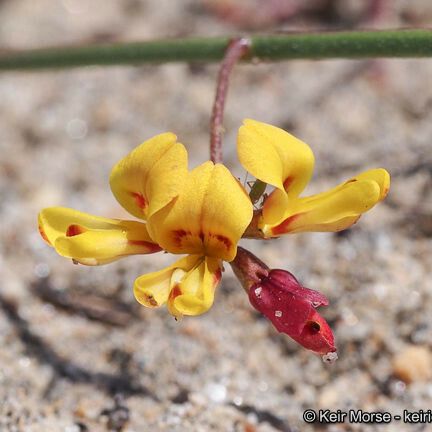
Often called the "Prostrate Deerweed," this hardy perennial is a master of the California coastal scrub landscape. With its sprawling, ground-hugging habit and brilliant yellow-to-orange pea-like flowers, it acts as a vibrant living carpet that breathes life into arid, sandy slopes. It is a true native survivor, adapted to thrive where other plants struggle.
🔍 How to Identify
- 🌱 Growth Habit: Look for a low-lying, mat-forming shrub that spreads horizontally along the ground rather than growing upright.
- 🌼 Floral Display: Features clusters of small, yellow, pea-like flowers that frequently blush into shades of orange or even deep red as they age.
- 🍃 Foliage: The leaves are trifoliate (composed of three small leaflets) and often covered in a fine, grayish-green downy texture, which helps the plant retain moisture.
🏡 In Your Garden
- ☀️ Soil & Water: This plant is perfectly adapted to poor, rocky, or sandy soils. It requires very little supplemental irrigation once established; in fact, overwatering or over-fertilizing can significantly shorten its lifespan.
- 🐝 Pollinator Powerhouse: As a member of the legume family, it is a crucial resource for native bees, butterflies, and skippers, providing both nectar and essential structural cover for small insects.
⚠️ Safety & Toxicity
- 🚫 Toxicity Status: While Syrmatium prostratum is not classified as highly toxic, it contains compounds common to many legumes that can cause gastrointestinal upset if ingested in large quantities by pets or curious children.
- 🧤 General Precautions: Because the plant is often found in wild areas, observe it closely for native bees and wasps that may be foraging on the flowers. Always wash hands after handling native shrubs, as the fine hairs on the leaves can occasionally cause mild skin irritation for sensitive individuals.
✨ Fun Fact
- Deerweed is famously known for its "pioneer" spirit; it is often one of the very first plants to return to a landscape after a wildfire. Its deep, nitrogen-fixing roots help stabilize the soil and prepare the ground for other, less hardy plants to move in later!

Detailed Care Instructions








