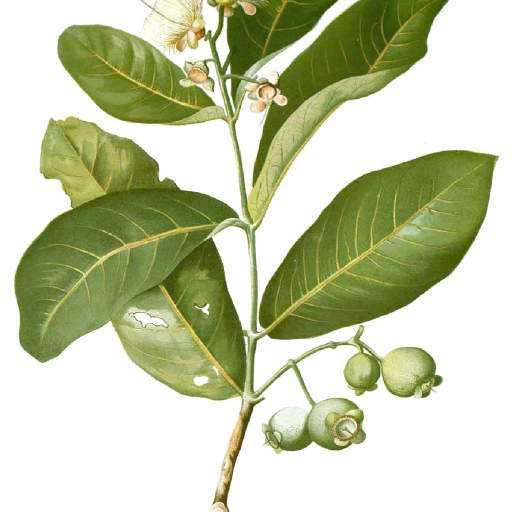
Plant Overview
Known as the "Water Apple," "Bell Fruit," or "Jambu Air," Syzygium aqueum is a tropical masterpiece famous for its refreshing, thirst-quenching crunch. Native to Southeast Asia, this tree is often found lining riverbanks or gracing backyard gardens. Its fruit looks more like a polished wax sculpture than a typical snack, appearing translucent and vibrant under the tropical sun.
🔍 How to Identify
- 🔔 The Bell Shape: The most iconic feature is the fruit itself—distinctively bell-shaped, widening at the bottom, with a thin, waxy skin that can range from pearly white to a deep, glowing red.
- ☁️ Pom-Pom Blooms: Before the fruit arrives, the tree is adorned with clusters of yellowish-white flowers. These blooms look like feathery "pom-poms" because of their long, delicate stamens.
- 🍃 Glossy Foliage: The leaves are large, oblong, and leathery. They grow in opposite pairs and give off a mild, pleasant scent when crushed, typical of the Myrtle family.
🏡 In Your Garden
- 💧 True to Its Name: As the name "Water Apple" suggests, this plant is a heavy drinker. It thrives in high-humidity environments and requires consistently moist soil; if the ground dries out too much, the tree may prematurely drop its developing fruit.
- ☀️ Frost Phobia: This is a strictly tropical species. While it loves a full-sun position to sweeten its fruit, it has zero tolerance for frost. If you are in a temperate zone, it must be kept in a large container and moved indoors before the first chill.
⚠️ Safety & Toxicity
- ✅ Human-Friendly: The fruit is safe and highly nutritious for humans, often eaten raw for its cooling effect or used in spicy "Rojak" fruit salads.
- 🐾 Pet Caution: While the flesh of the fruit is generally harmless, the seeds and bark of many Syzygium species contain trace amounts of cyanogenic glycosides. It is best to prevent pets from chewing on the fallen seeds or wood to avoid digestive distress.
✨ Fun Fact
Despite being called an "apple," the Water Apple contains nearly 90% water! In its native regions, travelers often use the fruit as a natural "water bottle" to stay hydrated while trekking through the heat.

Detailed Care Instructions
| Lighting | Full Sun |
To grow Syzygium Aqueum plant, also known as the Water Apple tree or Jambu Air tree, follow these steps:
- Obtain a healthy and viable Syzygium Aqueum plant or seeds from a reputable nursery or online seller.
- Choose a suitable location for planting. Syzygium Aqueum prefers a warm, tropical climate with ample sunlight, but it can also tolerate some shade. Ensure the soil is well-draining with a pH between 5.5 and 6.5.
- Prepare the planting hole or container by loosening the soil and adding organic matter such as compost or well-rotted manure to provide nutrients for the plant.
- If planting from seeds, soak them for 24 hours in warm water to enhance germination. If using a young plant, gently remove it from its container, ensuring the roots remain intact, and loosen them slightly.
- Place the seeds or plant in the prepared hole or container, ensuring the top of the root ball is level with the soil surface. Backfill the hole with soil, gently firming it around the roots.
- Water the newly planted Syzygium Aqueum thoroughly, ensuring the soil is moist but not waterlogged. Water regularly, especially during dry periods, but avoid overwatering, which can lead to root rot.
- Mulch around the base of the plant to help retain moisture, suppress weed growth, and regulate soil temperature.
- Prune the plant as needed to encourage bushier growth, remove dead or damaged branches, and maintain its desired shape. Prune during the dormant season, typically in late winter or early spring.
- Fertilize the Syzygium Aqueum plant every few months with a balanced slow-release fertilizer or organic fertilizer formulated for fruit trees. Follow the manufacturer's instructions for application rates.
- Protect the plant from pests and diseases by regularly inspecting it for signs of damage or infestations. Treat any issues promptly using organic or chemical treatments as needed.
- Harvest the water apples when they reach the desired ripeness, typically when their skin turns glossy and deep red or purple. Enjoy the fruit fresh, use it in recipes, or preserve it for later use.
By following these steps, you should be able to cultivate and grow a healthy Syzygium Aqueum plant.

Place in a window with dappled sun or a spot in the middle of a room. Or directly in a window facing west or east.

To water this plant, you should first check the moisture level of the soil by sticking your finger about an inch into the soil. If the soil feels dry at this depth, it's time to water. Use a watering can or hose attachment with a gentle flow to avoid disturbing the roots or compacting the soil. Water around the base of the plant until the soil is moist, but not waterlogged or saturated. Wait until the top inch of soil begins to dry out before watering again. If the plant is in a container, allow any excess water to drain out before returning it to its usual location. Avoid letting the plant sit in standing water, as this can cause root rot.
To fertilize this plant, use a balanced fertilizer with equal amounts of nitrogen, phosphorus, and potassium. Apply the fertilizer during the growing season every four to six weeks. Be sure to follow the manufacturer's instructions for the recommended amount of fertilizer to apply. Avoid over-fertilizing, as this can lead to leaf burn or root damage. Water the plant thoroughly after fertilizing to help distribute the nutrients evenly throughout the soil.
The ideal soil for the Syzygium Aqueum plant should be well-draining with a slight acidic pH between 5.5-6.5. It needs soil that is rich in organic matter, with good water retention capabilities. The plant favors well-aerated soils with good drainage, and it is also important to ensure that the soil used is free from pests, diseases, and weeds. The soil should be fertile and provide sufficient nutrients, including nitrogen, potassium, and phosphorus. Additionally, adding a layer of organic mulch on top of the soil can help maintain moisture levels and regulate soil temperature, which will provide the ideal environment for the Syzygium Aqueum to thrive.
Syzygium Aqueum plant propagation can be done through various methods, including stem cuttings, layering, air layering, and seed germination.
To propagate through stem cuttings, select a healthy stem with nodes and remove the leaves from its lower end. Dip the cut end of the stem in rooting hormone and plant it in a well-draining soil mix. Keep the soil moist and in a warm, bright place, preferably with indirect sunlight.
Layering is another method where you would bend a low-hanging branch and make a small cut underneath the node. Apply rooting hormone to the cut and bury it in soil. After a few months, roots should have developed, and then the branch can be cut from the parent plant, potted on its own.
Air layering involves making a small cut above a node on the stem, wrapping it with moist sphagnum moss, and covering it with plastic wrap to keep it moist. Once roots have formed, cut below the node and plant the rooted section.
Lastly, propagation can be done through seed germination. The fruit is harvested and seeds extracted and sown in germination mix. Seeds should be kept moist and in a warm, bright location. It may take several years to see significant growth from seedlings.








