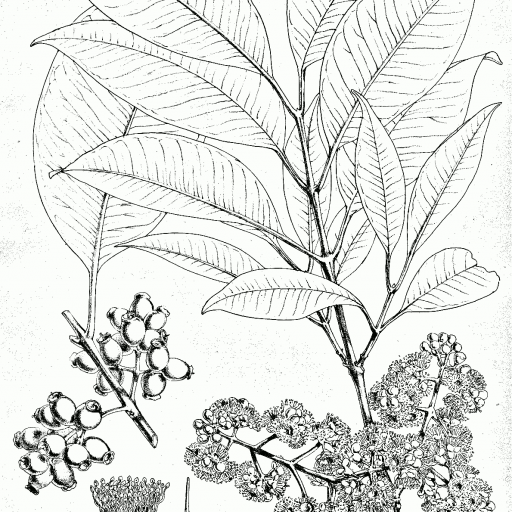
Plant Overview
The Syzygium cumini, famously known as the Jamun, Java Plum, or Black Plum, is a regal evergreen tree deeply woven into the folklore and spirituality of South Asia. Often referred to as the "Fruit of the Gods" in Indian mythology, this fast-growing giant provides a massive canopy of shade and a harvest of astringent, deep-purple fruits that have been a summer staple for centuries.
🔍 How to Identify
- 🍃 The Foliage: The leaves are leathery and glossy, featuring a distinct turpentine-like aroma when crushed. They grow in opposite pairs and have a smooth, oblong shape with a pointed tip.
- 🥥 The Bark: Younger trees have a smooth, light greyish-white bark, while older specimens develop a rough, cracked texture near the base.
- 🍇 The Fruit: In early summer, the tree produces clusters of oblong berries. They transition from green to a vibrant magenta, finally ripening into a deep, near-black purple that often hangs in heavy, tempting bunches.
🏡 In Your Garden
- 🌳 Space Requirements: This is not a "pot plant" for long. Because of its vigorous growth and deep taproot, it requires significant space. It hates being moved once established, so choose its "forever home" carefully where it won't interfere with power lines or foundations.
- 💧 Water & Soil: While it is incredibly hardy and can survive both droughts and heavy monsoons, it thrives best in well-draining soil with consistent moisture during its first three years. Once mature, its roots reach deep into the water table, making it an excellent "set it and forget it" shade tree for larger landscapes.
⚠️ Safety & Toxicity
- 🟢 Human Safety: The fruit is safe and highly nutritious for humans, though it is very astringent (dry-feeling) when underripe.
- 🐾 Pet Warning: While the flesh of the fruit is generally safe, the large seeds (pits) contain small amounts of cyanogenic glycosides and tannins. Keep dogs away from fallen fruit, as swallowing the large pits can cause digestive blockages or mild toxicity.
- 🧹 Mess Factor: Be warned—the juice of the fallen fruit is a potent natural dye. It will permanently stain light-colored concrete, patios, and car paint purple.
✨ Fun Fact
Eating the fruit of the Jamun is a childhood rite of passage in many tropical regions because it contains anthocyanins that temporarily dye your entire tongue a vibrant, "alien" purple!

Detailed Care Instructions
| Lighting | Full Sun |
| Hardiness Zones | 9B - 11 |
To grow a Syzygium cumini plant, also known as jambul or Indian blackberry, you can follow these steps:
- Obtaining seeds or saplings: Acquire seeds or saplings from a nursery or online store. If using seeds, make sure they are fresh and of good quality.
- Planting seeds or saplings:
- Seeds: Soak the seeds in water for 24 hours to enhance germination. Plant them in a seedling tray or small pots filled with well-draining soil. Cover the seeds with a thin layer of soil and water gently.
- Saplings: If using saplings, dig a hole that is slightly larger than the root ball of the sapling. Place the sapling in the hole and backfill with soil, ensuring the top of the root ball is level with the surrounding soil. Water the sapling thoroughly.
- Seeds: Soak the seeds in water for 24 hours to enhance germination. Plant them in a seedling tray or small pots filled with well-draining soil. Cover the seeds with a thin layer of soil and water gently.
- Positioning and sunlight: Choose a suitable location for your Syzygium cumini plant. It requires full sun for optimum growth, so ensure it receives at least 6 to 8 hours of direct sunlight daily.
- Watering: Keep the soil evenly moist but not waterlogged. Water the plant regularly, especially during hot and dry periods. Avoid overwatering or allowing the soil to dry out completely.
- Fertilizing: Apply a balanced, slow-release fertilizer or organic compost to the plant during the growing season to provide necessary nutrients. Follow the instructions on the product label for proper application.
- Pruning: Prune the plant annually in late winter or early spring to maintain its shape and remove any dead or diseased branches. This will also help to promote new growth and increase fruit production.
- Pollination: Syzygium cumini plants are usually self-fertile, meaning they don't require cross-pollination from another plant to produce fruit. However, having multiple plants nearby can increase the chances of successful pollination and fruiting.
- Pests and diseases: Monitor your plant regularly for any signs of pests or diseases, such as aphids, scale insects, or fungal infections. Treat any issues promptly with appropriate organic or chemical controls, as necessary.
- Harvesting: The fruits of Syzygium cumini are ready to harvest when they turn dark purple or black. Gently twist or cut the ripe fruits from the tree. Enjoy them fresh or use them in various culinary preparations.
Remember to provide adequate care and attention to your Syzygium cumini plant, and you will be rewarded with a healthy and productive tree.

Place in a bright room that is sun drenched almost all day. Or directly in a south-facing window.

To properly water this plant, it is important to take into account factors such as the size of the pot, the surrounding environmental conditions, and the plant's water requirements. Before watering, it is recommended to check the moisture level of the soil by sticking a finger or a moisture meter into the soil to ensure that it is neither too dry nor too wet.
When watering, it is best to use room temperature water and to water slowly and evenly to ensure that the water is absorbed evenly throughout the soil. It is important not to overwater the plant, as this can cause root rot and other issues. Also, avoid letting the plant sit in standing water as this can cause the roots to suffocate and die. Additionally, it is important to avoid getting water on the leaves of the plant, as this can lead to fungal growth and other issues.
In general, this plant prefers moist but well-draining soil, so it is important to ensure that the pot has good drainage and that the soil is not too compacted. In dry or hot conditions, it may be necessary to water more frequently, while in cooler or more humid conditions, the plant may require less water.
To fertilize this plant, it is recommended to use a balanced fertilizer with an NPK ratio of 10-10-10. Apply the fertilizer during the growth period, which is usually in spring and summer. Dilute the fertilizer with water and apply it to the soil around the base of the plant, avoiding contact with the leaves and stem. Water the plant thoroughly after fertilizing. It is important not to over-fertilize, as this can damage the plant and cause nutrient burn.
The ideal soil for the Syzygium Cumini plant is a well-draining soil that is rich in organic matter. It should have a pH level between 5.5 to 7.0. It is recommended to use a mixture of sandy soil and compost to ensure that the plant receives enough nutrients and has good drainage. The soil should also be kept moist but not waterlogged, as this can cause root rot. Additionally, adding a layer of mulch around the base of the plant can help retain moisture in the soil and prevent weed growth.
To propagate this plant, you can take softwood cuttings from healthy and mature plants during the growing season. The ideal time to do this is in the early morning.
- Choose healthy, disease-free stems that are at least 10-15 cm long and have actively growing tips.
- Cut the stems at a 45-degree angle using a sharp, sterilized knife or shears. Remove any leaves or buds from the lower half of the stem.
- Dip the cut end of the stem in rooting hormone powder or liquid to encourage root development.
- Fill a container with a well-draining medium such as a mix of sand and peat moss. Make sure the medium is moist but not waterlogged.
- Insert the cuttings into the medium and press the soil around the base of the stem.
- Place the container in a warm, bright area but out of direct sunlight. Cover the container with a plastic bag or plastic wrap to maintain humidity.
- Mist the cuttings regularly to keep them moist and encourage root growth.
- After a few weeks, check for roots by gently tugging on the stem. If there is resistance, the roots have formed.
- Once roots have formed, transplant the new plants into individual pots filled with moist, well-draining soil.
- Provide the new plants with bright, indirect light and keep the soil consistently moist for a few weeks to help them establish.
Common pests of the जामुन include Mealybugs, spider mites, thrips. Make a habit of checking your जामुन frequently for pests so that any infestations can be caught and managed early.








