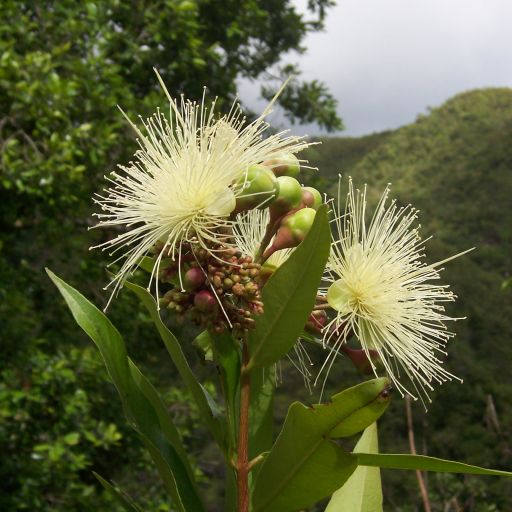
Plant Overview
Known as the "Rose Apple" or "Malabar Plum," this tropical beauty is famous for fruit that tastes like a crisp apple infused with the delicate scent of rose petals. Native to Southeast Asia, it has traveled the world as both an ornamental shade tree and a source of exotic snacks. In many cultures, its elegant, bell-shaped fruits are prized as symbols of hospitality and sweetness.
🔍 How to Identify
- 🍃 The Foliage: Long, lance-shaped leaves that emerge in a vibrant burgundy-pink before maturing into a deep, leathery green.
- 🏵️ The "Puffball" Flowers: Spectacular creamy-white or pale yellow blossoms that look like exploding starbursts due to their hundreds of long, delicate stamens.
- 🍎 The Fruit: Unique bell-shaped fruits that turn a waxy pale yellow or pinkish hue when ripe. Unlike a standard apple, the center is hollow and contains one or two loose brown seeds.
🏡 In Your Garden
- 💧 Thirsty Roots: While it is a hardy grower, the Rose Apple is a "water lover." It thrives in moist, well-draining soil and will drop its fruit prematurely if the ground stays dry for too long.
- 🌳 Space & Growth: This tree grows quickly and develops a dense, wide canopy. It is excellent for privacy screening or shade, but be mindful of its placement—the fallen, fermenting fruit can be messy on walkways and may attract unwanted garden visitors like wasps or fruit flies.
⚠️ Safety & Toxicity
- ✅ Edible Fruit: The flesh of the fruit is perfectly safe and highly refreshing to eat raw or used in jellies.
- 🚫 Seed Caution: While the fruit is a treat, the seeds and roots contain trace amounts of hydrocyanic acid. They should not be consumed by humans or pets, as they can cause digestive upset or more serious toxicity in large quantities.
- 🐾 Pet Safety: Keep an eye on curious dogs; while the fruit isn't inherently toxic to them, the large seeds can pose a choking hazard or cause intestinal blockages.
✨ Fun Fact
The scent of the Rose Apple isn't just a coincidence—the fruit contains the same essential oil (phenethyl alcohol) that gives real roses their signature fragrance! In some cultures, the distilled water from the fruit is even used as a cosmetic rosewater.

Detailed Care Instructions
| Humidity | Normal |
| Lighting | Part Sun |
| Difficulty | Easy |
| Hibernation | Cold Period |
| Temperature | 18°C - 38°C |
| Hardiness Zones | 9 - 12 |
To grow a Syzygium jambos plant, also known as rose apple or water apple, you can follow these steps:
- Obtain the seeds or a healthy young plant from a reputable source. You can also use fresh fruits to extract the seeds.
- Choose a well-draining pot or container with sufficient drainage holes. Fill it with a high-quality potting mix or a mixture of equal parts of compost, garden soil, and sand.
- Soak the seeds in water for 24-48 hours before planting to improve germination rates. Alternatively, you can also scarify the seeds by gently nicking the hard coat with a sharp knife.
- Place the seed or young plant in the center of the pot, making sure the soil covers the roots but not the stem if it's a young plant.
- Water the plant thoroughly after planting, ensuring the soil is moist but not waterlogged. Rose apple plants require consistent moisture, but they should not sit in waterlogged soil.
- Place the pot in a location that receives full sun to partial shade. The plant can tolerate some shade but prefers bright light for optimal growth.
- Maintain a warm temperature between 68-86°F (20-30°C). Syzygium jambos is a tropical plant and thrives in warm, humid conditions.
- Water the plant regularly to keep the soil slightly moist. It is crucial to not let the soil dry out completely.
- Fertilize the plant with a balanced, slow-release fertilizer during the growing season, following the package instructions. This helps provide essential nutrients for healthy growth.
- Prune the plant to maintain shape and control its size. Remove any dead or diseased branches and shape the plant as desired. Pruning also promotes better air circulation and helps prevent diseases.
- Keep an eye out for pests, such as aphids or mealybugs, which can occasionally infest Syzygium jambos plants. Treat any infestations promptly using organic or chemical pest control methods if necessary.
Remember that growing a Syzygium jambos plant requires patience, as it can take several years before it reaches maturity and starts producing fruits.

Place in a bright room that is sun drenched almost all day. Or directly in a south-facing window.

To water this particular plant, it is important to first consider the soil it is planted in. This plant prefers well-draining soil that does not become waterlogged. When watering, it is best to allow the soil to dry out slightly before watering again. Overwatering can lead to root rot and other issues.
Water should be applied at the base of the plant, rather than over the leaves or flowers. This will help prevent disease and encourage healthy growth. It is recommended to water deeply, providing enough water to soak the soil to the plant's root level.
In terms of frequency, the plant should typically be watered every 7-10 days. However, this can vary depending on factors such as the climate, soil type, and location of the plant. If the plant is in a very hot and dry climate, it may need to be watered more frequently.
Overall, it is important to monitor the soil moisture levels and adjust watering accordingly. With proper watering and care, this plant can thrive and produce beautiful flowers and fruit.
To fertilize this plant, you should choose a well-balanced, slow-release fertilizer that is rich in nitrogen, phosphorus, and potassium. Apply the fertilizer every three months in the spring and summer, when the plant is actively growing. Avoid fertilizing in the fall and winter when the plant is dormant. Be careful not to over-fertilize as this can result in leaf burn and other issues. Water the plant thoroughly before and after fertilizing to help distribute the nutrients evenly throughout the soil.
Syzygium Jambos prefers a well-draining soil that is rich in nutrients. A soil pH between 5.5 and 7.0 is ideal. A mixture of 1 part loam, 1 part sand, and 1 part organic matter, such as compost or aged manure, is recommended. Additionally, incorporating a slow-release fertilizer into the soil before planting can provide nutrients for the plant's initial growth. It is important to avoid using heavy or compacted soils, as the roots need room to grow and expand.
To propagate this plant, you can take stem cuttings or air layering. For stem cuttings, you need to select a healthy stem and make a clean cut of about 6-8 inches. Remove the lower leaves and dip the cut end into rooting hormone powder. Then insert the cutting into a pot filled with well-draining soil, water it and put it in indirect sunlight. Keep the soil moist and wait for the roots to develop.
For air layering, choose a stem that is thick and healthy and make a small wound on the stem. Apply rooting hormone powder on the wound and wrap the section with moist sphagnum moss and cover it with plastic wrap. Secure the plastic with small branches or ties and wait for a few weeks to months for the roots to develop. Once the roots appear, cut the stem below the rooting section and plant it in well-draining soil.
It's important to note that propagation through seeds is also possible, but it can take several years for the plant to produce fruits.








