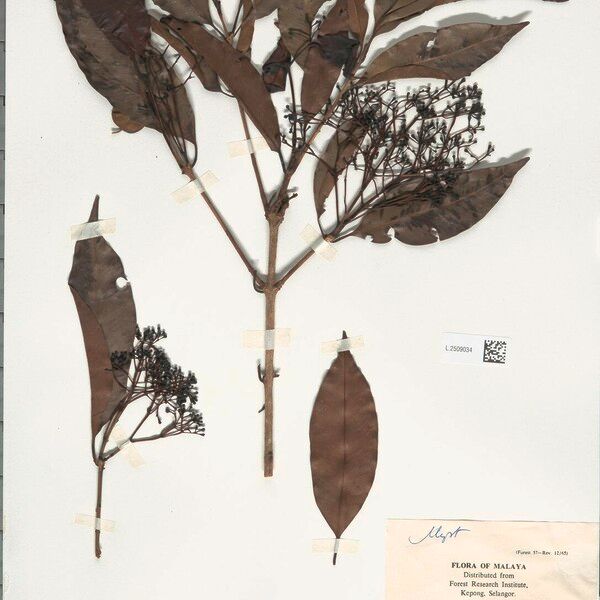
Plant Overview
Often called Maingay’s Eugenia, this elegant evergreen tree is a cherished resident of the Southeast Asian rainforests. It belongs to the diverse Syzygium family, the same group that gives us cloves and rose apples. In a garden setting, it is prized for its "pom-pom" flowers and the dramatic color shifts of its new foliage, which emerges in shades of burnt orange and bronze.
🔍 How to Identify
- 🍃 New Growth: One of its most striking features is the young foliage, which transitions from a vibrant reddish-copper to a deep, glossy forest green as the leaves mature.
- ☁️ Powder-puff Blooms: The tree produces clusters of white or cream-colored flowers that look like tiny bursts of fireworks due to their long, numerous stamens.
- 🍒 The Berries: Following the bloom, small fleshy fruits appear. They are typically oblong or pear-shaped, turning from a pale green to a soft pink or dark red when ripe.
🏡 In Your Garden
- 🌳 Space to Breath: While it can be pruned into a hedge, Syzygium maingayi naturally wants to be a medium-sized tree. It possesses a deep root system, so it is best planted away from underground pipes or narrow walkways.
- 💧 The Moisture Balance: Coming from tropical climates, it loves humidity and consistent moisture. However, it requires well-draining soil; it won’t tolerate "wet feet" or standing water, which can lead to root rot.
- 🐦 Wildlife Magnet: If you are looking to start a backyard ecosystem, this is a perfect choice. The nectar-rich flowers attract bees and butterflies, while the berries are a favorite snack for local bird species.
⚠️ Safety & Toxicity
- ✅ Status: Generally considered non-toxic.
- 🐾 Details: There are no known records of Syzygium maingayi being poisonous to dogs, cats, or humans. While the berries of many Syzygium species are technically edible, they are often quite tart or pithy compared to their cousin, the Rose Apple. Always supervise small children around berries to prevent choking hazards.
✨ Fun Fact
The species is named after Alexander Carroll Maingay, a 19th-century British magistrate and botanist who spent years documenting the rich flora of Malacca. Many rare plants in the Malay Peninsula still bear his name today!

Detailed Care Instructions








