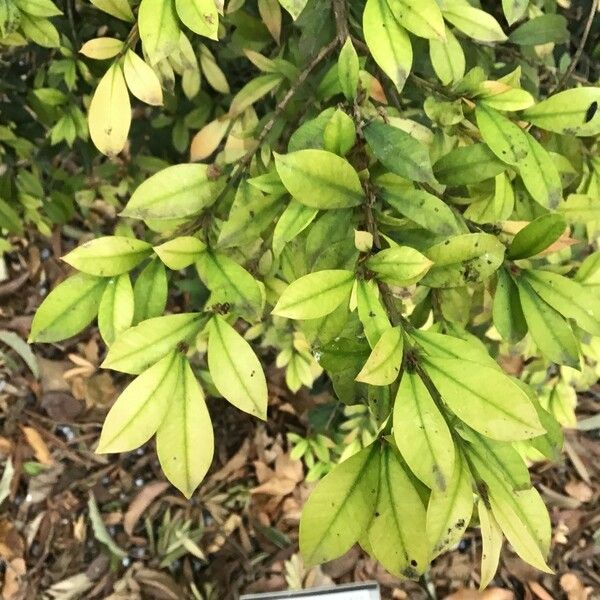
Plant Overview
Known as the "Red Lip" or "Kelat Oil" tree, Syzygium myrtifolium is the ultimate showstopper for living fences and privacy screens. Native to the tropical regions of Southeast Asia, this plant is beloved for its "burning" tips—vibrant, fiery-red new foliage that looks like a sunset captured in a hedge. It is a resilient, fast-growing evergreen that brings both structural elegance and a pop of color to any landscape.
🔍 How to Identify
- 🍃 The "Red Lips": The most striking feature is the flush of bright orange-to-red young leaves that crown the branches before they mature into a deep, glossy emerald green.
- 🌿 Dense Foliage: The leaves are small, lance-shaped, and grow very closely together, making it nearly impossible to see through a well-maintained hedge.
- 🌸 Fluffy Blooms: It produces small, creamy-white flowers that look like tiny bursts of fireworks or pom-poms due to their long, delicate stamens.
- 🍒 Dark Berries: After flowering, it develops small, round fruits that turn from green to a dark purple or blackish hue.
🏡 In Your Garden
- ✂️ The Pruning Paradox: This plant actually rewards you for being "high maintenance." The more frequently you prune it, the more new red growth it produces. It is a favorite for topiary lovers who want to sculpt spheres, cones, or pillars.
- ☀️ Sun for Color: To get the most intense red hues, place it in full sun. While it can survive in partial shade, the new leaves will often emerge a duller bronze or green without enough light.
- 🪴 Root Space: Because it is often used as a hedge, ensure you give individual plants enough breathing room; while it loves being a "wall," cramped roots can lead to thinner foliage at the base.
⚠️ Safety & Toxicity
- ✅ General Safety: Syzygium myrtifolium is generally considered non-toxic to humans and is not known to cause skin irritation upon contact.
- 🐾 Pet Watch: While not listed as a high-risk poisonous plant, the berries can cause mild digestive upset (vomiting or diarrhea) if a curious dog or cat eats them in large quantities.
- 🧹 Litter Alert: The falling berries can be quite messy on light-colored pavement or tiles, and the seeds germinate easily, so keep an eye out for "volunteer" seedlings in nearby pots.
✨ Fun Fact
In its native habitats in Southeast Asia, the name "Kelat" refers to the astringent taste of the fruit. Historically, the tough, durable wood of larger specimens was used to craft tool handles and even ribs for traditional boats!

Detailed Care Instructions
To grow Syzygium Myrtifolium, also known as Brush Cherry or Australian Brush Cherry, you can follow these steps:
- Climate and location: Syzygium Myrtifolium is native to Australia and thrives in warm climates. Ensure that you live in an area with temperatures above 50°F (10°C) year-round. Ideally, choose a location that receives partial shade to full sun.
- Soil requirements: The plant prefers well-draining soil with a slightly acidic to neutral pH. Sandy loam or loamy soil types are suitable. Improve the soil with organic matter like compost before planting to enhance drainage and nutrient content.
- Planting: Choose healthy, disease-free seedlings or buy established plants from a nursery. Plant them in spring or early summer when the weather is warm. Dig a hole twice as wide and deep as the plant's root ball. Place the plant in the hole, backfill with soil, and gently firm it around the roots. Water thoroughly after planting.
- Watering: Syzygium Myrtifolium prefers regular watering, especially during the first year. Ensure the soil remains moist but not waterlogged. Water deeply once or twice a week, allowing the soil to dry between waterings.
- Fertilization: Use a balanced slow-release fertilizer or organic compost in early spring or late winter to provide essential nutrients. Follow the package instructions for the appropriate dosage.
- Pruning: Regularly prune the plant to maintain its shape and promote dense growth. You can trim after flowering or during early spring to encourage new growth. Remove any dead or diseased branches.
- Pests and diseases: Syzygium Myrtifolium is generally resistant to pests and diseases. However, occasional issues like scale insects or aphids may occur. Monitor the plant regularly and treat any infestations promptly with appropriate insecticides or insecticidal soap.
- Mulching: Apply a layer of organic mulch, such as wood chips or shredded bark, around the base of the plant. Mulching helps retain moisture, suppress weed growth, and regulate soil temperature.
Remember to check the specific care requirements for your region or consult with local gardeners or experts for the best advice on growing Syzygium Myrtifolium in your area.

Place in a bright room that is sun drenched almost all day. Or directly in a south-facing window.

To water this plant, make sure that the soil is evenly moist but not too wet. Water slowly and deeply to allow the water to penetrate the root zone. Avoid overwatering as it can lead to root rot. Monitor the soil moisture level regularly and adjust watering frequency as needed based on the plant's needs and environmental conditions. Additionally, make sure to water the plant at the base and avoid getting water on the foliage, which can promote disease.
To properly fertilize your Syzygium Myrtifolium plant, follow these instructions:
- Choose a balanced, slow-release fertilizer specifically formulated for woody ornamental plants. Avoid using fertilizers high in nitrogen, as excessive foliage growth might occur at the expense of flower or fruit production.
- Read and follow the instructions on the fertilizer packaging carefully, as the application rates may differ depending on the brand and formulation.
- Apply the fertilizer during the growing season, preferably in spring and early summer. This will provide essential nutrients during the plant's active growth period.
- Prior to applying the fertilizer, water the soil around the plant thoroughly. This helps prevent any potential root damage from the fertilizer.
- Sprinkle the fertilizer evenly around the base of the plant, ensuring that it does not come into direct contact with the stem or foliage. Be cautious not to over-fertilize, as this can lead to nutrient burn or other adverse effects.
- After applying the fertilizer, gently work it into the top layer of soil using a small hand rake or fork. This ensures that the nutrients penetrate the root zone more effectively.
- Water the plant again after fertilizing, allowing the soil to absorb the nutrients. This also helps prevent any potential burning of the roots.
- To maintain optimal plant health, repeat the fertilization process periodically, following the package instructions regarding frequency and dosage. However, avoid excessive fertilization, as this can cause nutrient imbalances and harm the plant.
Remember, different factors such as climate, soil conditions, and plant size can affect the fertilization requirements, so always monitor your Syzygium Myrtifolium plant's response to the fertilizer and adjust as necessary.
Syzygium Myrtifolium plant is a species of plant that requires a specific type of soil to grow and thrive. The soil should be well-drained, with a pH level between 5.5 and 6.5. The soil should also be loamy, meaning it is a mixture of sand, silt, and clay, and should contain a good amount of organic matter such as compost or leaf litter. This type of soil will provide the necessary nutrients for the Syzygium Myrtifolium plant to grow a healthy root system and produce foliage and flowers. It is important to avoid soil that is too compact, clay-heavy, or waterlogged, as this can lead to root rot and other issues. Additionally, the planting location should receive adequate sunlight and water to support the plant's growth.
Propagation of Syzygium Myrtifolium can be done through various methods, including seed propagation, stem cuttings, and air layering. Here's a step-by-step guide on propagating this plant:
- Seed Propagation:
- Collect ripe fruits from a healthy Syzygium Myrtifolium plant.
- Extract the seeds from the fruits and remove any pulp that might be attached to them.
- Rinse the seeds with clean water to remove any remaining debris or gel.
- Fill a seed tray or small pots with a well-draining potting mix.
- Place the seeds on the soil surface and cover them lightly with more potting mix, ensuring they are not buried too deeply.
- Water the potting mix gently to ensure it is moist but not soggy.
- Keep the tray or pots in a warm and well-lit area, such as near a window with indirect sunlight.
- Maintain a consistently warm and moist environment by covering the tray or pots with a plastic bag or a propagator lid.
- Germination should occur within a few weeks to a couple of months.
- Once the seedlings have grown several sets of true leaves, they can be transplanted into individual pots or directly into the garden.
- Collect ripe fruits from a healthy Syzygium Myrtifolium plant.
- Stem Cuttings:
- Take stem cuttings from a healthy Syzygium Myrtifolium plant during its active growth phase, which is usually in spring or early summer.
- Choose a stem that is semi-hardwood, not too tender or too woody.
- Cut the stem at an angle, just below a node, using a clean and sharp pruning tool.
- Remove any leaves from the lower half of the cutting, leaving only a few pairs of leaves at the top.
- Optionally, you can dip the cut end of the stem in a rooting hormone powder to promote root development.
- Fill a small pot with a well-draining potting mix and make a hole using a pencil or your finger.
- Insert the lower end of the cutting into the hole and gently firm the soil around it.
- Water the potting mix thoroughly but avoid overwatering.
- Place the cutting in a warm and well-lit area, away from direct sunlight.
- Keep the soil consistently moist but not waterlogged.
- Rooting should occur within a few weeks to a couple of months.
- Once the roots have developed, the cutting can be transplanted into a larger pot or directly into the garden.
- Take stem cuttings from a healthy Syzygium Myrtifolium plant during its active growth phase, which is usually in spring or early summer.
- Air Layering:
- Select a healthy stem on the Syzygium Myrtifolium plant that is semi-hardwood, not too tender or too woody.
- Make a horizontal cut around the stem, just below a node.
- Make another vertical cut starting from the bottom of the horizontal cut and extending downwards for a few inches.
- Gently remove the bark between the two cuts to expose the inner layer of the stem.
- Dust the exposed area with a rooting hormone powder to stimulate root growth.
- Moisten a handful of sphagnum moss with water and wrap it around the exposed area.
- Cover the moss with a plastic wrap, ensuring it is secured at both ends to create a sealed environment.
- After a few weeks to a couple of months, roots should start to form within the moss.
- Once the roots are well-developed, cut the stem just below the rooted area.
- Plant the rooted section in a pot or directly in the ground, keeping the soil consistently moist until it establishes itself.
By following these propagation methods, you can expand your Syzygium Myrtifolium plant collection and enjoy its beauty in your garden or indoor space.
- Select a healthy stem on the Syzygium Myrtifolium plant that is semi-hardwood, not too tender or too woody.








