Plant Overview
Known widely as the Indonesian Bay Leaf or Salam leaf, Syzygium polyanthum is the aromatic soul of many Southeast Asian kitchens. While it shares a name with the European bay leaf, it belongs to the Myrtle family and offers a completely different, subtle, earthy fragrance that deepens when dried. In its native tropical habitats, it is a majestic evergreen tree cherished both for its culinary gifts and its elegant, glossy canopy.
🔍 How to Identify
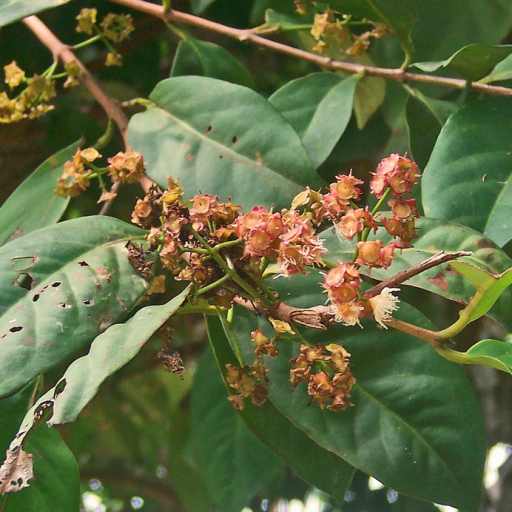
- 🍃 The Foliage: Look for smooth, leathery leaves that are dark green on top and paler underneath. They are typically elliptic or oblong, ending in a graceful point.
- 🌸 "Many Flowers": True to its botanical name (polyanthum), the tree produces dense, fragrant clusters of tiny, cream-colored or pinkish-white flowers that sprout directly from the twigs.
- 🍒 Jewel-like Berries: It bears small, round fruits that change color from green to a vibrant red, eventually ripening into a deep, glossy purple-black.
🏡 In Your Garden
- 🌳 Space to Breathe: In the wild, this tree can reach impressive heights, but in a garden, it is easily maintained as a medium-sized specimen or a thick, privacy-providing hedge. It prefers a sunny spot with plenty of humidity.
- 🌱 Root Stability: The Salam tree develops a strong taproot system. This makes it quite drought-tolerant once established, but it also means it "hates" being transplanted. It is best to plant it in its permanent location while it is still a young sapling.
- 🍂 The Flavor Secret: Unlike many herbs that are best used fresh, the leaves of Syzygium polyanthum are often more flavorful after they have been dried. Drying concentrates the essential oils that provide its signature cinnamon-meets-citrus aroma.
⚠️ Safety & Toxicity
- 🍴 Status: Safe and widely used as a culinary herb for flavoring stews, rice, and meats.
- 🐾 Pets & Kids: The plant is generally considered non-toxic to humans and pets. However, the berries—while technically edible—are quite astringent and may cause minor stomach upset if consumed in large quantities by small children or curious dogs.
✨ Fun Fact
- ✨ The "Salam" Greeting: In Indonesia, "Salam" means "peace" or "greetings." The leaf is so essential to the local identity that it is almost impossible to find a savory Indonesian dish that doesn't start with a few of these "peace leaves" tossed into the pot!

Detailed Care Instructions
To grow a Syzygium Polyanthum plant, also known as Indonesian bay leaf or daun salam, follow these steps:
- Choose a suitable location: Select a spot that receives full to partial sunlight. The plant can tolerate some shade, but it thrives in direct sunlight.
- Soil preparation: The soil should be well-draining and rich in organic matter. You can amend the soil with compost or well-rotted manure to improve its quality if necessary.
- Planting: Dig a hole that is slightly larger than the root ball of the plant. Place the plant in the hole, ensuring that the top of the root ball is level with the surface of the soil. Backfill the hole with soil and gently firm it around the plant.
- Watering: Water the newly planted Syzygium Polyanthum thoroughly to settle the soil around the roots. Afterward, keep the soil consistently moist but not waterlogged. Water when the top inch of soil feels dry to the touch.
- Fertilizing: Feed the plant with a balanced fertilizer once a month during the growing season (spring to summer). Follow the instructions on the fertilizer package for the correct dosage.
- Pruning: Prune the plant to maintain its shape and size. This can be done after the flowering period or in early spring. Remove dead, damaged, or overcrowded branches to improve airflow and light penetration.
- Pests and diseases: Monitor your plant regularly for any signs of pests or diseases, such as aphids or powdery mildew. If necessary, treat the plant with organic or chemical insecticides or fungicides to control these issues.
- Propagation: Syzygium Polyanthum can be propagated from stem cuttings. Take 4-6 inch long cuttings from healthy, mature plants and plant them in well-draining potting soil. Keep the soil moist and provide indirect sunlight until roots form.
By following these steps, you can successfully grow a Syzygium Polyanthum plant and enjoy its aromatic leaves and culinary uses.
To water this plant, it is important to maintain consistent moisture levels in the soil. This can be achieved by watering the plant deeply once a week or more frequently if the soil feels dry to the touch. It is important to avoid overwatering, which can lead to root rot and other issues. Additionally, it is important to use high-quality soil that is well-draining to prevent waterlogged conditions. Finally, it is recommended to water the plant in the morning or early evening to reduce evaporation and allow the plant to absorb water properly.
To fertilize this plant, you can use a well-balanced fertilizer with equal amounts of nitrogen, phosphorus, and potassium. Dilute the fertilizer to half strength and apply it every two weeks during the growing season. Avoid fertilizing during the winter months when the plant is dormant. Be careful not to over-fertilize as it can cause leaf burn and damage the roots.
For optimal growth and health of this plant, it is recommended to use a well-draining soil that is rich in organic matter. A soil mix that contains a combination of loam, sand, and peat moss would be ideal. pH level is also an important factor to consider, as this plant prefers slightly acidic soil with a pH range between 5.5 and 6.5. It is also important to avoid using heavy clay soil, as it can hinder root development and lead to waterlogging. Adding compost or other organic amendments to the soil can help improve its structure, texture, and nutrient content, which can benefit the plant's overall health and vigor.
To propagate the plant, first take a cutting from a healthy and mature plant. The cutting should have at least two nodes and be about 6 inches in length. Remove the leaves from the lower 2 inches of the stem and dip the cut end in rooting hormone.
Next, plant the cutting in a pot filled with a well-draining medium such as perlite or sand. Water the cutting thoroughly and cover it with a plastic bag to create a humid environment. Place the pot in bright, indirect light and maintain the moisture level of the soil by watering when the top inch feels dry.
After several weeks, new growth will appear indicating that the cutting has rooted. At this point, remove the plastic bag and gradually introduce the plant to more light until it is able to tolerate direct sunlight. Transplant the rooted cutting into a larger pot or into the garden once it has grown to a mature size.








