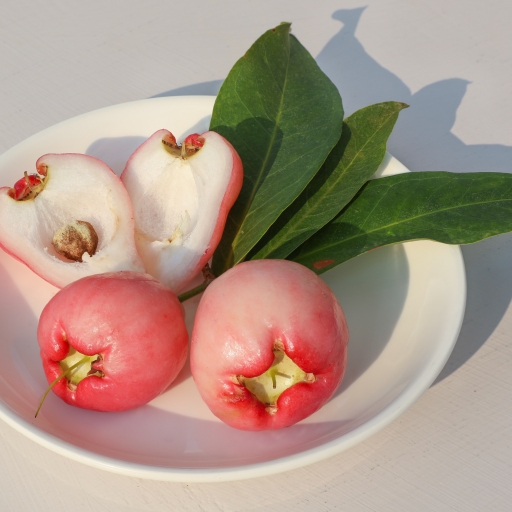
Plant Overview
Known as the "Wax Apple" or "Java Apple," this stunning tropical tree produces fruit that looks like polished glass ornaments hanging from its branches. In many Southeast Asian cultures, it is the ultimate thirst-quencher, valued for its refreshing crunch and high water content rather than an intense sugary sweetness. It is a favorite for backyard orchards in warm climates because of its rapid growth and incredibly heavy fruit yields.
🔍 How to Identify
- 🍎 The "Bell" Fruit: The fruit is uniquely pear- or bell-shaped with a waxy, translucent skin that can range from pale green to deep ruby red, looking almost artificial in its perfection.
- 🍃 Leathery Foliage: It features large, elliptic, evergreen leaves that grow in opposite pairs, creating a very dense, cooling canopy of shade.
- 🌸 Pom-Pom Flowers: The tree produces clusters of yellowish-white flowers that look like exploding "pom-poms" due to their numerous long, showy stamens.
🏡 In Your Garden
- 💧 A Thirst for Hydration: As the name "Water Apple" suggests, this tree is a heavy drinker. To get crisp, juicy fruit, the soil must stay consistently moist; if the tree dries out while fruiting, the "apples" will become dry and pithy.
- 🌡️ Frost Phobia: This is a strictly tropical species. It will suffer significant damage if temperatures drop near freezing. In non-tropical zones, it is best grown in a large pot that can be moved into a heated greenhouse during winter.
- ✂️ Growth Management: Because it grows so vigorously, it can quickly overwhelm a small yard. Regular pruning is essential not just for size, but to ensure light reaches the center of the tree for better fruit ripening.
⚠️ Safety & Toxicity
- ✅ Safe Fruit: The fruit is non-toxic and widely enjoyed raw, pickled, or in spicy "Rujak" fruit salads.
- 🐾 Seed & Leaf Caution: While the fruit is safe, the seeds and leaves of the Syzygium family can contain trace amounts of cyanide-producing compounds. It is best to discard the seeds and prevent pets from chewing on the foliage or fallen branches.
✨ Fun Fact
In Taiwan, the most expensive and sought-after variety is called the "Black Pearl." Farmers actually "stress" the trees by using salt or flooding the roots with seawater, which tricks the tree into producing smaller, much darker, and incredibly sweet fruit!

Detailed Care Instructions
To grow Syzygium samarangense (also known as the wax apple or rose apple), follow these steps:
- Climate and Lighting: Select a location that has a tropical or subtropical climate, with temperatures above 60°F (15°C). The wax apple thrives in full sun but can also tolerate partial shade.
- Soil and Drainage: The plant prefers well-draining soil that is rich in organic matter. It can tolerate a variety of soil types but does best in slightly acidic soil with a pH of 5.5 to 6.5.
- Planting: Choose healthy wax apple seedlings or propagate from seeds. Dig a hole that is slightly larger and wider than the root ball of the seedling. Place the seedling in the hole, ensuring the top of the root ball is level with or slightly above the soil surface. Backfill the hole with soil and gently firm it around the seedling.
- Watering: Keep the soil consistently moist but not waterlogged. Water the plant thoroughly after planting and continue watering it regularly, especially during dry periods.
- Fertilization: Apply a balanced fertilizer with equal ratios of nitrogen (N), phosphorus (P), and potassium (K) every two to three months during the growing season. Follow the manufacturer's instructions for the recommended amount.
- Pruning: Prune the plant to maintain its shape, remove dead or damaged branches, and improve air circulation. Pruning can also help enhance fruit production by directing energy to fruit-bearing branches.
- Mulching: Apply a layer of organic mulch around the base of the plant to help retain soil moisture, suppress weed growth, and improve soil fertility.
- Pest and Disease Control: Monitor the plant for any signs of pests, such as aphids or scale insects, and promptly take appropriate measures to control them. Ensure good air circulation around the plant to prevent fungal diseases.
- Harvesting: Wax apples usually take around 100-120 days from flowering to reach maturity. Harvest the fruit when it has reached its full size and the color has changed to its respective variety (red or green). Depending on the variety, the fruit may be slightly soft or firm to the touch.
By following these guidelines, you should be able to successfully grow Syzygium samarangense and enjoy its delicious fruits.

Place in a bright room that is sun drenched almost all day. Or directly in a south-facing window.

The best way to water this plant is to check the moisture level of the soil regularly. This can be done by sticking your finger in the soil up to your second knuckle – if the soil feels dry, it is time to water. It is important not to overwater, as this can lead to root rot. Water should be applied slowly and evenly around the base of the plant, ensuring that the soil is thoroughly moistened. If the plant is planted in a pot, ensure that there is drainage in the bottom of the pot to allow excess water to flow out. If you are not sure when to water, it is safer to err on the side of underwatering rather than overwatering.
To fertilize the plant, use a slow-release fertilizer that contains equal parts of nitrogen, phosphorus, and potassium. Apply the fertilizer during the growing season, which is typically from summer through fall. Water the plant thoroughly before and after applying the fertilizer to prevent the roots from burning. Avoid fertilizing the plant during the dormant season, which is typically during the winter. Follow the instructions on the fertilizer packaging for the amount and frequency of application.
Syzygium Samarangense plant prefers well-draining soil that is rich in nutrients. The ideal soil for this plant is loamy soil with a pH range of 5.5 to 6.5. This plant can also tolerate slightly acidic or alkaline soil with a pH range of 5.0 to 7.5. It is recommended to mix organic matter such as compost or aged manure to improve soil fertility and texture. The soil should also retain moisture without becoming waterlogged. Regularly watering the plant is necessary to maintain a moist but not soggy soil. Additionally, providing proper drainage is essential to prevent root rot. As this plant is sensitive to salt, it is important to avoid using fertilizers with high salinity levels. Overall, a well-draining, nutrient-rich, slightly acidic soil is ideal for growing Syzygium Samarangense plant.
Syzygium Samarangense can be propagated using cuttings. Select a healthy stem that is around 15-20 centimeters long and remove the leaves from the bottom two-thirds of the stem. Dip the cut end in rooting hormone powder and plant it in a pot filled with moist soil. Cover the pot with a plastic bag to create a mini greenhouse and place it in a warm, bright spot. Keep the soil moist and mist the cutting every few days. After about 2-3 weeks, the cutting should start to form roots. Once the roots are well established, transplant the new plant into a larger pot or to the desired location in the garden.
Common pests of the java apple include Mealybugs, spider mites, thrips. Make a habit of checking your java apple frequently for pests so that any infestations can be caught and managed early.








