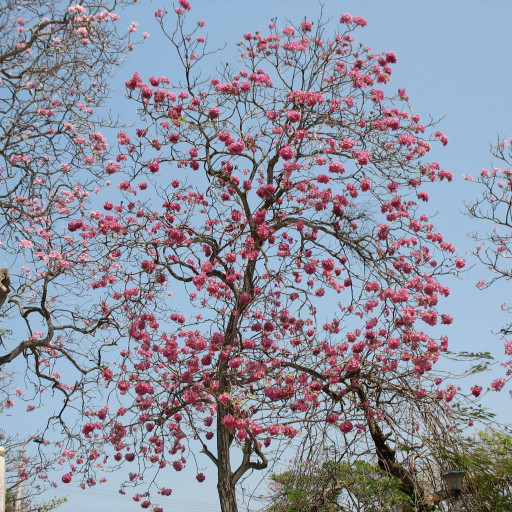
Plant Overview
Often called the "Pink Trumpet Tree," Tabebuia rosea is a breathtaking spectacle of nature that turns urban streets into soft pink clouds every spring. This Central American native is celebrated for its dramatic seasonal transformation, shedding its leaves entirely to reveal a canopy smothered in delicate, bell-shaped blooms. It is a favorite in tropical landscaping for its rapid growth and undeniable "wow factor."
🔍 How to Identify
- 🌸 The Bloom: Large clusters of trumpet-shaped flowers that range from pale blush to deep lavender, often featuring a cheerful yellow throat that fades to white.
- 🖐️ The Foliage: Distinctive "palmate" leaves, meaning they are divided into five leaflets that spread out like the fingers on a hand.
- 🪵 The Bark: A sturdy, grayish-brown trunk with vertical fissures that become deeper and more rugged as the tree matures.
🏡 In Your Garden
- ☀️ Sun Seeker: This tree is a true sun-worshipper; the more direct light it receives, the more spectacular and dense its flowering season will be.
- 🌳 Space Requirements: While tempting for small yards, it has a sprawling root system and can reach heights of over 60 feet. Plant it well away from sidewalks, driveways, or underground pipes to prevent its powerful roots from lifting the pavement.
- 💧 Drought Logic: Once established, it is remarkably hardy. It actually prefers a distinct dry spell in the winter, which "shocks" the tree into its massive, leaf-dropping flowering cycle.
⚠️ Safety & Toxicity
- ✅ Safe Status: The Pink Trumpet Tree is generally considered non-toxic to humans, dogs, and cats.
- 🧹 Slip Hazard: While not chemically dangerous, the tree drops a massive carpet of spent flowers and long seed pods. On wet walkways, these can become quite slippery, so keep an eye on paths used by children or the elderly.
✨ Fun Fact
Tabebuia rosea is the national tree of El Salvador, where it is known as Maquilishuat. Beyond its beauty, its wood is so dense and durable that it has historically been used to craft everything from fine furniture to heavy-duty construction beams.

Detailed Care Instructions
To grow a Tabebuia Rosea plant, also known as the Pink Trumpet Tree or the Rosy Trumpet Tree, follow these steps:
- Choose the right location: Tabebuia Rosea requires full sun exposure, so ensure you select a spot in your garden that receives at least 6-8 hours of direct sunlight daily.
- Soil preparation: The plant prefers well-draining soil with a slightly acidic to neutral pH level. Prepare the soil by loosening it and incorporating organic matter such as compost or well-rotted cow dung.
- Planting: Dig a hole that is slightly wider and deeper than the root ball of the Tabebuia Rosea plant. Place the plant in the hole, ensuring that the top of the root ball is level with or slightly higher than the soil surface. Backfill the hole with the prepared soil, gently pressing it down to eliminate any air pockets.
- Watering: After planting, water the Tabebuia Rosea thoroughly to settle the soil. Make sure to keep the soil consistently moist but not waterlogged. Provide regular watering during dry periods or extended droughts.
- Fertilization: Apply a balanced slow-release fertilizer in spring to promote healthy growth and flowering. Follow the package instructions for the appropriate dosage and frequency.
- Pruning: Prune the Tabebuia Rosea plant after it has finished flowering to maintain its shape and remove any dead or damaged branches. Use clean and sterilized pruning tools to prevent the spread of diseases.
- Mulching: Apply a layer of organic mulch around the base of the plant to conserve moisture, suppress weed growth, and provide insulation during temperature fluctuations.
- Protection: Tabebuia Rosea is generally a hardy tree, but young plants may require protection from extreme cold or frost. Cover the plant or consider moving it indoors during freezing temperatures.
- Pest and disease control: Monitor the plant regularly for any signs of pests like aphids, mealybugs, or scale insects. Treat infestations using appropriate organic or chemical controls. Additionally, prevent fungal diseases like powdery mildew by providing good air circulation and avoiding overhead watering.
- Enjoy the blooms: Tabebuia Rosea typically flowers in spring or summer, producing clusters of pink trumpet-shaped flowers. Take time to admire their beauty and fragrance!
Remember to check for any local gardening guidelines specific to your area, as cultivation recommendations may vary based on climate and environment.

Place in a bright room that is sun drenched almost all day. Or directly in a south-facing window.

To water this plant, one should first check the soil to see if it is dry to the touch. If it is, then the plant should be given a deep watering until the water begins to drain from the bottom of the pot or out of the ground around the plant. It is important not to overwater, as this can lead to root rot and other issues. The frequency of watering will depend on the climate and soil conditions, but generally, this plant prefers to have moist soil but not be constantly saturated. Additionally, it is important to avoid getting water on the foliage or flowers, as this can lead to disease.
To fertilize this plant, use a balanced fertilizer with a N-P-K ratio of 10-10-10. Apply the fertilizer in early spring before new growth begins and again in early summer. Follow the manufacturer's instructions for application rates. Avoid over-fertilizing as it can damage the roots of the plant. Water the soil thoroughly after fertilizing.
The best soil for Tabebuia Rosea plant is a well-draining, fertile, and nutrient-rich soil. It should be slightly acidic with a pH level of around 6.0 to 7.0. The soil should be able to retain moisture while also allowing excess water to drain away to avoid waterlogging, which can cause root rot. Organic matter can help to improve the quality of the soil and provide beneficial nutrients to the plant. A mixture of compost, peat moss, and perlite can be added to improve drainage, aeration, and nutrient retention. It is important to ensure that the soil is free from any pests or diseases that could harm the plant. Regular fertilization with a balanced fertilizer can also help to promote healthy growth and blooming.
To propagate this plant, you will need to take a cutting from the stem. Choose a healthy stem that is about 4-6 inches long. Make a clean cut at a 45-degree angle using a sharp, sterile knife or scissors. Remove any leaves from the lower 2/3 of the stem.
Dip the cut end of the stem in rooting hormone powder and place it in a well-draining potting mix. Make sure the soil is moist but not waterlogged. Cover the plant and pot with a plastic bag to increase humidity. Place the pot in a warm, bright area, but out of direct sunlight.
Check the plant regularly to make sure the soil stays moist and the plastic bag remains in place. After a few weeks, roots should start to form. Once the plant has developed a good root system, remove the plastic bag and gradually introduce it to more light.
Wait until the plant has grown enough to be transplanted into a larger pot or into the garden. When transplanting, be gentle with the roots to avoid damaging them. Water the plant well and keep it in a sunny location to encourage growth.








