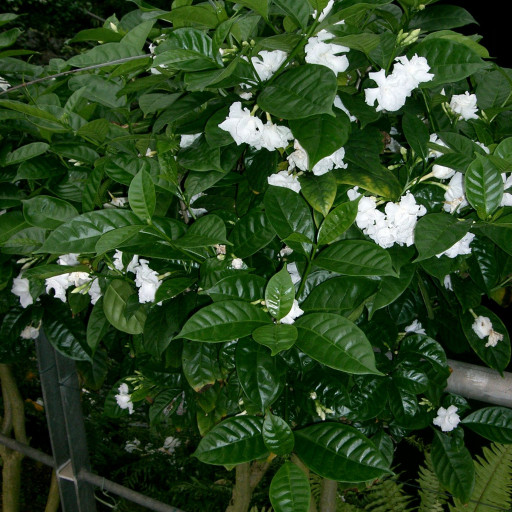
Plant Overview
Known as the Pinwheel Flower or Crape Jasmine, this evergreen shrub is a staple in tropical gardens for its pristine white blooms and glossy foliage. Often mistaken for a Gardenia due to its delicate appearance, it carries a rich history in South Asian culture, where it is frequently used in religious ceremonies and traditional medicine. Its neat, rounded growth habit makes it a favorite for those seeking a "clean" and elegant landscape look.
🔍 How to Identify
- 🌸 The Pinwheel Bloom: The flowers are pure white with five waxy petals that twist slightly, resembling a child’s pinwheel toy or a small star.
- 🍃 Deep Green Foliage: The leaves are large, lance-shaped, and have a high-gloss finish with deeply recessed veins that give them a "quilted" texture.
- 💧 Milky Latex: Like many members of the Apocynaceae family, the stems and leaves release a thick, white milky sap when broken or cut.
🏡 In Your Garden
- ☀️ Light & Humidity: This plant thrives in bright, dappled sunlight. While it can handle full sun, it prefers a bit of afternoon shade in scorching climates to keep its leaves from yellowing. It craves humidity, so it’s perfect for poolside planting.
- 🪴 Soil Nuances: It is a "heavy feeder" and prefers acidic, well-draining soil. If the leaves start to turn yellow while the veins stay green (chlorosis), it’s usually a sign that the soil is too alkaline and needs a boost of organic matter or chelated iron.
- ✂️ Structural Pruning: It naturally forms a dense, rounded mound, but it can be easily trained into a "standard" (a small tree shape) with regular pruning of the lower branches.
⚠️ Safety & Toxicity
- 🐾 Toxic to Pets: The entire plant—especially the milky sap—contains alkaloids that are toxic to dogs, cats, and horses if ingested.
- 🖐️ Skin Irritant: The sap can cause mild to moderate skin irritation or dermatitis in sensitive individuals. It is highly recommended to wear gloves when pruning or taking cuttings.
✨ Fun Fact
In India, the plant is often called "Nandi Battalu," referring to the "horns of Nandi" (the sacred bull of Shiva), because the shape of the flower bud is said to resemble the curve of a bull's horn.

Detailed Care Instructions
| Lighting | Full Sun |
| Hardiness Zones | 9A - 11 |
To grow Tabernaemontana Divaricata, also known as the crepe jasmine or pinwheel flower, follow these steps:
- Climate: First, determine if your climate is suitable for growing Tabernaemontana Divaricata. It thrives in warm tropical or subtropical regions and can be grown in USDA hardiness zones 9-11.
- Sunlight: Choose a planting location that receives full to partial sunlight, ideally 4-6 hours of direct sunlight per day. Avoid areas with excessive shade.
- Soil: Tabernaemontana Divaricata prefers well-draining soil that is fertile and enriched with organic matter. Make sure the soil pH is slightly acidic to neutral (around 6.0-7.0).
- Watering: Keep the soil evenly moist but not waterlogged. Overwatering can lead to root rot. Water the plant regularly during the growing season, reducing frequency during colder months.
- Propagation: The plant can be propagated through seeds, stem cuttings, or air layering. Seeds should be sown in a seed-starting mix and kept moist until they germinate. Stem cuttings can be taken from healthy, mature stems and rooted in a well-draining soil mix. Air layering involves rooting a section of the stem while it is still attached to the parent plant.
- Fertilization: Feed the plant with a balanced, slow-release fertilizer during the growing season. Follow the instructions on the fertilizer packaging for application rates.
- Pruning: Prune the plant regularly to maintain its shape and promote bushier growth. Remove dead or diseased branches, and cut back any overly long or leggy stems.
- Pests and diseases: Monitor the plant for common pests such as aphids, mealybugs, and spider mites. Treat infestations promptly with insecticidal soap or neem oil. Watch out for fungal diseases like powdery mildew and treat with appropriate fungicides if necessary.
- Protection: If you live in a cold climate, protect the plant from frost by covering it or moving it indoors during winter.
- Mulching: Apply a layer of organic mulch around the base of the plant to help conserve moisture, suppress weed growth, and keep the root zone insulated.
By following these steps and providing the necessary care, you can successfully grow Tabernaemontana Divaricata and enjoy its beautiful flowers.

Place in a window with dappled sun or a spot in the middle of a room. Or directly in a window facing west or east.

To properly water this plant, you should allow the soil to dry out partially before watering. Test the soil by inserting your finger about an inch down into the soil - if it feels dry, it's time to water. Use a watering can or a hose with a gentle stream to water the plant at the base of the stem, taking care not to get water on the leaves. Water until the excess water flows out of the drainage hole at the bottom of the pot or soil, and then stop. Avoid over-watering and allowing the plant to sit in standing water. Adjust the frequency of watering based on the temperature and humidity of the environment, as well as the size of the plant and pot.
To fertilize this plant, choose a balanced fertilizer with equal amounts of nitrogen, phosphorous, and potassium. Apply the fertilizer in early spring when new growth appears and again in midsummer. Dissolve the fertilizer in water according to the package instructions and water the plant with the solution. Be careful not to over-fertilize as this can encourage too much leaf growth at the expense of blooms. Water the plant regularly, especially during the growing season, to keep the soil moist but not waterlogged.
The ideal soil for Tabernaemontana Divaricata plant would be a well-draining, nutrient-rich, and aerated soil mix. The pH range of the soil should be mildly acidic to neutral, ranging from 5.5 to 7.5. A mix of soil, sand, and peat moss, in equal proportions, would provide the required moisture retention and drainage. The soil should be loose enough to allow the roots to spread comfortably and access nutrients easily. Organic matter can also be added to improve soil fertility and structure. Avoid using heavy or clayey soils that retain water for too long and can lead to root rot. Additionally, it is recommended to fertilize the soil with a balanced, slow-release fertilizer every month during the growing season to promote healthy growth and flowering.
There are different ways to propagate this plant, but one common method is through stem cuttings. Here are the steps:
- Select a healthy stem from the parent plant that is about 4-6 inches long and has several mature leaves.
- Using clean and sharp pruning shears, make a clean cut below a node (where a leaf attaches to the stem) at a 45-degree angle.
- Remove the lower leaves from the stem, leaving only a few near the top.
- Dip the cutting in rooting hormone powder (optional but can increase success rates).
- Prepare a potting mix of equal parts perlite and peat moss and moisten it.
- Use a pencil or chopstick to make a hole in the potting mix and insert the cutting up to the first node.
- Firmly press the potting mix around the cutting and water lightly.
- Cover the cutting and pot with a clear plastic bag or a plastic container with holes to create a mini greenhouse.
- Place the pot in a bright but indirect light location and maintain soil moisture (avoid overwatering or letting the soil dry out completely).
- After a few weeks, check the cutting for roots by gently tugging on it. If there is resistance, roots have formed.
- When the cutting has developed a good root system, remove the plastic cover and gradually acclimate the new plant to lower humidity.
- Transplant the new plant to a larger pot or to the garden after it has grown several new leaves and is well-established.
Common pests of the crape jasmine include Mealybugs, spider mites, aphids, thrips. Make a habit of checking your crape jasmine frequently for pests so that any infestations can be caught and managed early.








