Plant Overview
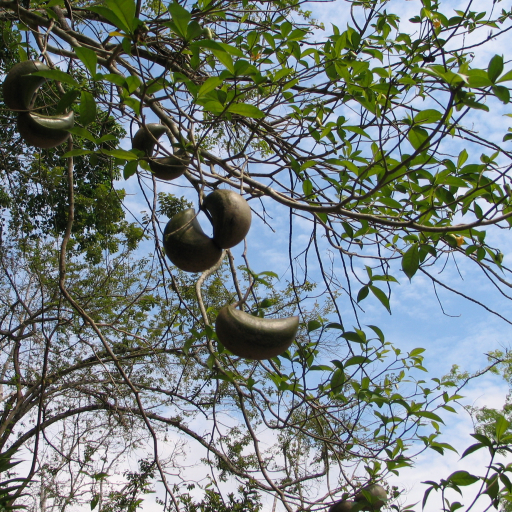
Often referred to by the colorful nicknames "Horseballs" or "Cojón de Baco," this tropical tree is a showstopper in any lowland jungle or botanical collection. Native to the humid corridors of Central America and Southern Mexico, it is cherished for its glossy, deep-green foliage and its incredibly strange, paired fruits that dangle from the branches. While it belongs to the same family as the fragrant Frangipani, this plant trades delicate elegance for bold, sculptural drama.
🔍 How to Identify
- 🥚 The Fruit: The most unmistakable feature; it produces large, paired, oval-shaped pods that hang in twos. They have a rough, lenticelled (bumpy) skin that looks almost like a pair of eggs or stones.
- 🌀 The Flowers: Produces clusters of creamy yellow or white flowers with five petals that curve slightly, resembling a small pinwheel. They often emit a soft, sweet fragrance in the evening.
- 🍃 The Foliage: Large, elliptical leaves that are smooth and shiny. Like many members of the Dogbane family, the stems and leaves will "bleed" a thick, milky white latex if broken.
🏡 In Your Garden
- 💧 Thirsty Foundations: This tree is a child of the rainforest. It thrives in high humidity and deep, rich soil that stays consistently moist. If the soil dries out completely, the large leaves will quickly droop in protest.
- 🌳 Space to Breathe: While it starts as a manageable shrub, Tabernaemontana donnell-smithii can grow into a substantial tree. It is best suited for large tropical landscapes where its wide canopy and falling heavy fruits won't cause a "bonk" on the head to passersby.
- 🌡️ Warmth is Key: It is strictly a tropical species. It has zero tolerance for frost and will begin to suffer if temperatures consistently dip below 50°F (10°C).
⚠️ Safety & Toxicity
- 🚫 Status: TOXIC. Like many plants in the Apocynaceae family, the entire plant contains alkaloids that can be harmful if ingested.
- 🧪 The Sap: The milky white latex can be a significant skin and eye irritant. Always wear gloves when pruning, and ensure that curious pets or children do not chew on the fallen fruits or leaves, as ingestion can cause severe stomach upset and neurological symptoms.
✨ Fun Fact
The name "Cojón de Baco" translates to "Bacchus's Testicles," a nod to the Roman god of wine and theater. In local folk medicine, the sticky latex has historically been used to treat skin infections and even to extract "torsalo" (botfly larvae) from the skin by suffocating them.

Detailed Care Instructions
To grow Tabernaemontana Donnell-smithii, also known as Donnell's Pinwheel, follow these steps:
- Climate and soil requirements: Donnell's Pinwheel thrives in tropical or subtropical climates. Ensure the plant receives at least 6-8 hours of direct sunlight daily, and keep it in well-draining soil.
- Propagation: You can propagate Donnell's Pinwheel through seeds or stem cuttings. If you have access to mature plants, collect the seeds from the ripened fruit. Sow the seeds directly in moist potting soil, covering them with a thin layer of soil. For stem cuttings, take a 4-6 inch cutting from the tip of a healthy branch and remove the lower leaves. Dip the cut end in rooting hormone, then plant it in a pot filled with moist potting soil.
- Potting: If using stem cuttings, plant them in small pots filled with well-draining potting soil. Place the pots in a warm, bright location but avoid direct sunlight. Keep the soil moist until the cuttings establish roots. Transplant the rooted cuttings into larger pots to allow for growth.
- Watering: Donnell's Pinwheel plants prefer consistent moisture levels but should not be waterlogged. Water the plant when the top inch of soil feels dry and allow excess water to drain away. Mist the foliage occasionally to increase humidity levels.
- Fertilization: Feed the plant with a balanced, water-soluble fertilizer once a month during the growing season (spring and summer). Dilute the fertilizer according to the package instructions and apply it to the soil.
- Pruning: To maintain a bushy shape, pinch back the growing tips of the plant occasionally. This encourages branching and a compact growth habit.
- Pests and diseases: Monitor the plant for common pests like aphids, spider mites, and whiteflies. Treat any infestations immediately using organic or chemical insecticides. Watch for signs of leaf spot diseases or fungal issues and address them promptly by adjusting watering habits and improving air circulation.
Remember to research specific care requirements for Tabernaemontana Donnell-smithii as different varieties may have slight variations.
To water this particular plant, it is important to first assess the surrounding environment. Factors such as humidity and temperature play a role in determining the frequency and amount of water needed. It is essential to avoid over-watering, as this can lead to root rot and other issues.
A good method is to water deeply and allow the soil to dry out slightly before watering again, rather than providing shallow frequent watering. When watering, aim to saturate the soil evenly around the base of the plant, while avoiding getting water on the leaves. Drainage is also important for this plant, so ensure that the pot or planting area allows for excess water to escape.
Additionally, it is ideal to use room temperature or tepid water, rather than cold water, to avoid shocking the roots. Watering during the morning or early afternoon is recommended to allow the plant to fully absorb the water before cooler nighttime temperatures. With the proper care and attention to watering, this plant can thrive and produce beautiful blooms.
To fertilize this plant, use a balanced fertilizer with equal amounts of nitrogen, phosphorus, and potassium. It is recommended to fertilize once a month during the growing season, which is from spring to early fall. Please follow the manufacturer's instructions for the amount of fertilizer to use, and be careful not to over-fertilize as this can damage the plant. Additionally, make sure the soil is moist before fertilizing as dry soil can also cause damage to the plant.
The ideal soil for the Tabernaemontana Donnell-smithii plant is a well-draining, nutrient-rich soil that is slightly acidic. The soil should have a pH level of around 6.0 to 6.5 and should be rich in organic matter, such as peat moss or compost. The soil should be moist but not waterlogged, and the plant should be watered regularly to maintain adequate moisture levels. It is important to note that the Tabernaemontana Donnell-smithii plant is sensitive to fertilizers and should only be fertilized sparingly with a balanced fertilizer. Moreover, the plant prefers a warm, humid environment and should be located in a partially shaded spot.
To propagate this plant, you will need to take a stem cutting from a mature and healthy plant. Choose a stem that is about 6 inches long and has at least 2-3 nodes. Use a clean, sharp knife or scissors to make a clean cut just below a node.
Remove any leaves or flowers from the bottom half of the stem, leaving only a few leaves at the top. Dip the cut end in rooting hormone powder to encourage root growth.
Prepare a pot with well-draining potting soil and make a planting hole in the center. Insert the stem cutting into the hole and gently press the soil around it. Water the soil lightly to settle it around the cutting.
Cover the pot with a plastic bag or clear plastic wrap to create a humid environment. Place the pot in a warm, bright area, but out of direct sunlight.
Check the soil moisture regularly and water when the top inch of soil feels dry. After a few weeks, check for root growth by gently tugging on the cutting. Once roots have formed, remove the plastic bag and move the plant to a brighter location.
Continue to care for the young plant by providing regular water and fertilization, and eventually transplant it into a larger pot or into the ground once it has outgrown its container.








