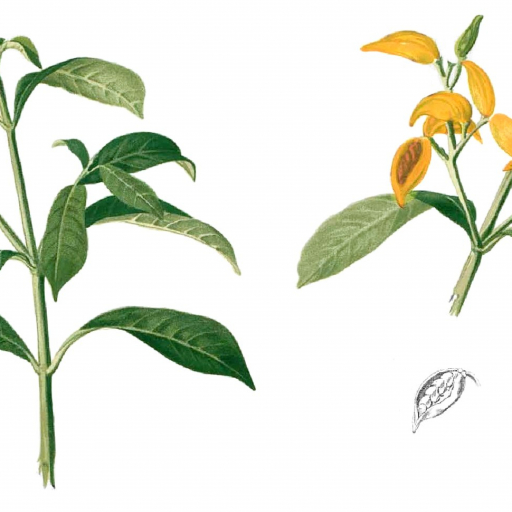
Plant Overview
Often called the Banana Bush or Windmill Bush, this tropical evergreen is a standout in Southeast Asian and Australian landscapes. It is beloved for its "pinwheel" flowers that seem to spin in the breeze and its curious, horn-shaped fruit. While it looks like a delicate jasmine relative, it is a hardy shrub that adds a lush, architectural feel to any warm-climate garden.
🔍 How to Identify
- 🌼 Pinwheel Blooms: Small, waxy white flowers with five petals that are distinctly twisted or "falcate," making them look like miniature white propellers.
- 🍃 Glossy Foliage: Deep green, elliptical leaves with a shiny, polished surface that helps the plant thrive in high-humidity environments.
- 🍌 Banana Pods: The most striking feature—paired, curved orange or yellow seed pods that resemble tiny bananas or horns, which eventually split open to reveal bright red seeds.
🏡 In Your Garden
- 🌱 Tropical Resilience: This plant thrives in filtered light or dappled shade. It is particularly valued because it can handle "wet feet" better than many other ornamental shrubs, making it ideal for tropical rain-heavy seasons.
- ✂️ Easy Shaping: It has a naturally bushy growth habit but takes very well to pruning. It is often used as a fragrant "living fence" or a mid-height screen to block out noisy neighbors or street views.
⚠️ Safety & Toxicity
- 🥛 Irritating Sap: The plant contains a thick, milky white latex (sap) that flows whenever a leaf or stem is broken.
- 🚫 Toxic if Ingested: This sap is toxic and can cause significant skin irritation or eye inflammation. It is vital to keep this plant away from pets that like to chew and to wear gloves when pruning to avoid "sap burn."
✨ Fun Fact
In the Philippines, the plant is known as Pandakaki. While the sap is irritating, historical folk medicine practitioners used controlled preparations of the roots and leaves to treat everything from snakebites to skin diseases—though modern gardeners should stick to just enjoying its beauty from a distance!

Detailed Care Instructions
To grow a Tabernaemontana Pandacaqui plant, you can follow these steps:
- Purchase a healthy plant from a reputable nursery or obtain seeds or cuttings.
- Choose a suitable location for the plant. Tabernaemontana Pandacaqui prefers partial shade to full sun and well-draining soil.
- Prepare the planting hole by loosening the soil and adding organic matter such as compost or aged manure.
- Place the plant in the hole, making sure the root ball is level with or slightly above the soil surface.
- Fill the hole with soil, gently firming it around the plant.
- Water the plant thoroughly after planting to help settle the soil and provide moisture.
- Water the plant regularly, keeping the soil evenly moist but not waterlogged. Avoid overwatering as it can cause root rot.
- Mulch around the base of the plant to help retain moisture and suppress weed growth.
- Prune the plant as needed to maintain its shape and remove any dead or damaged branches.
- Fertilize the plant during the growing season with a balanced slow-release fertilizer, following the package instructions.
- Monitor the plant for pests such as aphids or mealybugs and treat accordingly using organic or chemical control methods if necessary.
- Provide support if required, as some varieties of Tabernaemontana Pandacaqui can be vining or have sprawling growth habits.
- Protect the plant from extreme temperatures or frost if necessary.
- Enjoy the beautiful blooms of the Tabernaemontana Pandacaqui plant, which typically appear in the spring or summer.
It's important to note that the Tabernaemontana Pandacaqui plant is toxic if ingested, so keep it away from children and pets.

Place in a bright room that is sun drenched almost all day. Or directly in a south-facing window.

To water this plant, it is recommended to thoroughly moisten the soil around the base of the plant while avoiding overwatering. This can be done by pouring water evenly around the soil, allowing it to soak in before pouring more. It is important to ensure that the soil is not waterlogged as this can lead to root rot and other health problems for the plant. Additionally, it is important to water the plant less frequently during the winter months when growth slows down. Regularly checking the soil moisture level and adjusting watering as necessary can help ensure that this plant thrives in its environment.
To fertilize this plant, use a balanced fertilizer with a ratio of 10-10-10, applying it once a month during the growing season of spring and summer. Water the plant thoroughly before and after applying the fertilizer to avoid burning the roots. Additionally, the plant can benefit from occasional applications of organic matter such as compost or manure to further nourish the soil.
Tabernaemontana Pandacaqui is a plant that requires well-draining and nutrient-rich soil to grow properly. The soil should have a pH level of around 6 to 7.5, which is slightly acidic to neutral. A soil mix that contains a blend of organic matter such as peat moss, compost, and perlite or vermiculite will create an ideal medium for the plant's growth. The soil should not be too dense or compacted, as it can limit the root growth and water drainage of the plant. It is recommended to avoid using heavy clay soils or soils that retain too much moisture. A sandy loam soil with a light texture that allows good aeration will work well for this plant. Additionally, the soil should be kept moist but not overly wet, as too much water can cause root rot and other damage to the plant. Overall, providing a well-draining, nutrient-rich soil mix will help ensure healthy growth and flowering of Tabernaemontana Pandacaqui.
To propagate this plant, take softwood cuttings from a healthy parent plant in the early summer. Cuttings should be about 4-6 inches in length and include a few leaves at the tip. Remove the lower leaves from the stem and dip the cut end in rooting hormone powder. Place the cutting in a pot filled with a well-draining potting mix and keep it moist until roots start to form. You can also propagate the plant by layering, but this method takes longer. Select a low branch and bend it to the ground. Use a sharp knife to remove a small section of the branch's bark and apply rooting hormone. Cover the wound with damp soil and secure it in place with a stone or a wire. Wait for new roots to grow before cutting the stem from the parent plant.








