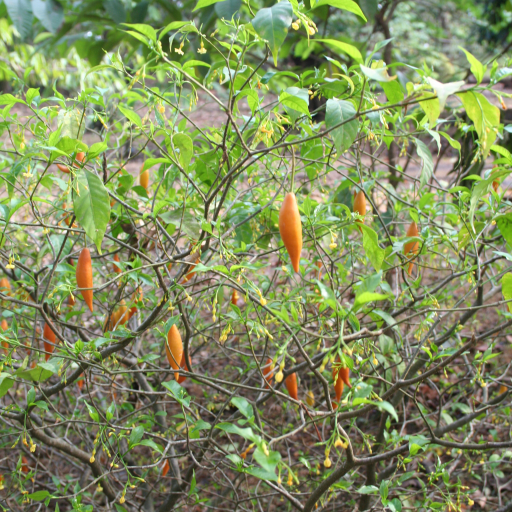
Plant Overview
Deep in the rainforests of West-Central Africa, the Iboga shrub is revered as a "sacred teacher" and a pillar of the Bwiti spiritual tradition. Known primarily for the powerful alkaloids found in its roots, this perennial plant plays a central role in initiation rites and communal healing. While it may look like an unassuming garden shrub, it carries a heavy cultural and chemical legacy that spans centuries.
🔍 How to Identify
- 🌿 The Foliage: Look for thin, dark green leaves that grow in opposite pairs. They are typically lance-shaped and have a smooth, slightly glossy texture.
- 🌸 The Blooms: Small, tubular flowers appear in clusters. They are usually white or creamy yellow, often featuring delicate pink or purple markings in the center.
- 🍊 The Fruit: One of its most distinctive features is its bright orange, teardrop-shaped fruit. Though they look tempting, these fruits grow in pairs and are generally not the part of the plant used for its famous properties.
🏡 In Your Garden
- ☁️ The Understory Life: In its natural habitat, Iboga grows beneath the canopy of giant tropical trees. This means it thrives in high humidity and dappled shade; direct, harsh sunlight will quickly scorch its tender leaves.
- 💧 Drainage is Key: While it loves the moisture of the rainforest, it cannot stand "wet feet." It requires a very airy, well-draining soil mix rich in organic matter. It is notoriously sensitive to transplanting, as its long taproot does not like to be disturbed once established.
- 🌡️ Warmth Only: This is a strictly tropical plant. It will stop growing or drop its leaves if temperatures dip below 60°F (15°C) and cannot survive even a light frost.
⚠️ Safety & Toxicity
- 🚫 Status: HIGHLY TOXIC / PSYCHOACTIVE.
- 🐾 Details: All parts of the plant, especially the root bark, contain potent alkaloids like ibogaine. Ingestion can lead to severe neurological effects, heart palpitations, and hallucinations. It is considered a controlled substance in many countries and should never be kept within reach of children or pets.
✨ Fun Fact
The Iboga plant is currently at the center of modern medical research for its potential to "reset" the brain. Scientists are studying whether compounds derived from its roots can help interrupt severe chemical addictions, bridging the gap between ancient jungle ritual and 21st-century neuroscience.

Detailed Care Instructions
Growing Tabernanthe Iboga plants can be challenging, as they have specific growth requirements. Here are some steps to help you grow Tabernanthe Iboga:
- Obtain seeds or cuttings: Tabernanthe Iboga seeds can be purchased online, or you can try to obtain mature fruits and collect the seeds yourself. Alternatively, you can find nurseries or experienced growers that may sell Iboga cuttings.
- Provide the right growing conditions: Tabernanthe Iboga plants prefer warm, tropical climates. They require a temperature range of 75-85°F (24-29°C). Ensure the growing area is humid, with around 70-80% humidity. Use a well-draining soil mix that retains moisture but also allows excess water to drain.
- Prepare the germination medium: Use a mixture of peat moss and sand to create a germination medium. Sterilize the mixture by baking it in an oven at 250°F (120°C) for 30 minutes. Let it cool before use.
- Germination: Sow the seeds on the sterilized germination medium and cover them lightly with a thin layer of soil. Maintain moist conditions by misting the surface regularly. Keep the temperature around 80°F (27°C) and provide indirect light. Germination can take anywhere between a few weeks to several months, so be patient.
- Transplanting: Once the seedlings have grown a few inches tall and have developed several sets of leaves, they can be transplanted into larger pots. Use a well-draining potting mix with added compost or organic matter. Provide filtered or indirect light, as direct sunlight may scorch the young plants.
- Watering and fertilizing: Keep the soil consistently moist but not waterlogged. Water the plants whenever the top inch of soil feels dry. Fertilize every 2-4 weeks using a balanced organic fertilizer, following the package instructions.
- Pruning and training: As the plants grow, consider pruning and training them to shape desired forms. Cutting the plants back will encourage bushier growth and a stronger root system.
- Protect from pests and diseases: Inspect the plants regularly for pests such as aphids, spider mites, or scale insects, and treat as necessary. Avoid overwatering to prevent root rot.
- Repotting: Tabernanthe Iboga plants require periodic repotting as they grow. Choose pots that are slightly larger than the current container, ensuring good drainage.
- Harvesting: If all goes well, after several years, the Tabernanthe Iboga plant may produce alkaloid-rich roots. Harvest the roots carefully, leaving some behind in the soil to promote regrowth.
Remember, Tabernanthe Iboga is a controlled substance in some countries due to its psychoactive properties, so make sure to understand and comply with the legal regulations in your area.

Place in a window with dappled sun or a spot in the middle of a room. Or directly in a window facing west or east.
To properly water this plant, you should ensure that the soil is always moist but not waterlogged. Check the soil regularly by sticking your finger about an inch deep into the soil. If it feels dry, it is time to water. Use a watering can with a fine spout to evenly distribute water throughout the soil without disturbing the plant or the soil structure. It is important not to let the plant become too dry, as this can lead to wilting and other issues. Additionally, make sure to use room temperature water and avoid getting water on the leaves or stem, as this can cause damage or disease.
To fertilize your plant, use a balanced fertilizer with equal amounts of nitrogen, phosphorus, and potassium. Apply the fertilizer every 4 to 6 weeks during the growing season (spring and summer). Do not over-fertilize, as this can result in fertilizer burn and damage to the plant. Water the plant regularly and ensure that the soil is well-draining. Avoid getting fertilizer on the leaves or stem of the plant, as this can cause damage and leaf burn.
The soil used for Tabernanthe Iboga plant should ideally be well-draining and have a slightly acidic pH level between 5.5 to 6.5. It is recommended to use a soil mix that contains a blend of organic matter such as peat moss, compost, or well-rotted manure along with coarse sand or perlite to improve the soil's drainage. The plant prefers moist but not waterlogged soil, and therefore, it is crucial to avoid compacted or heavy soil mixes that can retain excessive moisture and lead to root rot. Additionally, the soil should be rich in essential micronutrients such as iron, manganese, and magnesium, which are necessary for the plant's growth and development. Therefore, incorporating slow-release fertilizers or organic supplements like fish emulsion or seaweed extract can improve the soil's nutrient profile and promote healthy plant growth.
The propagation of this plant can be achieved through taking stem cuttings or through dividing the rootstock. The stem cuttings should be taken from the lower part of the stem, around 10-15cm in length. The leaves should be removed from the lower part of the cutting, leaving a few at the top. The cutting can then be dipped in rooting hormone powder and planted in a propagation mix of equal parts peat and perlite. The cutting should be kept moist and in a warm, shady location until it roots and new growth appears.
To divide the rootstock, the plant should be carefully dug up and the rootstock separated into several sections. The sections should each have a healthy shoot and root system. These can then be replanted and watered in.
Propagation is best undertaken in spring or early summer, when the plant is actively growing. It is important to keep the new cuttings or divisions moist and out of direct sunlight until established. Once established, Tabernanthe Iboga is a hardy and resilient plant.








