Plant Overview
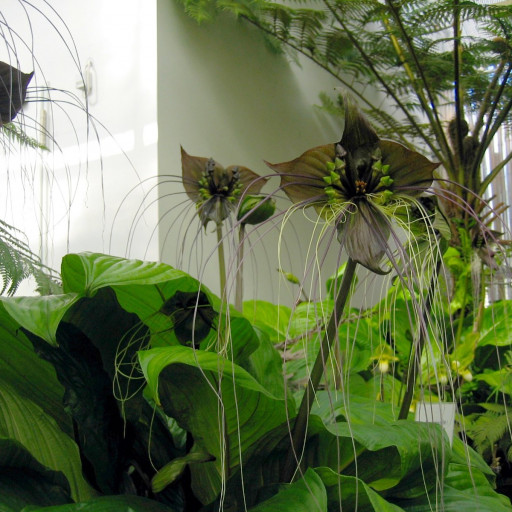
Known as the "Black Bat Flower" or the "Devil Flower," Tacca chantrieri is one of nature’s most gothic masterpieces. Originating from the humid, shaded forest floors of Southeast Asia, this plant is famous for its uncanny resemblance to a bat in flight, complete with long, trailing "whiskers." It is a favorite for collectors who want to add a touch of mystery and drama to their indoor jungle.
🔍 How to Identify
- 🦇 The "Wings": The most striking feature is the pair of large, wing-like bracts (modified leaves) that are a deep maroon or midnight purple, appearing almost black.
- 🧶 The Whiskers: Hanging from the center of the flower are long, thread-like bracteoles that can grow up to 10 inches long, looking like elegant, dark streamers.
- 🍃 Lush Foliage: When not in bloom, the plant features large, glossy, lance-shaped green leaves that look similar to a Peace Lily but with deeper ribbing and a more substantial texture.
🏡 In Your Garden
- ☁️ Humidity is Vital: Because they naturally live on the tropical rainforest floor, they crave high humidity. If the air is too dry, the edges of the "wings" will turn brown and crisp before the flower even fully opens.
- 🌬️ The Airflow Paradox: While they love moisture, stagnant air can lead to fungal issues. They need a "goldilocks" environment—humid but with gentle air circulation to keep the crown healthy.
- 🌱 The "Diva" Factor: These plants possess a sensitive root system and hate being moved. Repotting should be done sparingly, as the plant may go into a growth "protest" for several weeks after its roots are disturbed.
⚠️ Safety & Toxicity
- 🚫 Status: Generally non-toxic but not edible.
- 🐾 Details: While the Bat Flower is not listed as highly toxic to pets by major veterinary databases, ingesting the foliage or tubers can cause mild stomach upset. The sap may also cause slight skin irritation for those with sensitive skin.
✨ Fun Fact
🎭 The Great Mimic: For years, scientists believed the Bat Flower evolved its dark color and "whisker" filaments to look and smell like rotting meat to attract carrion flies. However, recent studies suggest the plant is actually primarily self-pollinating, making its elaborate "bat" appearance one of nature's most beautiful coincidences!

Detailed Care Instructions
| Color | White, Purple |
| Soil Ph | 6 To 7 |
| Lighting | Part Sun |
| Soil Type | Loamy, Well-Draining |
| Bloom Time | Mid-Spring To Early Fall |
| Plant Type | Tropical Herb |
| Mature Size | 2 To 3 Feet Tall |
| Native Area | Tropical And Subtropical Asia |
| Sun Exposure | Partial Shade, Shade |
| Hardiness Zones | 10 To 11 (Usa) Or Indoors |
To grow Tacca chantrieri, also known as the black bat flower plant, you can follow these steps:
- Climate and Location: Tacca chantrieri is native to tropical areas, so it thrives in warm and humid climates. Make sure to place it in a location with filtered or indirect light, as direct sunlight can scorch its delicate leaves.
- Soil: Use well-draining and rich potting soil that retains some moisture but does not become waterlogged.
- Watering: Keep the plant's soil consistently moist but not excessively wet. Water when the top inch of soil feels dry, and avoid letting it dry out completely.
- Humidity: This plant prefers high humidity levels. You can increase humidity by placing a tray of water near the plant, misting the leaves regularly, or using a humidifier.
- Fertilizer: Feed the plant with a balanced, water-soluble fertilizer once every two weeks during the growing season (spring and summer). Reduce fertilization during the dormant period (fall and winter).
- Repotting: When the plant's roots become crowded, you can repot it into a slightly larger container with fresh potting soil. Be gentle when handling the plant, as its tubers are delicate.
- Pruning: Remove any dead or damaged leaves or flowers to maintain the plant's health and appearance.
- Propagation: Tacca chantrieri can be propagated through division or from its seeds. To propagate by division, separate the tubers during repotting. Sow seeds in a container with moist potting soil, cover them lightly, and keep them warm and humid until germination.
- Dormancy: During the winter months, Tacca chantrieri often goes into a dormant phase. Reduce watering and lower the temperature slightly to mimic its natural environment.
- Protection: Protect the plant from extreme temperatures, drafts, and strong winds, as it is sensitive to these conditions.
By following these guidelines, you can foster the growth and beauty of the Tacca chantrieri plant.

Place in a window with dappled sun or a spot in the middle of a room. Or directly in a window facing west or east.

To water this plant, one should first check the soil moisture level by inserting a finger into the soil. If it feels dry to the touch up to the first knuckle, it is time to water. When watering, use room-temperature or lukewarm water to avoid shocking the plant. Water the plant slowly and deeply, ensuring that the water reaches the roots. Ideally, the plant should be watered moderately and consistently to keep the soil evenly moist. Overwatering can result in root rot and other issues, so it is crucial to avoid leaving the plant sitting in standing water. Additionally, it is important to avoid getting water on the leaves or flowers, as this can cause spotting or fungal growth.
To fertilize the Tacca Chantrieri plant, use a balanced fertilizer with an NPK ratio of 10-10-10. Apply the fertilizer once a month during the growing season (spring and summer) and reduce the frequency to every two months during the dormant season (fall and winter). Dissolve the fertilizer in water according to the package instructions and water the plant thoroughly. Avoid over-fertilizing, as this can lead to leaf burn and stunted growth.
The best soil to use for the Tacca Chantrieri plant is a nutrient-rich, well-draining soil mix with a slightly acidic pH. It should also have good water retention capacity, as the plant requires consistent moisture, but not waterlogged conditions. Compost or well-rotted manure can be added to the soil mix to increase its nutrient content. Additionally, using a soil mix with organic materials such as peat moss, coconut coir, or leaf mold can help improve the soil structure and enhance water retention. It is recommended to avoid using heavy soil mixes that can retain too much moisture, or sandy soil mixes that can dry out too quickly.
To propagate the plant, first choose a mature plant with healthy roots. Next, carefully remove the plant from its pot and gently separate any offshoots or rhizomes from the main plant. Cut the rhizomes into smaller sections, making sure each section has at least one healthy bud.
Prepare a pot with well-draining soil mix and plant the rhizomes just below the surface of the soil. Water the plant thoroughly and place it in a warm, bright location with indirect sunlight. Keep the soil moist but not waterlogged, and avoid overwatering as this can lead to root rot.
After a few weeks, the propagated plant should start to show signs of growth, with new leaves and stems emerging from the rhizomes. Once the new plant has become established, it can be transferred into a larger pot or planted in the ground, depending on your preference. Remember to continue caring for the new plant with proper watering, fertilization, and pruning as needed to encourage healthy growth.
Common pests of the black bat flower include Spider mites, thrips, snails. Make a habit of checking your black bat flower frequently for pests so that any infestations can be caught and managed early.








