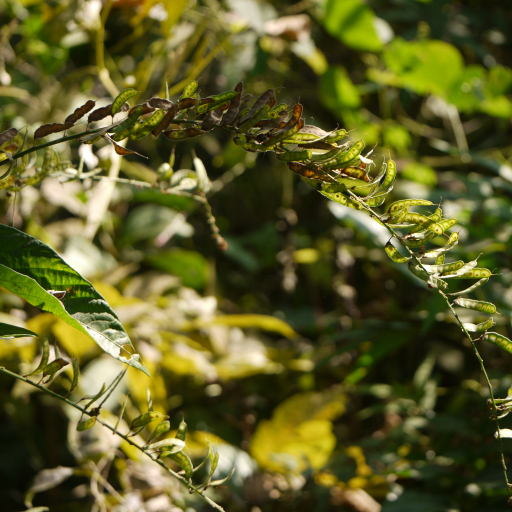
Plant Overview
Often called the Gall-leaf or the Three-cornered Tadehagi, this resilient subshrub is a master of architectural disguise. Native to the tropical landscapes of Southeast Asia, China, and Australia, it is easily recognized by its peculiar "winged" leaves that look like green arrowheads. In many regions, it is a respected member of the traditional medicine cabinet, often brewed into "Gourd Tea" to treat various ailments.
🔍 How to Identify
- 🍃 Winged Petioles: The most distinctive feature is the leaf stalk (petiole), which has wide, flat "wings" that make the leaf look like it is divided into two distinct segments.
- 🌸 Pea-like Blooms: It produces small, delicate flowers in shades of pale purple, pink, or lavender that grow in elongated clusters at the tips of the branches.
- 📏 Geometric Shape: The overall leaf structure is triangular or lance-shaped, leading to its Latin name triquetrum, which means "three-cornered."
🏡 In Your Garden
- 🌱 Soil Improver: As a member of the legume family, this plant is a "nitrogen fixer." It hosts special bacteria in its roots that pull nitrogen from the air and put it into the soil, acting as a natural fertilizer for surrounding plants.
- ☀️ Hardy Survivor: It thrives in open grasslands and forest edges. In a garden setting, it prefers well-drained soil and plenty of sunlight, showing great resilience against dry spells once its root system is established.
⚠️ Safety & Toxicity
- 🟢 Low Risk: Tadehagi triquetrum is generally considered non-toxic to humans and is frequently used in traditional herbal preparations.
- 🐾 Pet Watch: While it is not documented as a poisonous species for cats or dogs, it is always best to discourage pets from munching on garden plants, as any high-fiber plant material can cause mild digestive upset in small animals.
✨ Fun Fact
In Traditional Chinese Medicine, this plant is known as Hu Lu Cha (Gourd Tea). This isn't because it tastes like gourd, but because the unique shape of the winged leaf is said to resemble the silhouette of a traditional Wu Lou gourd bottle!

Detailed Care Instructions
To grow Tadehagi Triquetrum, also known as Hairy Vetch, you can follow these steps:
- Choose a suitable planting location: Tadehagi Triquetrum prefers full sun or partial shade. Ensure the planting area has well-drained soil.
- Prepare the soil: Remove any weeds or grass from the planting area. Loosen the soil using a garden fork or tiller. Tadehagi Triquetrum prefers slightly acidic soil, so you may need to amend the soil with organic matter, such as compost or peat moss, if your soil is too alkaline.
- Sow the seeds: Scatter the Tadehagi Triquetrum seeds evenly over the prepared soil. The recommended seeding rate is approximately 2 pounds per 1,000 square feet. Gently rake over the seeds to ensure good seed-to-soil contact, as this promotes germination.
- Water the seeds: After sowing the seeds, water the area thoroughly to ensure the seeds are moistened. Keep the soil consistently damp but not waterlogged during the germination and early growth stage.
- Maintain the plants: Once the seeds have germinated, thin the seedlings to allow for proper spacing. Tadehagi Triquetrum plants should ideally have about 4-6 inches of space between each other. Water the plants regularly, especially during dry periods.
- Fertilize if necessary: If your soil lacks nutrients, you can provide a balanced fertilizer for the Tadehagi Triquetrum plants. Follow the manufacturer's instructions for application rates and timing.
- Control weeds: Keep the planting area free from weeds as they can compete with the Tadehagi Triquetrum plants for nutrients and water.
- Harvest if desired: Depending on your purpose for growing Tadehagi Triquetrum, you can harvest the plants to use as green manure, forage, or cover crop. The optimal time for harvesting would be when the plants are in full bloom.
By following these steps, you can successfully grow Tadehagi Triquetrum plants in your garden or desired area.

Place in a bright room that is sun drenched almost all day. Or directly in a south-facing window.

When caring for this plant, it is important to provide adequate watering. The soil should be kept moist but not waterlogged, as excessive moisture can lead to root rot. Watering frequency will depend on various factors such as the plant's age, growing conditions, and the weather.
One effective way to water this plant is by gently pouring water around the base of the stem. Avoid getting water on the leaves or flowers as this can promote the growth of fungal diseases.
Another method is to soak the plant's container in a shallow tray filled with water until the soil is moist. Afterward, allow the excess water to drain out before putting the plant back in its original location.
It is also essential to use a well-draining soil mix for this plant, as poor drainage can lead to water-logging and cause damage to the roots. It's a good idea to check the soil moisture level regularly to ensure that it doesn't become too dry or too wet.
To fertilize this plant, use a balanced all-purpose fertilizer with equal amounts of nitrogen, phosphorus, and potassium. Apply the fertilizer during the growing season every two to three weeks, diluting it to half strength. Water the plant before and after fertilizing to prevent root burn. Avoid fertilizing during periods of drought or extreme temperatures.
Tadehagi Triquetrum prefers a well-draining soil that is rich in nutrients. The ideal pH range for the soil should be between 6.0-7.5. It is recommended to use a mixture of organic compost, peat moss, and sand to create a well-draining soil. The soil should be moist but not waterlogged as this can lead to root rot and other diseases. It is important to avoid using heavy clay soils which can hold too much moisture and suffocate the roots. Additionally, the soil should be amended with a slow-release fertilizer that can provide a steady source of nutrients throughout the growing season. Overall, a nutrient-rich, well-draining soil is essential for the healthy growth and development of Tadehagi Triquetrum.
Propagation of this plant can be done through various methods such as seed propagation, cutting, and division.
Seed propagation involves collecting seeds from the matured plant and sowing them in a well-draining potting mix. The potting mix should be kept moist and the seeds should be placed in a warm and bright location to encourage germination.
Cutting propagation involves taking cuttings from healthy, matured stems of the plant. The cuttings should be approximately 6-8 cm in length and should be dipped in rooting hormone before being planted in a potting mix. They should be kept moist and placed in a warm and bright location until roots develop.
Division propagation involves separating the plant into smaller sections and replanting them in individual pots. This can be done when the plant has outgrown its current pot, and should be done carefully to avoid damaging the plant. The separated sections should be planted in a well-draining potting mix and kept moist until established.
Regardless of the propagation method used, the plant should be provided with adequate water, light, and nutrients to ensure successful growth.








