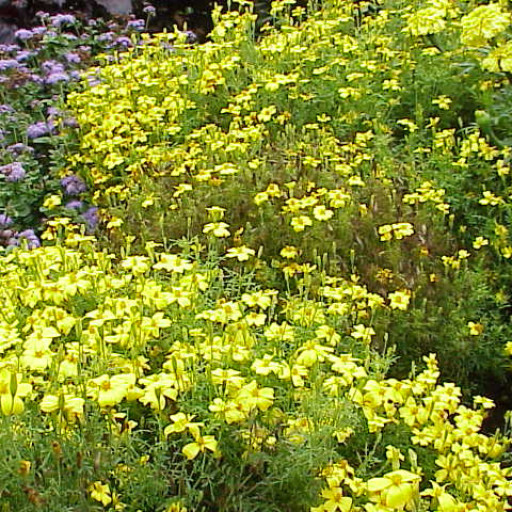
Plant Overview
Known affectionately as the Signet Marigold or Lemon Gem, this plant is the delicate, sophisticated cousin of the common garden marigold. While its relatives are often bold and chunky, Tagetes tenuifolia forms airy, lace-like mounds covered in hundreds of tiny, jewel-like blossoms. Originally hailing from the sunny slopes of Mexico and Central America, it is prized by gardeners not just for its beauty, but for its refreshing citrus fragrance that replaces the typical "musky" marigold scent.
🔍 How to Identify
- 🌿 Lacy Foliage: The leaves are exceptionally fine and fern-like, looking more like a delicate herb or a sprig of dill than a typical broad marigold leaf.
- 🌼 Petite Blooms: The flowers are small, flat, and single-layered with five distinct petals, usually appearing in brilliant shades of lemon yellow, golden orange, or striking bicolors.
- 🍋 Citrus Aroma: One of the easiest ways to identify it is by scent; crushing the leaves releases a powerful, pleasant aroma of lemon or tangerine.
- 🟢 Mounded Habit: It grows in a neat, self-branching "ball" or mound shape, rarely requiring pruning to look tidy.
🏡 In Your Garden
- 🦋 Pollinator Magnet: These plants act as "landing pads" for butterflies and hoverflies. Their flat, open centers make nectar easily accessible compared to the ruffled "pom-pom" style marigolds.
- 🛡️ The Tomato's Best Friend: They are famous in companion planting for their ability to deter underground pests like nematodes, making them a functional and beautiful border for vegetable patches.
- ☀️ Heat & Drought Tolerance: Because they have a more delicate structure, they are surprisingly resilient in high heat, provided they aren't sitting in "wet feet" (soggy soil).
⚠️ Safety & Toxicity
- 🥗 Edible Status: Unlike many other marigold species, the flowers of Tagetes tenuifolia are edible for humans and are frequently used as a gourmet garnish.
- 🐾 Pet Safety: They are generally considered non-toxic to dogs and cats. However, like most garden plants, consuming large quantities can lead to mild gastrointestinal upset or drooling.
- 🧤 Skin Sensitivity: The sap contains phototoxic compounds that can cause mild skin irritation or "blistering" in some individuals if they handle the plant in bright sunlight.
✨ Fun Fact
The "Lemon Gem" variety is a favorite in Michelin-star kitchens; the petals don't just look like citrus—they actually taste like it! Chefs describe the flavor as a sophisticated mix of lemon zest, mint, and a hint of tarragon.

Detailed Care Instructions
| Humidity | Normal |
| Lighting | Shade |
| Difficulty | Medium |
| Hibernation | Cold Period |
| Hardiness Zones | 2 - 11 |
Tagetes tenuifolia, also known as signet marigold or lemon gem marigold, is an easy-to-grow plant. Here are some steps to grow Tagetes Tenuifolia:
- Seeds: Obtain Tagetes tenuifolia seeds from a reputable nursery or garden center. Make sure the seeds are fresh and viable.
- Soil: Prepare well-draining soil with a pH range of 6.0 to 7.5. It should be loose and fertile. If your soil is heavy or compacted, consider adding sand or organic matter to improve drainage.
- Planting: Sow the seeds directly in the garden bed after the last frost date in your area. Alternatively, you can start the seeds indoors 6-8 weeks before the last frost and transplant them later.
- Location: Choose a sunny location for your Tagetes tenuifolia plant. It thrives in full sun but can tolerate light shade. Ensure there is good air circulation to prevent diseases.
- Watering: Keep the soil moist but not overly wet. Regularly water your plants, especially during dry periods, ensuring the water is reaching the roots.
- Fertilizer: Tagetes tenuifolia plants are generally low-maintenance and do not require excessive fertilization. However, you can apply a balanced, water-soluble fertilizer once a month or incorporate compost into the soil at planting time.
- Mulching: Apply a layer of organic mulch around the plants to suppress weeds, retain moisture, and regulate soil temperature.
- Pruning: While not necessary for growth, you can pinch back the plants when they reach about 4 inches in height to encourage bushier growth.
- Pests and Diseases: Tagetes tenuifolia is relatively resistant to pests and diseases. However, be watchful for aphids, slugs, and snails. If necessary, use organic pest control methods to address any issues.
- Harvesting: The flowers of Tagetes tenuifolia are edible and have a strong lemony flavor. You can start harvesting the flowers when they are fully open. Pinch off the flowers just above their base to encourage more blooms.
By following these steps, you should be able to successfully grow Tagetes tenuifolia plants in your garden. Enjoy their bright and fragrant blooms!

Place in a bright room that is sun drenched almost all day. Or directly in a south-facing window.

To water this plant, make sure to give it consistent and frequent watering throughout the growing season. Water the soil thoroughly around the base of the plant, taking care not to splash water onto the foliage. The plant prefers to be kept slightly moist, but be careful not to overwater as it can lead to root rot. It is important to also make sure the soil has good drainage to prevent water from sitting in the roots for too long. In hotter and drier climates, the plant may require more frequent watering. Avoid watering during the hottest part of the day, and instead water in the morning or evening when the temperatures are cooler.
For optimal growth, apply a balanced fertilizer to the soil around the base of the plant once every 2 to 3 months. Avoid over-fertilization as it can lead to excessive plant growth and reduced flowering. Additionally, ensure the soil is moist before applying fertilizer, and avoid fertilizing during periods of drought or extreme heat.
The ideal soil for the plant in question would be well-draining and rich in nutrients. It should have a slightly acidic to neutral pH level, ranging between 6.0 to 7.5. The soil should be loose and crumbly, allowing for good aeration and water retention. Organic matter such as compost or manure can be added to improve soil fertility. It is important to avoid heavy or compacted soil as it can hinder root growth and cause the plant to wilt. The plant prefers full sun to partial shade and requires regular watering to maintain soil moisture, but care should be taken to avoid overwatering which can lead to root rot.
Tagetes tenuifolia plant can be propagated through various methods such as seeds and cuttings. To propagate through seeds, the seeds should be collected from the matured plant and dried. The seeds can then be sown in well-prepared soil and moistened regularly until the seedlings emerge.
To propagate through cuttings, select healthy stems from the plant and trim them to about 3-4 inches in length. Ensure that the cutting has leaves and a node from where new roots will form. Dip the cut end of the stem into rooting hormone powder and plant it in a pot with well-draining soil. Provide regular water and keep the plant in a warm and bright area.
Another propagation method is layering, which involves bending a healthy stem of the plant into soil and pinning it down, ensuring that the node is buried in the soil. After a few weeks, new roots will emerge from the node. Cut the stem from the parent plant and transplant it into its own pot.
Propagation of Tagetes tenuifolia plant is relatively easy, and it can be done at any time of the year.
Common pests of the signet marigold include Spider mites, fungus gnats, thrips. Make a habit of checking your signet marigold frequently for pests so that any infestations can be caught and managed early.








