Plant Overview
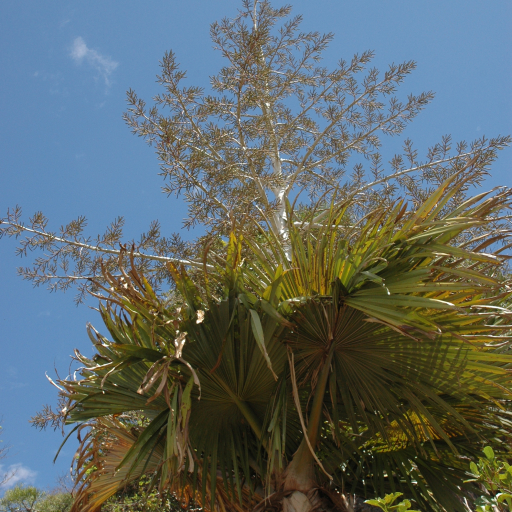
Often called the "Suicide Palm," the Tahina spectabilis is a giant of the botanical world that remained hidden from science until 2007. This legendary palm, native to a remote corner of Madagascar, spends decades growing to a massive height before exploding into a single, spectacular floral display. Once the seeds are set, the tree completely exhausts its energy reserves and dies, leaving its offspring to carry on its legacy.
🔍 How to Identify
- 🌴 Gigantic Stature: These palms are true behemoths, reaching heights of nearly 60 feet (18 meters) with trunks that resemble massive, ringed stone pillars.
- 🪭 Colossal Fan Leaves: The leaves are "palmate" (fan-shaped) and can reach over 16 feet (5 meters) in diameter. They are among the largest leaves of any plant in the world.
- 🌼 The Death Bloom: At the very end of its life, a huge, pyramid-shaped cluster of thousands of tiny flowers erupts from the crown, appearing like a secondary golden tree growing out of the top.
🏡 In Your Garden
- 🏰 Extreme Space Needs: This is not a plant for a standard backyard or a pot. It requires a vast, tropical landscape to reach its full potential. Because it only blooms once every 30 to 50 years, it is a plant of incredible patience.
- 🏜️ Climate & Soil: It thrives in seasonally dry tropical climates and prefers well-drained, alkaline soil. In the wild, it is often found growing near limestone outcrops.
- 🌱 Conservation Act: Growing this palm is an act of botanical preservation. Since it is Critically Endangered, hobbyists and botanical gardens who cultivate it are helping to ensure the survival of a species that was nearly lost to history.
⚠️ Safety & Toxicity
- ✅ Safe Status: Tahina spectabilis is generally considered non-toxic to humans, cats, and dogs. It lacks the caustic sap or irritant crystals found in some other tropical palm relatives.
- 🧤 Physical Caution: The primary danger with this plant is its sheer scale. When the massive fronds eventually dry and fall, or when the trunk collapses after the "suicide bloom," the weight can be significant and hazardous to anything standing beneath it.
✨ Fun Fact
The Tahina spectabilis was discovered by a cashew plantation manager while on a family picnic. It was so massive and distinct from the surrounding vegetation that it was actually visible on Google Earth satellite imagery before botanists even knew it existed!

Detailed Care Instructions
To grow Tahina spectabilis plant, follow these steps:
- Acquire seeds or young plants: Obtain Tahina spectabilis seeds or young plants from a trustworthy source. These plants are rare and may not be readily available in local nurseries.
- Soil requirements: Tahina spectabilis prefers well-draining soil that is rich in organic matter. A mixture of sand, peat moss, and compost will work well. The pH level should be around 6.0 to 7.0.
- Pot selection: Choose a large pot with sufficient drainage holes to accommodate the plant's large size. Tahina spectabilis can grow up to 30 feet tall, so provide enough space for root development.
- Planting: Fill the pot with the prepared soil mix. Plant the Tahina spectabilis seeds or young plant at a depth of around 1 inch (2.5 cm) and cover it lightly with soil. Water the soil thoroughly after planting.
- Sunlight requirements: Tahina spectabilis thrives in full sun to partial shade. Choose a location where it can receive 6-8 hours of bright sunlight each day.
- Watering: Keep the soil consistently moist but not waterlogged. Water the plant deeply when the top inch of soil feels dry. Avoid overwatering, as this can lead to root rot.
- Fertilization: Feed the plant with a balanced, slow-release fertilizer once every 2-3 months during the growing season (spring and summer). Follow the instructions on the fertilizer package for application rates.
- Pruning: Tahina spectabilis generally does not require pruning, except for removing dead or damaged leaves. Trim any yellow or brown leaves to maintain the overall health and appearance of the plant.
- Protect from cold temperatures: Tahina spectabilis is not cold-hardy and cannot tolerate freezing temperatures. If grown in cooler regions, consider moving the plant indoors or provide protection during winter.
- Patience and care: Tahina spectabilis is a slow-growing palm and can take several years to reach maturity. Be patient and provide consistent care, ensuring appropriate sunlight, water, and nutrient levels.
Remember to research and understand any specific care requirements unique to Tahina spectabilis to ensure optimal growth and health of the plant.
The recommended method for watering this plant is to first check the soil's moisture level by inserting a finger approximately 1-2 inches into the soil. If the soil feels dry, it is time to water the plant. It is advisable to use room temperature or tepid water and pour it slowly at the base of the plant, allowing it to absorb into the soil. Avoid getting water on the leaves and try not to overwater, as this may lead to root rot. Watering frequency may vary depending on environmental conditions, such as temperature and humidity, as well as the plant's size and age.
To fertilize this plant, use a balanced fertilizer with equal amounts of nitrogen, phosphorous, and potassium (N-P-K). Apply the fertilizer in early spring and early fall, using a slow-release formula. Do not over-fertilize as it can lead to an imbalance in nutrients and damage the plant. Always water the plant before and after fertilizing to prevent the roots from burning. Use caution when applying fertilizer near the base of the plant to avoid burning the stem and leaves.
Tahina Spectabilis requires a well-draining soil mix that is rich in organic matter and nutrients. A good soil mix for this plant should consist of equal parts of sphagnum peat moss, perlite, and sand. It is important to avoid heavy clay soils or soils that retain too much moisture, as this can lead to root rot and other bacterial infections that can damage the plant. Additionally, adding a slow-release fertilizer to the soil mix before planting can help provide the necessary nutrients for healthy growth and development. Finally, maintaining a consistent watering schedule and avoiding over-watering or under-watering the plant is also crucial for its overall health and success.
To propagate this plant, start by collecting ripe seeds from the parent plant. Clean the seeds by removing any remaining pulp and allow them to dry for a few days. Next, fill a seed tray with potting soil and place the seeds about 1 inch apart in the soil. Cover the seeds with a thin layer of soil and keep the soil moist but not waterlogged. Place the seed tray in a warm and bright location, but avoid direct sunlight. After about 4-6 weeks, the seedlings should begin to emerge from the soil. Once they have developed a few leaves, carefully transplant them into individual pots with well-draining soil. As the plant grows, it will need to be repotted into larger containers until it reaches its mature size.








