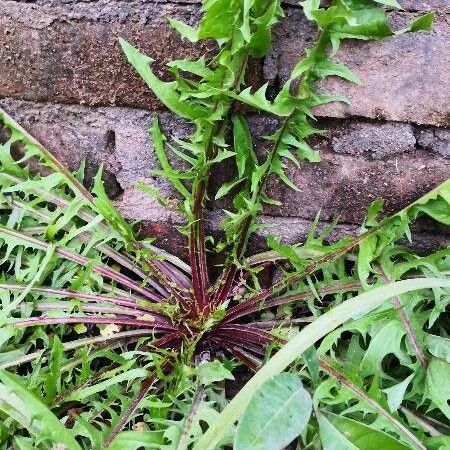
Plant Overview
Known affectionately as the "Mongolian Dandelion" or Pu Gong Ying in traditional herbalism, this hardy perennial is a staple of East Asian meadows and hillsides. While it may look like the common lawn dandelion at a glance, this specific variety is a powerhouse of resilience and a cornerstone of ancient medicine. It is a golden herald of spring that thrives in the sun, turning wild landscapes into carpets of bright yellow.
🔍 How to Identify
- 🍃 Jagged Leaves: The plant grows in a basal rosette with deeply lobed, tooth-like green leaves that point toward the center of the plant.
- 🌼 Composite Blooms: It produces bright yellow flower heads made of hundreds of tiny ray florets, sitting atop a tall, hollow, and smooth stalk.
- ☁️ The "Puffball": After flowering, the head transforms into a spherical "clock" of white, feathery seeds (pappus) designed to travel miles on a light breeze.
- 🥛 Milky Sap: If you break the stem or leaf, the plant exudes a thick, white, bitter-tasting latex or sap.
🏡 In Your Garden
- 🏗️ The Deep Anchor: This plant develops a remarkably long and sturdy taproot. This makes it a champion at surviving droughts, but it also means it is very difficult to transplant. Once it chooses a spot, it intends to stay there.
- 🌞 Pioneer Spirit: It thrives in full sun and isn't picky about soil quality. In fact, its deep roots help pull nutrients from the subsoil to the surface, naturally aerating compacted earth for neighboring plants.
- 🐝 Pollinator Buffet: In early spring, when other flowers are still sleeping, this dandelion provides a vital source of nectar and pollen for early-rising bees and butterflies.
⚠️ Safety & Toxicity
- ✅ Edible Status: Taraxacum mongolicum is generally considered safe and is widely consumed as a bitter green or brewed into traditional teas.
- 🥛 Skin Sensitivity: The white milky sap contains natural latex. While harmless to most, it can cause mild skin irritation or contact dermatitis in individuals with sensitive skin or specific latex allergies.
- 🐾 Pet Note: While non-toxic, consuming large amounts may cause mild digestive upset in cats or dogs due to its high fiber and bitter compounds.
✨ Fun Fact
- 📜 Ancient Pharmacy: In Traditional Chinese Medicine, this specific dandelion is prized as a "cooling" herb. It has been documented for over a thousand years for its ability to "clear heat" and detoxify the body, making it one of the most culturally significant "weeds" in history!

Detailed Care Instructions
To grow Taraxacum Mongolicum, also known as Mongolian dandelion, you can follow these steps:
- Prepare the soil: Mongolian dandelions prefer well-draining soil rich in nutrients. Amend the soil with compost or organic matter to enhance its fertility.
- Choose a sunny spot: Select a location that receives full sun for most of the day. Mongolian dandelions thrive in bright light.
- Plant the seeds: Sow the seeds directly into the prepared soil. The depth should be around 1/4 to 1/2 inch. Space the seeds about 6 to 12 inches apart to allow sufficient room for growth.
- Water regularly: Keep the soil evenly moist but not soggy. Watering whenever the top inch of soil feels dry is a good rule of thumb. Avoid overwatering as it can lead to root rot.
- Control weeds: Remove any weeds that may compete with the Mongolian dandelion plants for nutrients and space. Regular weeding is essential to ensure their healthy growth.
- Fertilize as needed: Mongolian dandelions are generally low-maintenance plants, but you can apply a balanced fertilizer once or twice during the growing season to promote healthier foliage and stronger root development.
- Harvesting: Wait until the plant flowers and develops mature seed heads. The seed heads can be collected and dried for future planting or culinary use.
- Propagation: Mongolian dandelion can spread quickly through its seeds. Allow some seed heads to remain on the plants so they can self-seed for the next growing season.
Note: It's important to consider the legal regulations and invasive potential of Mongolian dandelion in your area, as it may be considered a weed or invasive species in some regions.

Place in a bright room that is sun drenched almost all day. Or directly in a south-facing window.

In order to properly water this plant, it is important to first determine the moisture level of the soil. This can be done by inserting a finger about two inches into the soil and feeling for moisture. If the soil feels dry to the touch, it is time to water the plant.
When watering, it is important to do so slowly and evenly, so as not to create pockets of dry soil. Use a watering can or a hose with a gentle spray attachment, and aim the water at the base of the plant. Avoid getting water on the leaves, as this can lead to disease or mold.
It is also important not to over-water the plant, as this can lead to root rot. Allow the soil to dry out slightly between waterings, and adjust the frequency and amount of water as needed based on the weather and the moisture level of the soil.
Overall, consistent and appropriate watering is key to the health and growth of this plant.
To fertilize the Taraxacum Mongolicum plant, mix a balanced fertilizer with an NPK ratio of 10-10-10 into the top layer of soil around the plant. Apply the fertilizer once per month from early spring to early fall. Avoid over-fertilizing, as it may harm the plant. Water the plant immediately after fertilizing to help it absorb the nutrients.
The ideal soil for Taraxacum Mongolicum is a well-draining soil that is rich in organic matter. The soil pH should be slightly acidic to neutral, with a range of 6.5 to 7.5. A loamy soil with good drainage is preferred, so avoid heavy clay soils.
If the soil is too heavy or poorly drained, amend it with sand or perlite to improve drainage. If the soil is too alkaline, amend it with organic matter to reduce pH levels.
Taraxacum Mongolicum prefers fertile soils, so add compost or a balanced fertilizer to the soil before planting. This will provide the necessary nutrients for healthy growth and development.
Additionally, it is important to maintain consistent soil moisture levels. Regular watering is necessary, but avoid overwatering as it can lead to root rot. Mulching around the plant can help retain soil moisture.
Overall, a well-draining, fertile soil with consistent moisture levels and a slightly acidic to neutral pH range is recommended for Taraxacum Mongolicum.
There are different ways to propagate Taraxacum Mongolicum plant. One method is through seed propagation. Seeds can be collected from mature plants and stored in a cool, dry place until ready to be sown. The seeds can be scattered over prepared soil in the fall or spring and lightly covered with soil. The soil should be kept moist until the seeds germinate and establish themselves.
Another method is through root division. This involves carefully digging up a mature plant and separating the root system into smaller sections. Each section should have a crown and some roots attached. The separated sections can be replanted in new soil.
Finally, Taraxacum Mongolicum can also be propagated through tissue culture. This method involves taking small pieces of the plant and growing them in a sterile environment under controlled conditions. Tissue culture can be used to rapidly propagate large numbers of plants from a single specimen.
Note: The plant is more commonly known as dandelion.








