Plant Overview
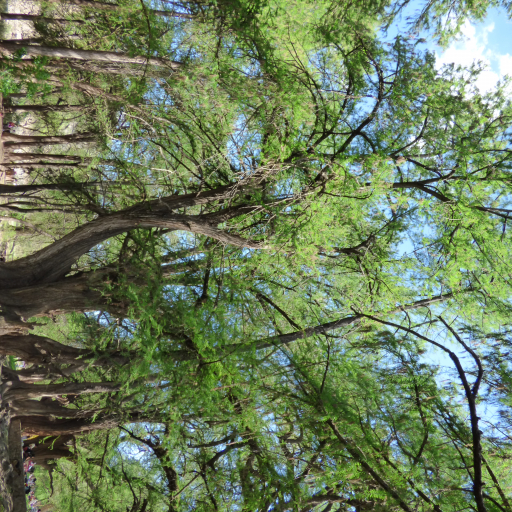
Known as the Ahuehuete (which means "Old Man of the Water" in Nahuatl), the Montezuma Cypress is the national tree of Mexico and a living monument of Mesoamerican history. This majestic giant is famous for its incredible longevity and massive, gnarled trunks that seem to melt into the riverbanks they protect. It often takes center stage in legends, most notably as the "Tree of the Sad Night," where Hernán Cortés is said to have wept after a historic defeat.
🔍 How to Identify
- 🌿 Feathery Foliage: Its leaves are soft, flat, and needle-like, arranged in two rows along the twigs to give the branches a delicate, fern-like appearance.
- 🪵 Buttressed Trunk: As the tree ages, the base becomes incredibly thick and fluted, often appearing like several trunks fused together into a single massive pillar.
- 🍂 Semi-Evergreen Habit: Unlike its cousin, the Bald Cypress, this species often holds onto its green needles through the winter in warmer climates, only shedding them briefly when new growth begins.
🏡 In Your Garden
- 💧 The Riparian Specialist: This tree is a "water lover" and thrives best near ponds, streams, or in areas with high water tables. It is famously used for erosion control along banks.
- 🌳 Legacy Planning: Because of its potential to live for over a thousand years and reach enormous widths, it should be planted far from foundations. Unlike other cypresses, it rarely produces "knees" (woody root protrusions), making it slightly friendlier for large lawns.
⚠️ Safety & Toxicity
- ✅ Non-Toxic Status: The Montezuma Cypress is generally considered safe and non-toxic for humans, dogs, and cats.
- 🌲 Resinous Sap: While not poisonous, the sticky resin from the cones and bark can be a mild skin irritant for some people and is difficult to wash out of pet fur.
✨ Fun Fact
The "Árbol del Tule" in Oaxaca, Mexico, is a Montezuma Cypress with the widest trunk of any tree in the world. It measures over 119 feet in circumference—so large that it was once thought to be multiple trees before DNA testing proved it was a single, massive individual!

Detailed Care Instructions
To grow Taxodium mucronatum, also known as Montezuma cypress or Mexican cypress, follow these steps:
- Climate: Ensure you are in a suitable climate for the plant. Taxodium mucronatum thrives in warm or hot climates, with temperatures averaging around 85°F (29°C) during the growing season. It can tolerate mild frosts, but prolonged exposure to freezing temperatures may damage the plant.
- Location: Choose a site that receives full sunlight. Taxodium mucronatum prefers a spot with at least 6-8 hours of direct sunlight per day. The location should also have well-draining soil.
- Soil: Taxodium mucronatum grows best in moist, loamy soil. The pH level should be slightly acidic (pH 6-7). If your soil is heavy clay or sandy, enrich it with organic matter, such as compost or peat moss, to improve fertility and drainage.
- Planting: Dig a hole that is twice as wide and deep as the root ball of the young Taxodium mucronatum sapling. Place the sapling in the hole, ensuring that the top of the root ball is level with or slightly above the soil surface. Fill the hole with soil, gently firming it around the roots to eliminate air pockets.
- Watering: After planting, water the sapling thoroughly to help it establish roots. Taxodium mucronatum prefers consistently moist soil, so water deeply once or twice per week during dry periods. However, it does not tolerate waterlogged conditions, so ensure proper drainage.
- Mulching: Apply a layer of organic mulch, like wood chips or bark, around the base of the tree. This helps retain soil moisture, suppresses weed growth, and buffers temperature extremes. Keep the mulch a few inches away from the trunk to avoid rotting the bark.
- Pruning: Minimal pruning is usually required for Taxodium mucronatum. Remove dead or damaged branches as needed. It has a naturally pyramidal shape and should require little to no shaping.
- Fertilizing: Taxodium mucronatum generally does not require regular fertilization but can benefit from a balanced slow-release fertilizer applied in early spring. Follow the manufacturer's instructions for application rates.
- Pests and Diseases: Taxodium mucronatum is relatively pest and disease resistant but can be susceptible to some fungal diseases like root rot in poorly drained soils. Maintaining proper moisture levels and good soil drainage will help prevent such issues.
- Patience: Taxodium mucronatum is a slow-growing tree and may take several years to reach its full size. Be patient and provide it with proper care and maintenance to ensure its healthy growth.
Note: Before planting Taxodium mucronatum, it's essential to check if it is a suitable tree for your location and climate.

Place in a bright room that is sun drenched almost all day. Or directly in a south-facing window.

To water this plant, it is important to consider its growing environment. The best method is to water deeply but infrequently, allowing the soil to dry out slightly between waterings. It also prefers well-draining soil and does not tolerate waterlogged conditions. When watering, avoid getting water on the foliage of the plant to prevent fungal diseases. It is important to note that this plant is drought-tolerant once established, so avoid over-watering.
To fertilize this plant, use a slow-release fertilizer with a balanced N-P-K ratio. Apply the fertilizer in early spring, before new growth appears. Follow the instructions on the fertilizer package for the recommended amount to use. Avoid over-fertilization, as this can lead to excess growth and weaken the plant's overall health. Water the plant thoroughly after applying fertilizer to help distribute it into the soil.
The ideal soil for Taxodium Mucronatum plant is a slightly acidic, sandy loam soil that is rich in organic matter and well-draining. It should also be able to retain moisture without becoming waterlogged as this plant prefers consistently moist soil without being submerged.
A suitable soil mixture can be created by using a high-quality potting mix that contains peat moss, perlite, and compost. This mixture should be blended with equal parts sand and garden soil to improve drainage. The addition of a slow-release fertilizer can provide the necessary nutrients required for healthy growth.
It is recommended to avoid using heavy clay soils as they can become hard and compacted, making it difficult for roots to grow and absorb nutrients. Also, alkaline soils should be avoided as they can have a negative effect on the plant's growth and development.
Overall, the key to growing a healthy Taxodium Mucronatum plant is to ensure that the soil is well-draining, rich in organic matter, and able to retain moisture without becoming waterlogged.
Taxodium mucronatum, commonly known as Montezuma bald cypress, can be propagated through two main methods: seed propagation and vegetative propagation.
Seed propagation involves harvesting the seeds from mature cones in the fall or winter. The seeds should be cleaned of any debris and then stratified for at least two months in a cool, moist environment. Once stratified, the seeds can be sown in individual pots or directly in a nursery bed. Plants will typically emerge within two to four weeks and can be transplanted to their permanent location after one year.
Vegetative propagation can be done through stem cuttings or layering. Stem cuttings should be taken from softwood growth in early summer and should be approximately 4-6 inches long. Cuttings should be dipped in rooting hormone before being placed in a propagation medium and kept in a warm, humid environment until roots have formed. Layering involves bending a low-growing branch of the parent plant and burying it partially in the soil. Once roots have formed, the new plant can be separated from the parent and transplanted.
Propagation success rates can vary depending on the method used and the environment in which it is done. Proper care and attention should be given to ensure successful propagation.








