Plant Overview
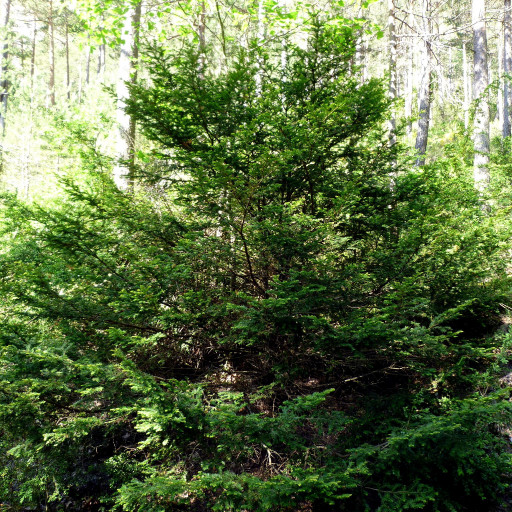
Often called the "English Yew" or the "Churchyard Yew," Taxus baccata is a living relic from the age of the dinosaurs. This ancient evergreen is steeped in folklore, symbolizing both death and immortality, often found guarding the gates of old cathedrals across Europe. It is the ultimate patient plant, growing slowly but capable of living for thousands of years.
🔍 How to Identify
- 🌿 The Foliage: It features flattened, dark-green needles arranged spirally around the stems but appearing in two flat rows. Unlike many firs, these needles are soft to the touch and lack white bands on the underside.
- 🔴 The "Berries": Unlike most conifers that produce woody cones, the Yew produces bright red, fleshy cups called arils. These look like soft berries with a single dark seed visible at the open end.
- 🪵 The Bark: The trunk is a masterpiece of texture, featuring thin, scaly, reddish-brown bark that flakes off to reveal purple or ginger-colored patches underneath.
🏡 In Your Garden
- ✂️ The King of Topiary: Because it grows slowly and produces dense foliage, it is the premier choice for formal hedges and complex garden sculptures. It handles "hard pruning" better than almost any other evergreen, bouncing back even when cut to the old wood.
- 🌑 Shade Mastery: While many conifers demand full sun, the Yew is remarkably versatile. It thrives in deep shade and under the canopy of larger trees, making it perfect for those tricky, dark corners of a garden.
- 💧 Drainage is Key: Its only true weakness is "wet feet." It requires well-draining soil; sitting in stagnant water or heavy, waterlogged clay will cause root rot almost immediately.
⚠️ Safety & Toxicity
- 🚫 Lethal Status: Every part of the Yew—the needles, the bark, and especially the seeds—contains highly toxic taxine alkaloids.
- 🐾 Pets & Kids: It is extremely dangerous if ingested by children, dogs, cats, or livestock. Ingestion can lead to rapid heart failure.
- 🧤 Skin Care: While the foliage is not usually an irritant, it is wise to wear gloves when pruning to avoid any potential sensitivity to the sap.
✨ Fun Fact
The Yew’s wood is legendary for its strength and elasticity, which made it the primary material for the English Longbow during medieval warfare. Some Yew trees in the UK are estimated to be over 3,000 years old, meaning they were already ancient when the Roman Empire was at its peak!

Detailed Care Instructions
| Soil Ph | Neutral |
| Humidity | Normal |
| Lighting | Part Sun |
| Toxicity | Poisonous |
| Soil Type | Well-Draining Soil |
| Bloom Time | March To April |
| Difficulty | Easy |
| Plant Type | Needle-Bearing Evergreens |
| Hibernation | Cold Period |
| Mature Size | 30-60' Tall |
| Native Area | Western, Central And Southern Europe, Northwest Africa, Northern Iran, And Southwest Asia |
| Sun Exposure | Sun, Partial Shade, Or Full Shade |
| Hardiness Zones | 6-8 |
Growing Taxus baccata plants, commonly known as yew plants, can be done through a few simple steps:
- Choose a suitable location: Taxus baccata prefers well-drained soil and partial shade. It can tolerate full sun but may require more moisture. Make sure the chosen location has enough space for the plant to grow.
- Prepare the soil: Yew plants prefer slightly acidic to neutral soil. If the pH level is too high, you can amend the soil by adding some organic matter like compost or well-rotted manure to improve drainage and fertility.
- Planting: Dig a hole that is larger than the plant's root ball. Remove any weeds or grass from the area around the hole. Place the yew plant in the hole so that it sits at the same depth as it was in the container or nursery. Backfill the hole with soil, firming it gently around the plant.
- Watering: Water the newly planted yew thoroughly, making sure the soil around the roots is moist. Yew plants prefer consistently moist soil, so water regularly, especially during dry periods. However, avoid overwatering, as it can lead to root rot.
- Mulching: Apply a layer of organic mulch, such as bark chips or compost, around the base of the plant. Mulching helps retain moisture, suppress weeds, and improve soil condition.
- Pruning: Yew plants tolerate pruning well and can be shaped or maintained as hedges. Prune in late winter or early spring before new growth begins. Remove any dead, damaged, or diseased branches and shape the plant as desired.
- Fertilizing: Taxus baccata plants generally don't require frequent fertilization. However, applying a slow-release, balanced fertilizer in spring can provide necessary nutrients for healthy growth. Follow the instructions on the fertilizer package.
- Pests and diseases: Yews are generally resistant to most pests and diseases. However, keep an eye out for common issues such as scale insects or fungal diseases. Treat any problems promptly using appropriate insecticides or fungicides.
Remember to research specific information for your specific location and climate, as certain variations may require additional care or adjustments.

Place in a window with dappled sun or a spot in the middle of a room. Or directly in a window facing west or east.

To water this particular plant, it is important to first analyze the soil and the environment surrounding the plant. Determine the moisture level of the soil and make sure you do not overwater the plant as it may result in root rot. Monitor the plant for signs of wilting or drying out, and increase watering accordingly. Water the plant slowly and deeply to ensure the water penetrates the soil and reaches the roots. It is also important to avoid getting the foliage wet while watering, as this may encourage disease and fungal growth on the foliage. Always water during the cooler times of the day, such as early morning or late evening, to reduce the amount of evaporation.
To fertilize this type of plant, use a slow-release fertilizer with balanced NPK (nitrogen, phosphorus, and potassium) ratios applied in early spring. Apply at the base of the plant and water thoroughly. Avoid over-fertilizing as it can cause leaf scorch and other issues. Regularly monitor the plant throughout the growing season and adjust fertilization if necessary based on the appearance of new growth.
The ideal type of soil for this plant is a well-draining soil mix that is slightly acidic with a pH of 5.5 to 6.5. It should be rich in organic matter and have good moisture-retaining properties. A mixture of peat moss, perlite, and sand is often recommended for this plant. The soil should be kept moist but not waterlogged and should not dry out completely. Adding a slow-release fertilizer to the soil before planting can help provide the plant with nutrients over time.
Taxus Baccata is a plant that belongs to the Taxaceae family and has a unique ability to propagate through marcotting. To install this method, take a long stem of the plant and select a portion that has not yet grown roots. Remove the bark from the stem in the area where the roots will be formed and apply rooting hormone on the exposed wood. The stem is then wrapped with moist sphagnum moss and enclosed with a plastic wrap. This will provide the perfect conditions for the roots to develop. After a few months, the stem will develop enough roots to be detached from the parent plant and be potted in well-draining soil. This method allows for a gradual and controlled propagation of the plant.








