Plant Overview
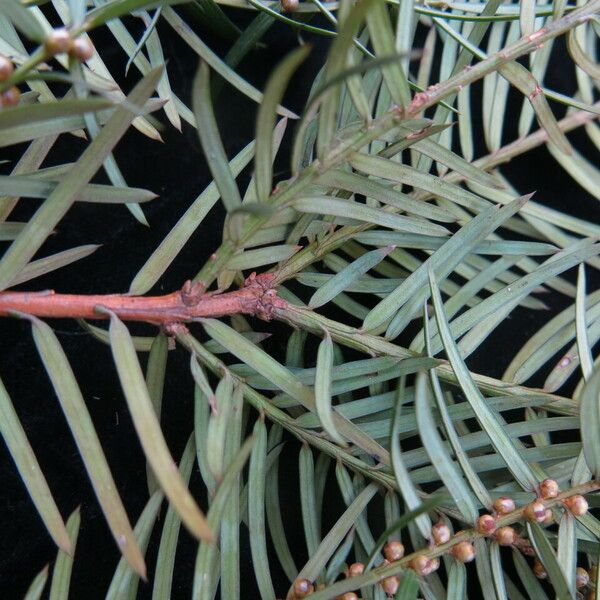
Known as the West Himalayan Yew, this "Tree of Eternity" is a living relic from the high-altitude forests of the Hindu Kush and the Himalayas. Its scientific name, contorta, refers to the elegantly twisted or "contorted" arrangement of its needles that give the tree a soft, feathery texture. In its native range, it is revered as a symbol of longevity, often living for centuries in the quiet shadows of mountain peaks.
🔍 How to Identify
- 🌿 The Needles: Unlike the straight needles of many conifers, these are dark green, linear, and slightly curved, appearing to spiral or twist around the branchlets.
- 🍂 The Bark: The trunk features beautiful reddish-brown or purplish bark that peels away in thin, papery flakes, revealing smoother textures underneath.
- 🍒 The "Berries": Technically called arils, these are bright red, fleshy cups that open at the bottom to reveal a single, dark brown seed nestled inside.
🏡 In Your Garden
- 💧 Drainage is Vital: While it loves the cool, moist air of a woodland setting, it is extremely sensitive to "wet feet." If planted in heavy clay or boggy soil, the roots will quickly decline; always prioritize a well-draining spot.
- ⏳ Patience Required: This is a slow-growing evergreen that takes years to reach its full potential. It’s best used as a structural "anchor" in a shade garden or as a low-maintenance, long-term hedge that requires very little pruning.
⚠️ Safety & Toxicity
- 🚫 Status: CRITICALLY TOXIC. Almost every part of the West Himalayan Yew—including the leaves, bark, and seeds—contains deadly taxine alkaloids.
- 🐾 Details: It is highly dangerous to horses, dogs, cats, and humans if ingested. While the red fleshy part of the fruit (the aril) is technically the only non-toxic part, the seed inside is lethal if chewed; therefore, it is best to treat the entire plant as strictly "look but don't touch" for children and pets.
✨ Fun Fact
The West Himalayan Yew is a true life-saver in the medical world! It contains compounds used to synthesize Paclitaxel, a powerful chemotherapy medication used to treat various types of cancer. This has unfortunately led to the tree becoming endangered in the wild due to over-harvesting.

Detailed Care Instructions
Here are some steps for growing Taxus Contorta plants:
- Choose the right location: Taxus Contorta plants prefer partial shade to full shade, so select a spot that receives limited direct sunlight. The soil should be well-draining, fertile, and slightly acidic.
- Prepare the soil: Before planting the Taxus Contorta plant, ensure that the soil is loosened up and free of weeds and debris. If the soil is heavy or compacted, you can amend it with organic matter like compost or well-rotted manure to improve drainage.
- Planting: Dig a hole slightly larger and as deep as the plant's root ball. Gently remove the plant from its container and place it in the hole. Ensure that the top of the root ball is level with the ground. Backfill the hole with soil, firming it gently around the roots.
- Watering: Initially, water the newly planted Taxus Contorta thoroughly to settle the soil and provide hydration to the roots. Afterward, maintain regular watering to keep the soil slightly moist but not overly saturated. Avoid overwatering, as it can cause root rot.
- Mulching: Apply a layer of organic mulch around the base of the plant to conserve moisture and suppress weed growth. Make sure not to pile the mulch against the stem to prevent moisture-related issues.
- Pruning: Regularly prune the Taxus Contorta plant to maintain its desired shape and size. Pruning can also help encourage denser growth. However, avoid excessive pruning, as these plants don't tolerate severe pruning well.
- Fertilizing: Apply a slow-release, balanced fertilizer in the spring to provide essential nutrients to the plant. Follow the manufacturer's instructions for application rates.
- Pests and diseases: Keep an eye out for common pests like spider mites, scale insects, and aphids. Treat any infestations promptly with insecticidal soap or neem oil. Taxus Contorta plants are generally resistant to diseases but can be affected by root rot if the soil is too wet.
Remember to check the specific planting and care instructions for your specific Taxus Contorta variety, as some cultivars may have unique requirements.
Taxus Contorta is a type of plant that requires careful watering. When watering this plant, it is essential to ensure that the soil is moist but not overly wet. Over-watering can lead to root rot and other issues, which can damage the plant.
To properly water Taxus Contorta, it is important to first consider the climate in which the plant is growing. If the weather is hot and dry, the plant may require more water than if it is cooler and more humid. Additionally, it is important to take into account the type of soil in which the plant is growing, as certain types of soil may retain water differently than others.
One common method of watering Taxus Contorta is to use a watering can or hose with a gentle, steady stream of water. It is best to water the soil around the base of the plant rather than watering the leaves or branches directly. This can help to prevent the foliage from becoming too wet, which can lead to disease or fungal growth.
When watering Taxus Contorta, it is also important to avoid overhead watering, as this can lead to water accumulating in the center of the plant and causing damage. Instead, focus on watering the soil evenly around the plant.
Overall, proper watering of Taxus Contorta involves careful observation of the plant and its environment, as well as consistent watering practices to ensure that the plant remains healthy and vibrant.
To fertilize this plant, apply a slow-release fertilizer in the early spring before new growth appears. The fertilizer should have a balanced ratio of nitrogen, phosphorus, and potassium. Water the plant after fertilizing to ensure the nutrients are absorbed into the soil. Do not over-fertilize as this can damage the plant's roots. Additionally, it is recommended to test the soil pH before fertilizing to ensure optimal nutrient uptake.
The recommended soil for this particular plant is a well-draining and acidic soil that is high in organic matter. It should have a pH level between 4.5-6.0 and a consistent moisture level. The soil should be rich in nutrients, particularly nitrogen, phosphorous, and potassium. A mixture of equal parts of peat moss, perlite, and pine bark is often recommended for this plant, as it provides the ideal soil composition and pH level. It is essential to avoid using soil that is too compacted or heavy, as this will limit root growth and lead to poor plant health. It is also crucial to avoid the use of soil that may contain pathogens or pests that could harm the plant.
To propagate this plant, you can take softwood cuttings in the spring or semi-hardwood cuttings in the summer. The cuttings should be around 2-4 inches in length and taken from healthy plants. Dip the cut ends in rooting hormone and plant in a well-draining soil mix. Keep the soil moist and the cuttings in a shaded area until roots develop, usually in 4-6 weeks. Once the roots have developed, you can transplant them into their permanent location. Additionally, this plant can also be propagated by layering or grafting.








