Plant Overview
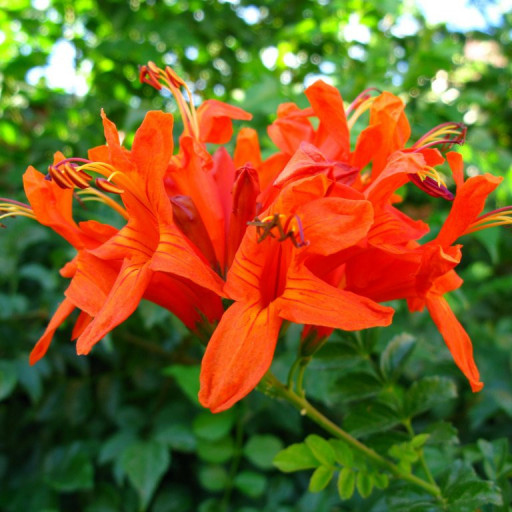
Often called the Cape Honeysuckle, this South African native is a burst of sunset colors that brings an exotic, tropical feel to any landscape. Though it shares a name with the common honeysuckle, it is a much more rugged, "scrambling" shrub that can transform from a neat hedge into a wild, climbing screen if given the chance. In its homeland, it is a vital nectar source for long-beaked Sunbirds, making it a premier "Hummingbird Magnet" in modern gardens.
🔍 How to Identify
- 🎺 Trumpet Flowers: Bright clusters of tubular, slightly curved blossoms that flare at the end, typically in fiery orange, though yellow and salmon varieties exist.
- 🍃 Serrated Foliage: Small, glossy, deep green leaves arranged in pairs, featuring distinct "toothed" or saw-like edges that give the plant a lush, textured look.
- 🧗 Scrambling Habit: Unlike vines with tendrils, this plant uses its long, arching, woody branches to lean on and "scramble" over fences, trellises, or neighboring trees.
🏡 In Your Garden
- ✂️ The Pruning Puzzle: Because of its vigorous growth, the Tecomaria is a bit of a "choose your own adventure" plant. You can prune it hard into a formal square hedge, or let it grow wild as a 10-foot tall privacy screen.
- 🌊 Coastal Resiliency: This is a "tough-as-nails" species that thrives in salty sea air and can handle periods of drought once its root system is established.
- 🐦 Pollinator Hub: If you want wildlife in your yard, this is the plant to choose. The flower shape is evolutionarily designed to fit the beaks of nectar-seeking birds, ensuring your garden is always full of movement.
⚠️ Safety & Toxicity
- ✅ Safe Status: The Cape Honeysuckle is non-toxic to humans, cats, and dogs.
- 🐾 Garden Shelter: Because it grows so densely, it often provides a safe nesting site for small songbirds, though pet owners should watch for "hitchhiker" pests like ticks that might hide in the thick foliage.
✨ Fun Fact
- 🌍 Family Ties: Despite its common name, this plant isn't a true honeysuckle at all! It actually belongs to the Bignoniaceae family, making it a cousin to the majestic Jacaranda tree and the massive Trumpet Vine.

Detailed Care Instructions
To grow Tecomaria capensis (also known as Cape Honeysuckle), follow these steps:
- Choose a suitable location: Tecomaria capensis thrives in full sun to partial shade. Select a spot in your garden that receives at least 6 hours of direct sunlight per day.
- Prepare the soil: Ensure the soil is well-drained and fertile. If your soil is heavy or clayey, mix in some organic compost or well-rotted manure to improve drainage and nutrient content.
- Planting: Dig a hole twice as wide and deep as the root ball of the Tecomaria capensis plant. Place the plant in the hole and backfill it with soil, gently firming it around the roots. Water thoroughly after planting.
- Watering: Initially, water the plant deeply to help establish its roots. Afterward, Tecomaria capensis is relatively drought-tolerant, but occasional watering during dry spells will help it stay healthy and produce more flowers.
- Mulching: Apply a layer of organic mulch around the base of the plant. This helps to conserve moisture, suppress weed growth, and maintain a more consistent soil temperature.
- Pruning: Regular pruning is beneficial for Tecomaria capensis. Prune lightly after the flowering period to maintain a compact size, remove dead or damaged branches, and encourage new growth.
- Fertilization: Apply a balanced, slow-release fertilizer in spring to promote healthy growth and abundant flowers. Follow the instructions on the specific fertilizer product you choose.
- Pests and diseases: Tecomaria capensis is generally resistant to pests and diseases. However, keep an eye out for common garden pests like aphids, mealybugs, or spider mites. If you notice any infestations, treat them with appropriate insecticidal soap or organic solutions.
Remember, Tecomaria capensis can be invasive in some regions, so ensure it is not planted near natural areas where it may spread uncontrollably.
To water this plant, you should first check the soil to ensure that it has dried out a bit between waterings. When you do water, make sure to give the plant a deep watering rather than just a light sprinkle. Aim to water the soil rather than the leaves or flowers, as this can help prevent fungal issues. You may also want to add a layer of mulch around the base of the plant to help retain moisture in the soil. Additionally, keep in mind that this plant prefers well-draining soil, so make sure that the pot or planting area has good drainage.
To fertilize this plant, use a balanced fertilizer with equal amounts of nitrogen, phosphorus, and potassium. Apply the fertilizer according to the manufacturer's instructions, usually every 2-4 weeks during the growing season (spring and summer). Be careful not to over-fertilize, as this can lead to root burn and other problems. Water the plant well before and after fertilizing to help dissolve and distribute the nutrients evenly throughout the soil.
Tecomaria Capensis plants thrive in well-draining soil that is rich in organic matter. The soil should be slightly acidic with a pH level between 6.0 and 7.0. The plant prefers sandy loam or loamy soil that is fertile and has good water retention capacity. It is recommended to mix the soil with compost or well-rotted manure to improve fertility and enhance drainage. The soil should be kept moist but not waterlogged, as too much water can cause root rot. Additionally, the soil should be free of any harmful pathogens and pests that could potentially harm the plant.
To propagate this plant, first choose a healthy parent plant with mature stems. Using a sharp and sterilized pair of pruning shears, take a stem cutting that is at least 4 inches long.
Remove all leaves from the lower half of the stem and make a clean cut at the base.
Apply rooting hormone to the cut end to encourage root growth and plant the cutting in a well-draining soil mix.
Water the cutting regularly and place it in an area with bright, indirect light.
After a few weeks, the cutting should start to develop new growth and form roots. Once the roots have established, the new plant can be carefully transplanted into a larger pot or garden bed.








