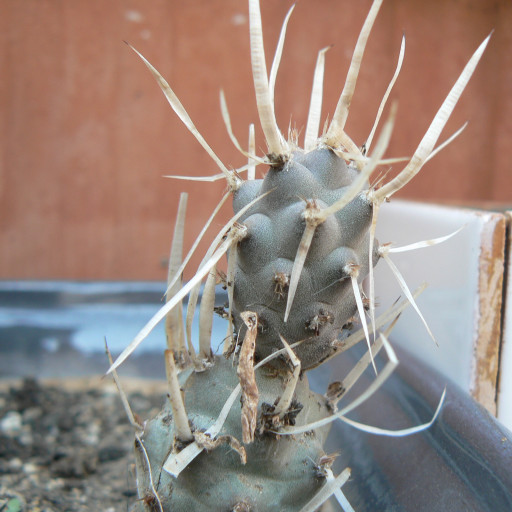
Plant Overview
Often called the Pine Cone Cactus or the Paper Spine Cactus, this Argentinian native looks more like a collection of prehistoric stones or dried cones than a typical desert plant. It is a slow-growing architectural wonder that thrives in the harsh, rocky environments of the Andean foothills. Gardeners love it for its bizarre, papery ribbons that mimic dried grass, making it one of the most tactile and unusual succulents for a sunny windowsill.
🔍 How to Identify
- 🧶 Stem Segments: The plant grows in distinct, globose to cylindrical "links" that stack on top of one another, resembling a chain of stacked pine cones.
- 📜 Papery Spines: In the popular papyracanthus variety, the spines are broad, flat, and flexible, feeling like parchment or thick paper rather than sharp needles.
- ⚪ Color and Texture: The skin is typically a grayish-green or olive tone, often developing a rough, corky texture as the individual segments age.
🏡 In Your Garden
- 🧩 Fragile Connections: The segments are very loosely attached and can "drop" if bumped. Don't worry if one falls off; this is the plant’s natural way of propagating. Simply set the fallen segment on dry soil, and it will likely grow into a new plant.
- 🏜️ Andean Roots: Because it originates from high-altitude, rocky slopes, it hates "wet feet." It requires a very gritty potting mix and needs a strict dry period during the winter to prevent the segments from softening and rotting.
⚠️ Safety & Toxicity
- 👐 Physical Irritant: While the long, papery spines are harmless, the plant also carries "glochids"—tiny, nearly invisible barbed bristles. These can embed in your skin and cause persistent itching or a stinging sensation.
- 🐾 Pet & Child Safety: The plant is non-toxic if ingested, but the segments are a choking hazard, and the glochids can cause irritation to the mouths and paws of curious pets. Always handle with tongs or thick gloves.
✨ Fun Fact
📜 Master of Disguise: In the wild, the long, flat spines help the cactus blend in perfectly with the dried tufts of brown grass found in the Argentine scrubland, a clever trick to hide from hungry guanacos!

Detailed Care Instructions
| Color | Green With White/Silver Stems |
| Soil Ph | 6.1-7.8 |
| Humidity | Dry |
| Lighting | Full Sun |
| Toxicity | Non-Toxic |
| Soil Type | Well-Drained Soil Mixture |
| Bloom Time | Spring |
| Difficulty | Easy |
| Plant Type | Bushy Cactus |
| Hibernation | Cold Period |
| Mature Size | Up To 12 Inches (1 Ft.) |
| Native Area | Argentina |
| Temperature | 15°C - 30°C |
| Sun Exposure | Full Sun |
| Hardiness Zones | 8-10 |
To grow Tephrocactus articulatus, also known as the paper spine cactus, you can follow these steps:
- Planting: Choose a well-draining pot or container with drainage holes. Fill it with a cactus and succulent potting mix or a mixture of regular potting soil and sand. Avoid using regular garden soil as it retains too much moisture.
- Sunlight: Place the plant in a location that receives bright, indirect sunlight for at least four to six hours a day. Tephrocactus articulatus prefers bright light but can tolerate some direct sunlight during the early morning or late afternoon.
- Temperature and humidity: This cactus thrives in temperatures between 60-85°F (15-29°C). It can tolerate low temperatures down to 40°F (4°C) but should be brought indoors if frost is expected. Maintain average indoor humidity levels, as excessive humidity can cause rot.
- Watering: Water the Tephrocactus articulatus sparingly, allowing the soil to dry out completely between waterings. During the active growing season (spring and summer), water once every 1-2 weeks. Reduce watering in the cooler months to once every 3-4 weeks. Overwatering can lead to root rot, so it's important not to let the plant sit in excess water.
- Fertilization: During the growing season, you can feed the cactus with a balanced cactus fertilizer diluted to half the strength recommended on the package. Apply the fertilizer once a month. Avoid fertilizing during the dormant season.
- Propagation: Tephrocactus articulatus can be propagated through stem cuttings. Allow the cutting to dry for a few days to form a callus, then insert it into well-draining soil. Keep the soil slightly moist until the cutting establishes roots.
- Maintenance: Pruning is not necessary for this cactus, but you can remove any dead or damaged branches with clean, sterile pruning tools.
Remember, Tephrocactus articulatus is relatively slow-growing, so be patient with its growth. With proper care and attention to watering, lighting, and temperature conditions, your cactus should thrive and grow over time.

Place in a bright room that is sun drenched almost all day. Or directly in a south-facing window.

To water this plant, make sure that the soil is completely dry before giving it a good watering. When watering, pour water slowly and evenly onto the soil around the base of the plant until the water begins to drain out of the bottom of the pot. Be careful not to get any water on the leaves or stem of the plant, as this can lead to rot and disease. Allow the plant to drain completely before returning it to its normal location. During the winter months, reduce watering to once every few weeks or when the soil is completely dry to help prevent overwatering and root rot.
To fertilize this particular plant, you will first need to dilute a balanced fertilizer in water. It should contain equal amounts of nitrogen, phosphorus, and potassium (NPK). The recommended ratio is approximately 10-10-10.
Next, you should apply the fertilizer solution to the soil evenly around the plant's base. Be careful not to over-fertilize, as this can lead to root burn and other negative effects.
Finally, you should water the plant thoroughly to ensure that the fertilizer penetrates the soil and reaches the plant's roots. Fertilizing once every three months during the growing season is recommended.
Remember to always read the label on the fertilizer package and follow the instructions carefully.
Tephrocactus Articulatus plant requires well-draining soil that is rich in minerals and nutrients. The soil should be slightly acidic with a pH level of about 6.0 to 6.5. A mix of sand, gravel, and peat moss is ideal for this plant as it provides good drainage and allows sufficient air to circulate around the roots. Additionally, the soil should be free from any contaminants, such as pesticides or fertilizers, as these can harm the plant's growth and development. Overall, a suitable soil mix for Tephrocactus Articulatus plant should be porous, well-draining, and nutrient-rich to support healthy growth.
- Obtain a mature, healthy Tephrocactus articulatus plant that has several segments.
- Wait until the plant enters its active growth phase in spring or early summer. This is when it is most receptive to propagation.
- Carefully remove one or more segments from the parent plant using a sharp, sterilized knife. Make sure that each segment has a clean break and is at least 2-3 inches long.
- Allow the cuttings to dry out and callus over for a few days to prevent rot.
- Choose a well-draining container or soil bed for the new cuttings. Fill the container with suitable potting mix, such as a mix of cactus soil, perlite, and sand.
- Make a hole in the soil and insert the cutting into the hole, being careful not to compress the soil around it.
- Water the cutting sparingly, only when the soil is dry to the touch. Too much water can cause rotting.
- Place the container in a warm, bright location that gets plenty of indirect sunlight. Avoid direct sunlight as it can burn the plant.
- After several weeks, new roots should develop, and the cutting will begin to grow. At this stage, you can start to water the plant more frequently.
- Once the cutting has established roots and begun to produce new growth, you can transplant it into a larger container or outdoors, if it is warm enough. Continue to water sparingly and provide plenty of bright, indirect sunlight.








