Plant Overview
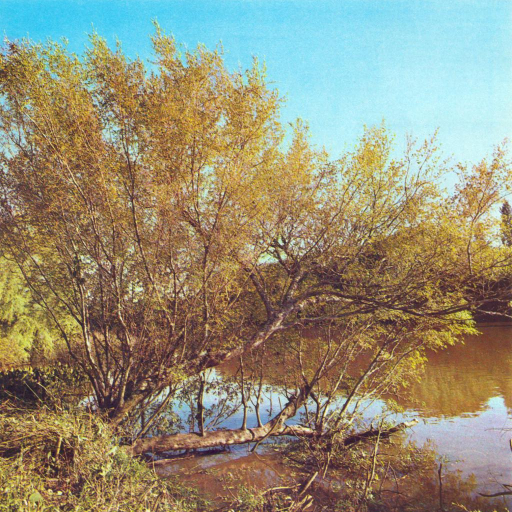
Known as the "Palo Amarillo" or Yellow Wood, Terminalia australis is a graceful, slender tree native to the riverbanks of South America. It is often found leaning over the waters of the Río de la Plata, where its willow-like foliage dances in the breeze. Historically, its flexible yet tough wood was highly valued by indigenous people for crafting spears and sturdy tool handles.
🔍 How to Identify
- 🍃 Slender Foliage: The leaves are narrow, elongated, and lance-shaped, resembling those of a willow tree, which gives the plant an airy and elegant silhouette.
- 🪵 Distinctive Bark: True to its nickname, the inner wood and certain sections of the bark reveal a noticeable yellowish tint, especially in younger branches.
- 🦋 Winged Fruits: It produces small, dry fruits equipped with two or three "wings" that allow them to spin through the air or float away on the water to find new soil.
🏡 In Your Garden
- 💧 Water Lover: This species is a "riparian" plant, meaning it naturally grows near water. In a garden setting, it thrives in damp areas or near ponds where other plants might suffer from "wet feet."
- 🌱 Erosion Expert: Because of its deep and vigorous root system, it is frequently used in ecological restoration to stabilize riverbanks and prevent soil from washing away during heavy rains.
- 🦋 Wildlife Hub: Its modest flowers are a magnet for local pollinators, particularly small butterflies and native bees, making it an excellent choice for a biodiversity-focused landscape.
⚠️ Safety & Toxicity
- ✅ Generally Safe: Terminalia australis is not considered a toxic plant and is generally safe to have in a landscape where pets and children are present.
- 🖐️ Physical Caution: While not poisonous, its branches can be quite thin and "whippy." Always wear gloves when pruning to avoid scratches from dry, snapping twigs.
✨ Fun Fact
In its native regions of Argentina and Uruguay, this tree is a favorite nesting site for many birds because its dense, flexible branches provide excellent camouflage and protection against high winds.

Detailed Care Instructions
| Humidity | Dry |
| Lighting | Full Sun |
| Difficulty | Easy |
To grow Terminalia Australis, also known as the Australian almond or Kurrajong, you can follow these steps:
- Climate and location: Terminalia Australis is native to Australia and thrives in warm and tropical regions. It prefers full sun but can also tolerate partial shade. Choose a well-draining location with enough space for the tree to grow.
- Soil preparation: Prepare the soil by removing any weeds, rocks, or debris. Terminalia Australis prefers slightly acidic to neutral soils but can grow in various soil types. Adding organic matter like compost or well-rotted manure can improve soil fertility and drainage.
- Planting: Dig a hole twice as wide and deep as the root ball of the tree. Place the tree in the hole, ensuring that the top of the root ball is level with or slightly above the ground. Backfill the hole with the removed soil, gently firming it around the roots. Water thoroughly after planting.
- Watering: Terminalia Australis is drought-tolerant but benefits from regular watering, especially during the establishment phase. Water deeply but infrequently to encourage deep root growth. Once established, the tree can tolerate dry spells.
- Mulching: Apply a layer of organic mulch around the base of the tree, but keep it several inches away from the trunk. Mulch helps retain soil moisture, suppress weeds, and improve soil fertility. Replenish the mulch regularly as it decomposes.
- Pruning: Prune Terminalia Australis to remove damaged, dead, or crossing branches. Pruning can be done in late winter or early spring. It can also be shaped if desired, but the tree generally has an attractive natural form.
- Fertilizing: Terminalia Australis typically does not require heavy fertilization, as it can obtain nutrients from the soil. If the tree shows signs of nutrient deficiency, like yellowing leaves, you can apply a balanced slow-release fertilizer in spring.
- Pests and diseases: The Australian almond tree is generally resilient to pests and diseases. However, keep an eye out for common issues like aphids, scales, or root rot. If necessary, treat pests with insecticidal soap or neem oil, and ensure good drainage to prevent root rot.
- Patience and care: Terminalia Australis is a slow-growing tree, so be patient with its growth. Regularly observe the tree for any signs of stress or issues and address them promptly.
Remember that local regulations, climate, and specific growing conditions may vary, so it's always helpful to consult with local gardening experts or nurseries for region-specific advice when growing Terminalia Australis.

Place in a bright room that is sun drenched almost all day. Or directly in a south-facing window.
To water this plant, ensure that the soil is dry to the touch before adding water. Use a watering jug to pour water onto the soil slowly and evenly. Avoid getting water on the leaves as this can cause damage or disease. Water the plant once or twice a week in the growing season, and reduce watering frequency during the dormant period. Observe the moisture levels in the soil and adjust watering as necessary.
To fertilize your tree, apply a balanced slow-release fertilizer in early spring and mid-summer. Use a fertilizer with equal parts nitrogen, phosphorus, and potassium. Spread the fertilizer evenly around the drip line, which is the outer perimeter of the tree's canopy. Water thoroughly after fertilizing to help the nutrients penetrate the soil and reach the root system. Avoid overfertilizing as it can damage the roots and may cause other issues with the tree's health.
The Terminalia Australis plant prefers a well-draining soil that is rich in organic matter. A slightly acidic to neutral pH level is ideal for this plant, which means a soil that has a pH range of 6.0 to 7.5 is suitable. The type of soil should also be well-aerated and have good water-holding capacity. To achieve optimal growth, the soil should also have good nutrient availability and a balanced blend of minerals. Soil texture can also play an important role, and a mixture of sandy loam and clay soils can prove to be beneficial. Overall, providing a nutrient-rich growing medium that promotes healthy root development is essential for Terminalia Australis plant growth and survival.
To propagate this plant, you will need to perform a method called cuttings. One method is by taking semi-hardwood cuttings in the late summer or early autumn. Start by taking cuttings from the current year's growth and make sure they're around 8-15cm long. Remove any lower leaves and dip the end of the cutting in rooting hormone. Plant the cutting in gritty compost and keep it moist. Keep the cutting in a warm but shady spot and make sure the soil does not dry out. After a month, gently tug on the cutting to see if any roots have formed. If there's resistance, it means the roots have formed and the plant is ready to be planted in a larger pot or in the garden.








